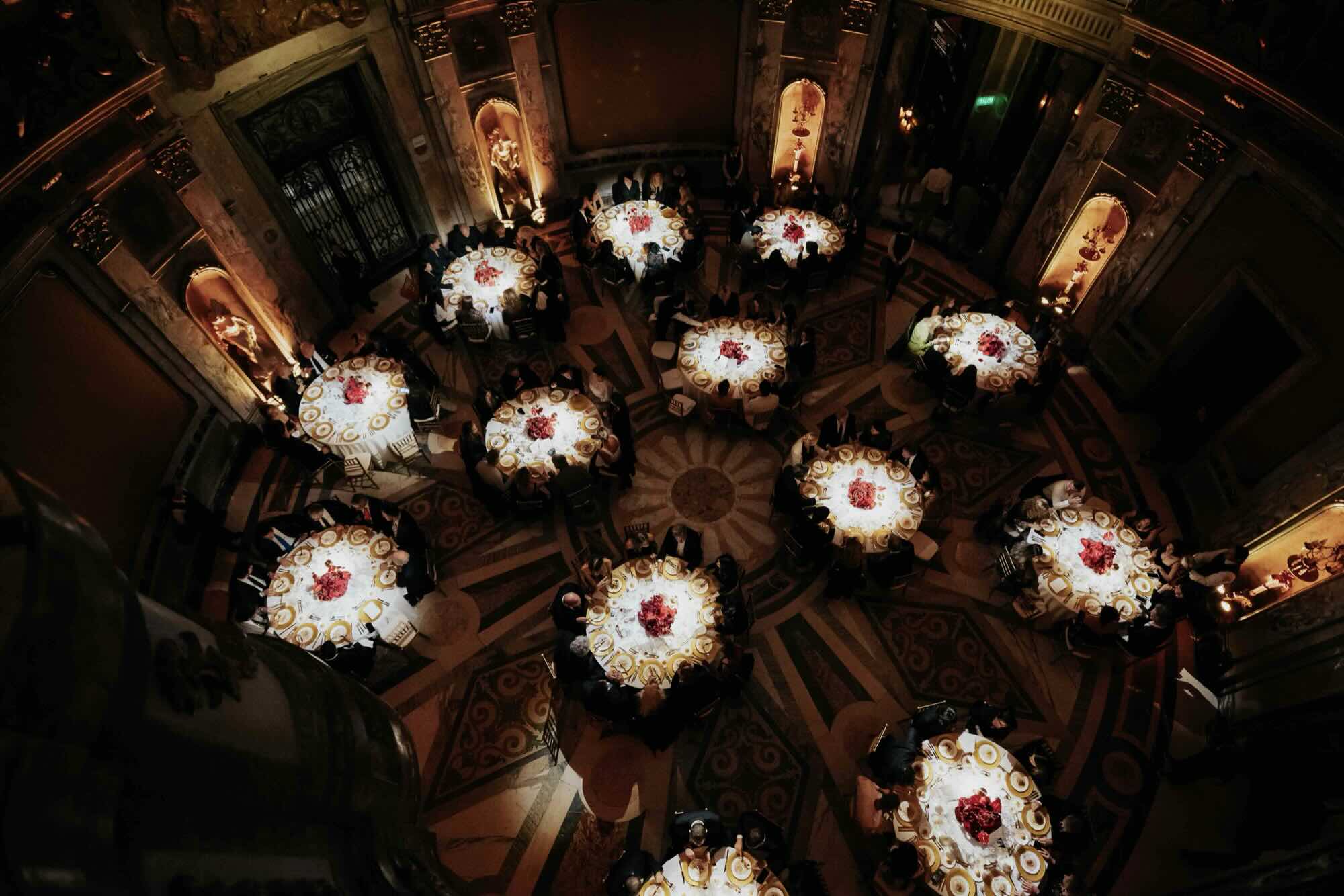
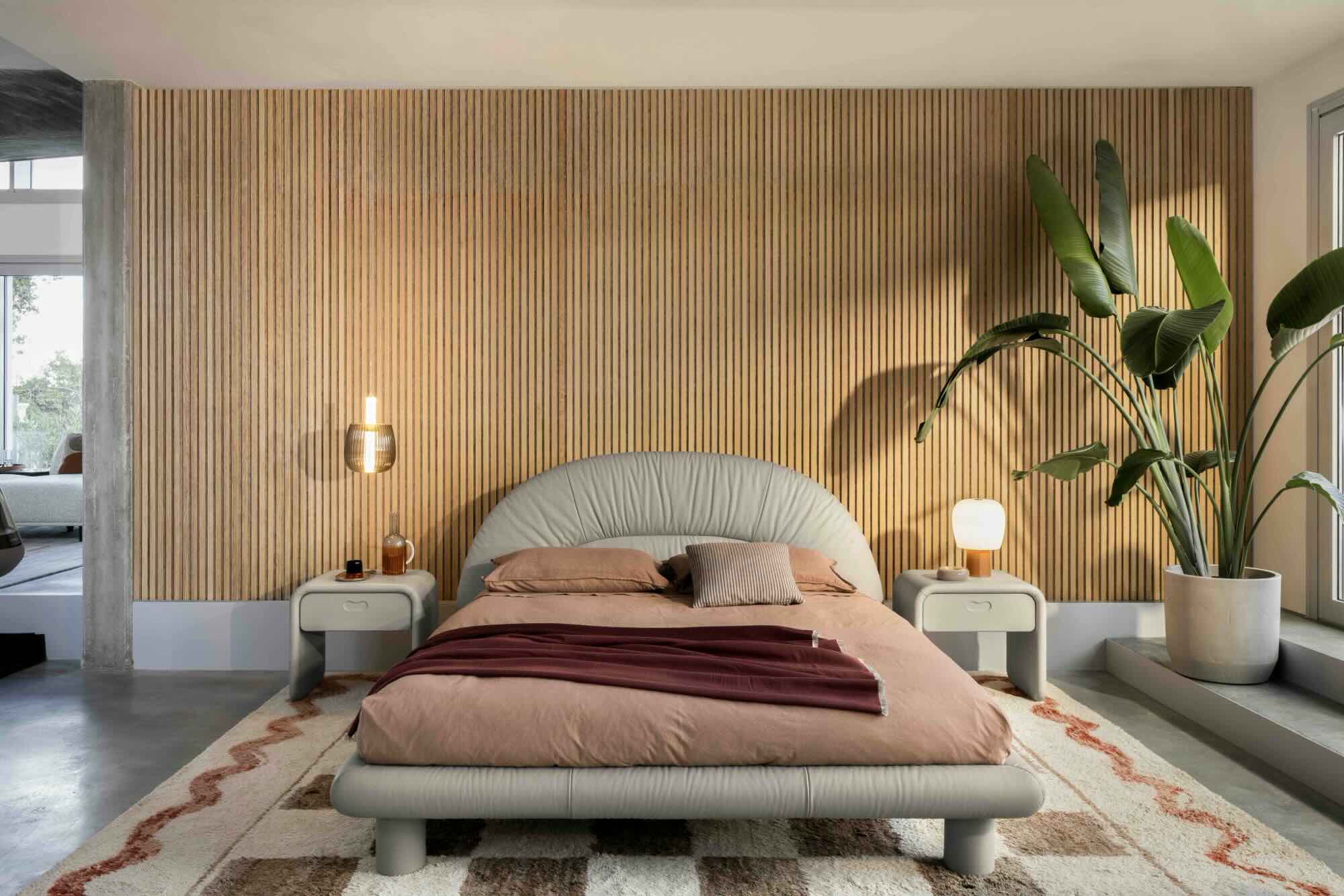
The subway is one of the few spaces where a city reveals itself without filters. A shared territory that requires no belonging, where lives intersect for mere seconds and then disappear forever. A space where no one is there to be seen yet everyone ends up being observed: what Marc Augé called a non-place. That suspended landscape —neither private nor fully public— was the one Chanel chose to present its Métiers d’Art 2026 under the direction of Matthieu Blazy.
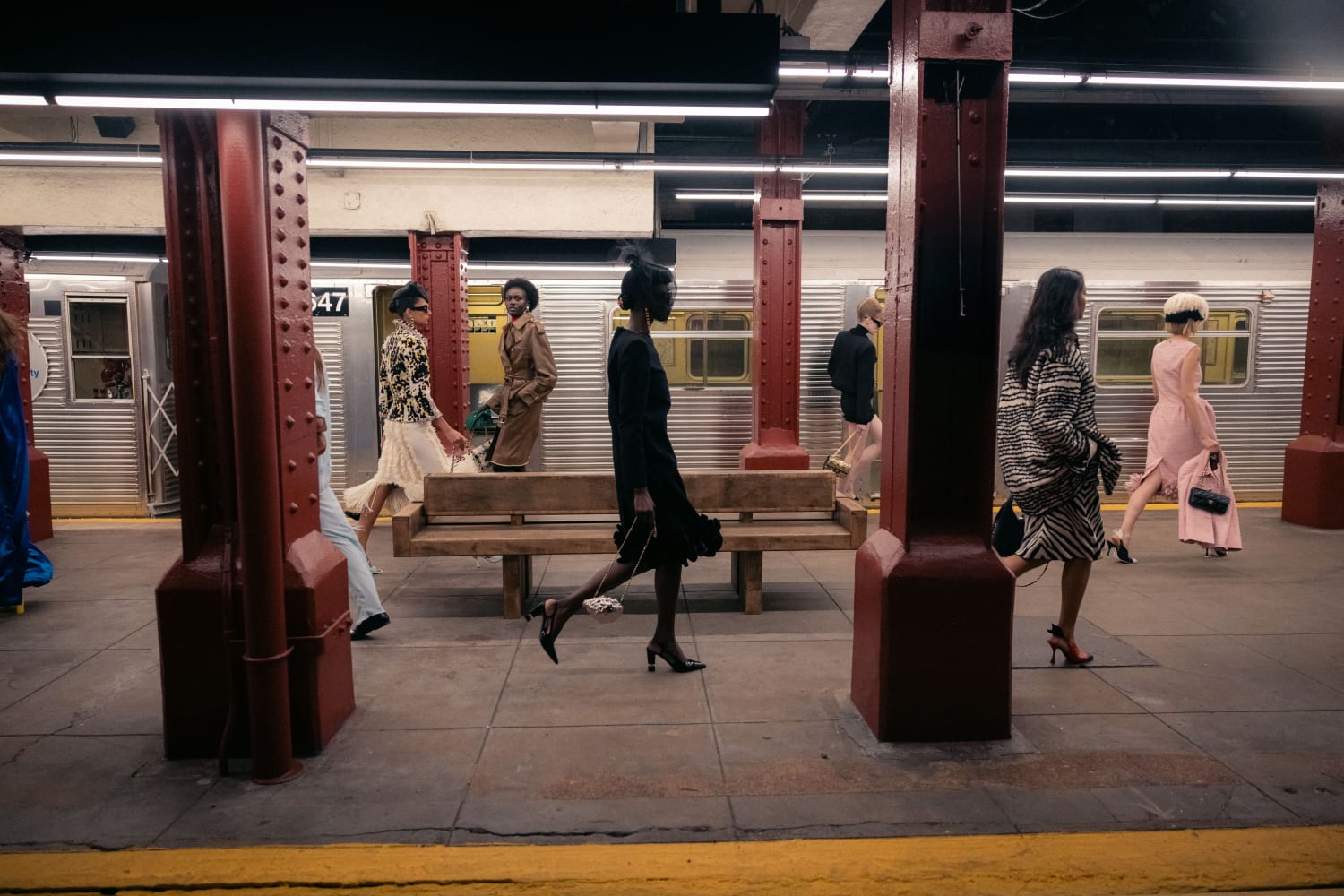
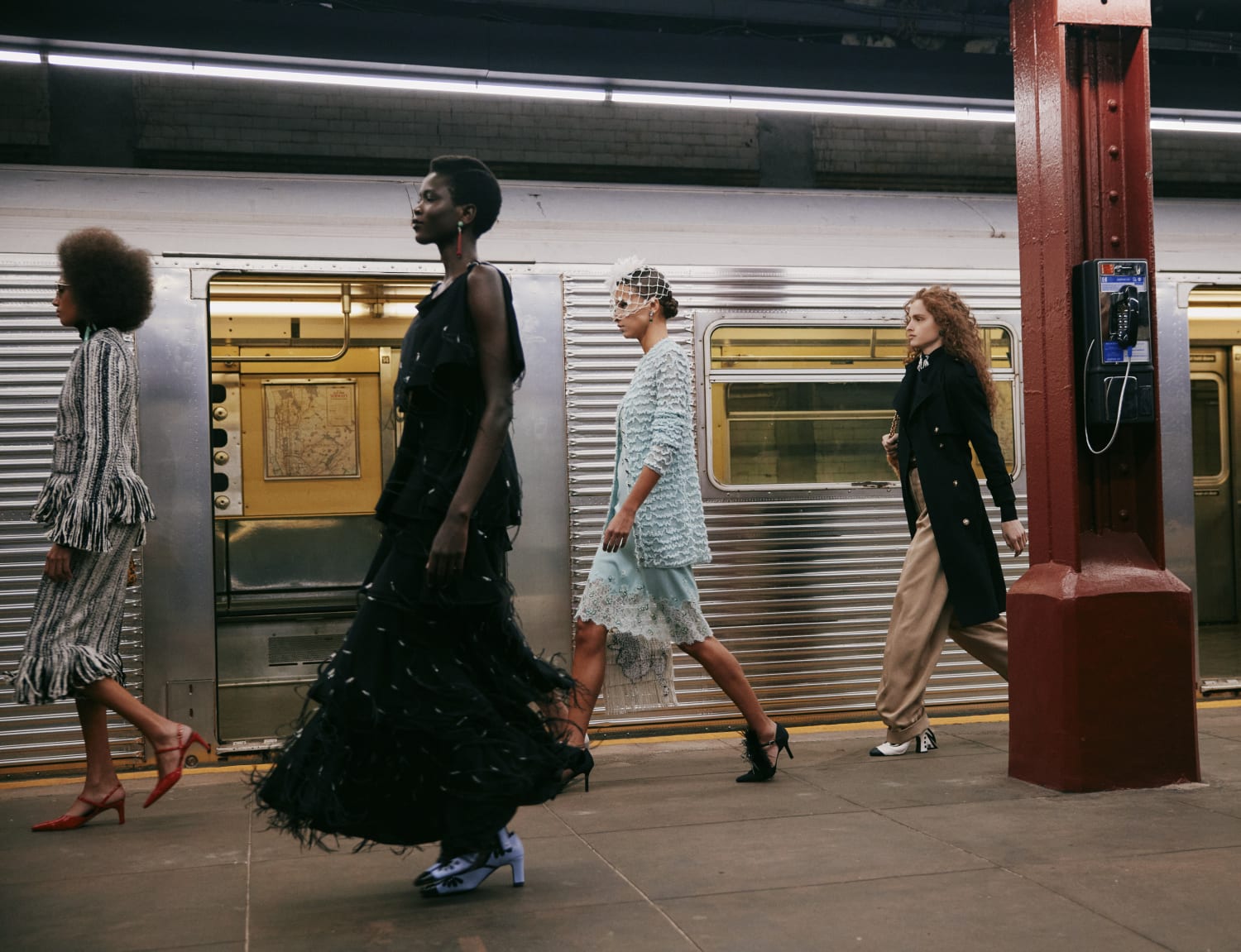
On the empty platform, without passengers or noise, the functional architecture of the subway stands bare: a transit system turned into silence. And in that silence, each figure cuts through with unexpected sharpness, like echoes of the urban jungle.
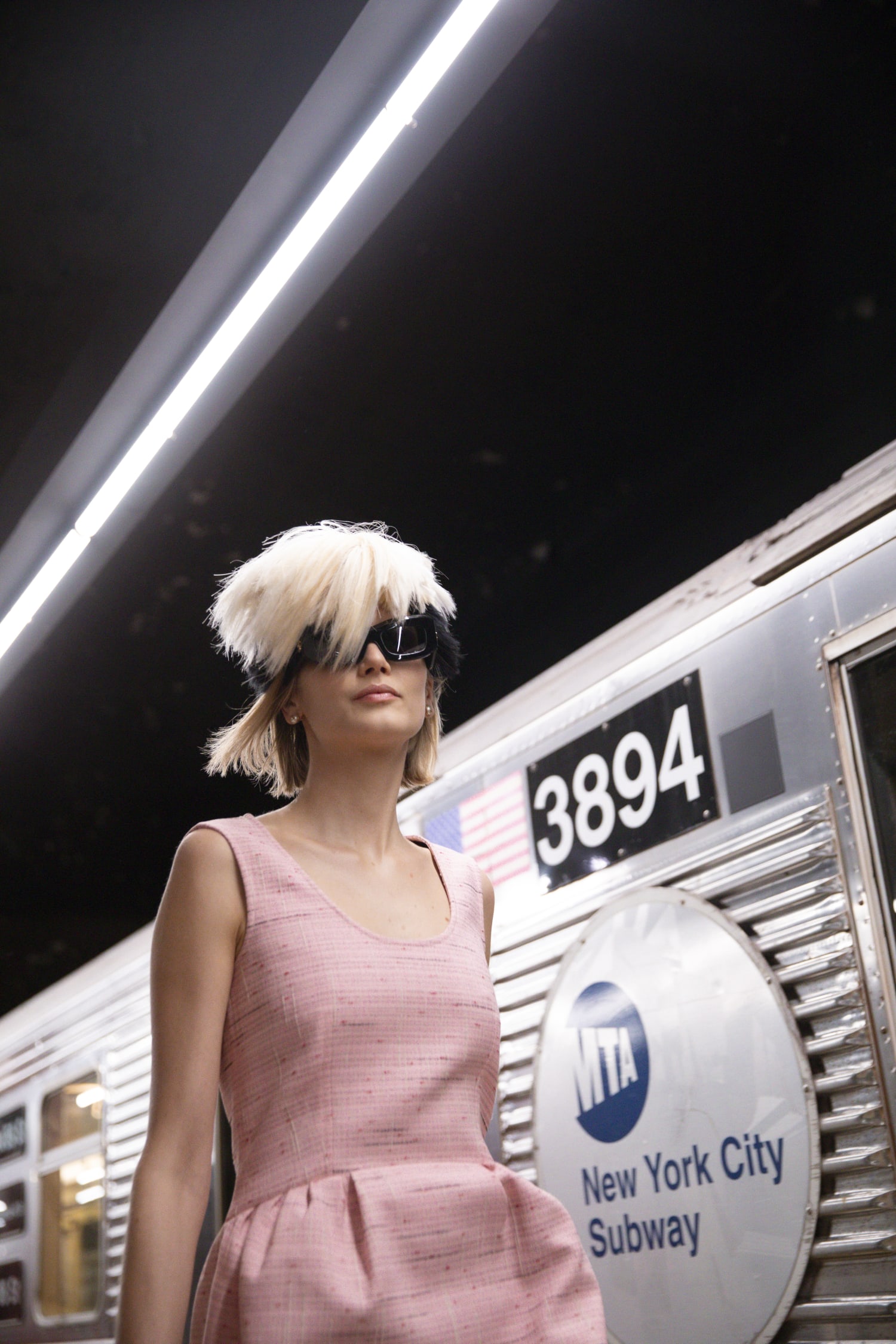
For Blazy, the subway is not a stage for urban exoticism but a point of contact between imaginaries. It is a place where anyone could appear: the student, the woman on her way to work, the eccentric figure who seems pulled from an old film, the marginal junkie, the group of unruly teenagers. That latent heterogeneity —which in real life unfolds in seconds and without attention— here takes the form of a runway, as if the city were releasing the possibility of certain characters who had always been there, hidden by the crowd.

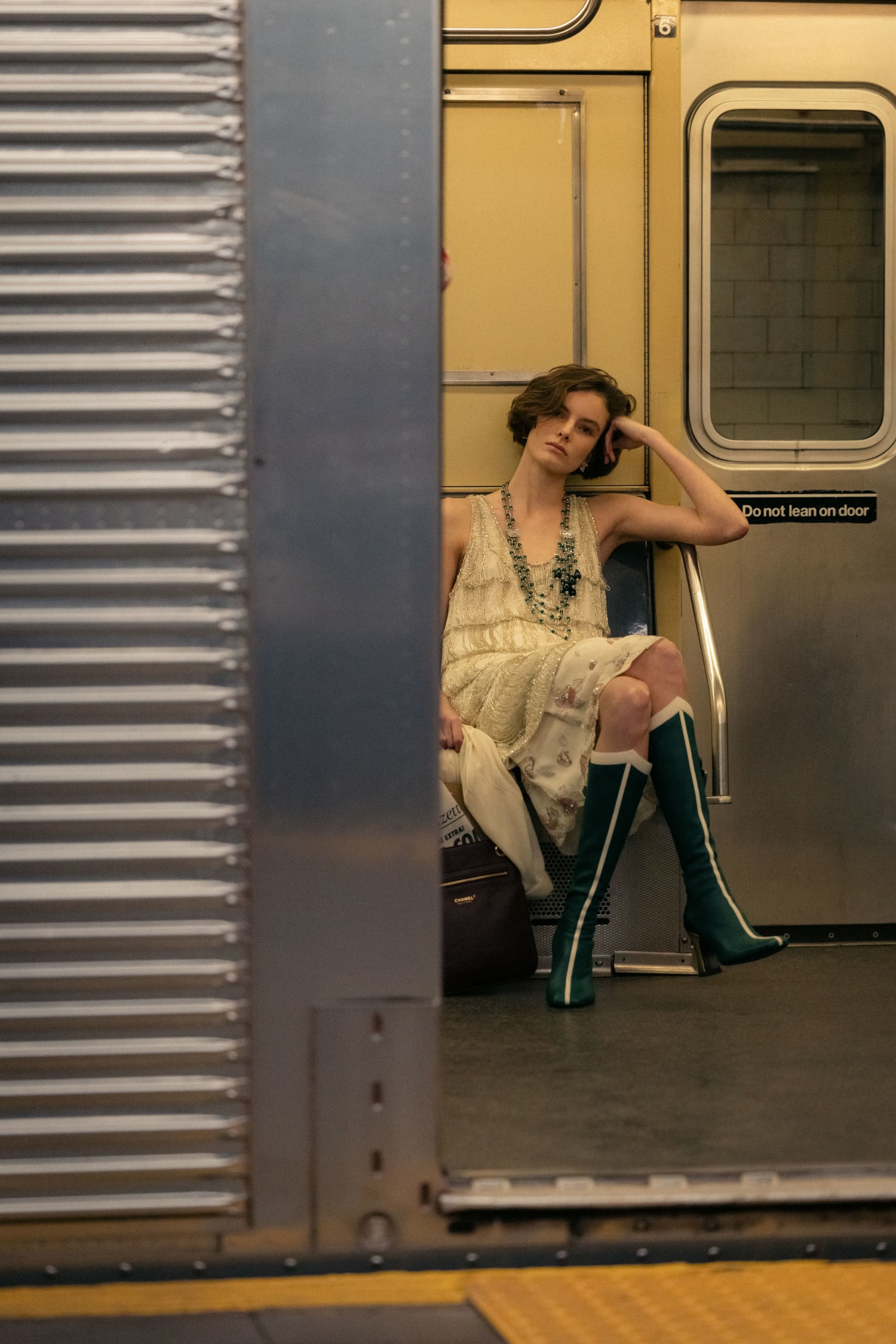
The collection moves across decades as if they coexisted on a single plane. There are gestures of the twenties reimagined with the craft of Lesage and Lemarié; shadows of the sixties filtered into reconfigured tweeds and flannels. Nothing appears as a direct citation: each piece functions as a memory of the city, a fragment of its emotional archive.
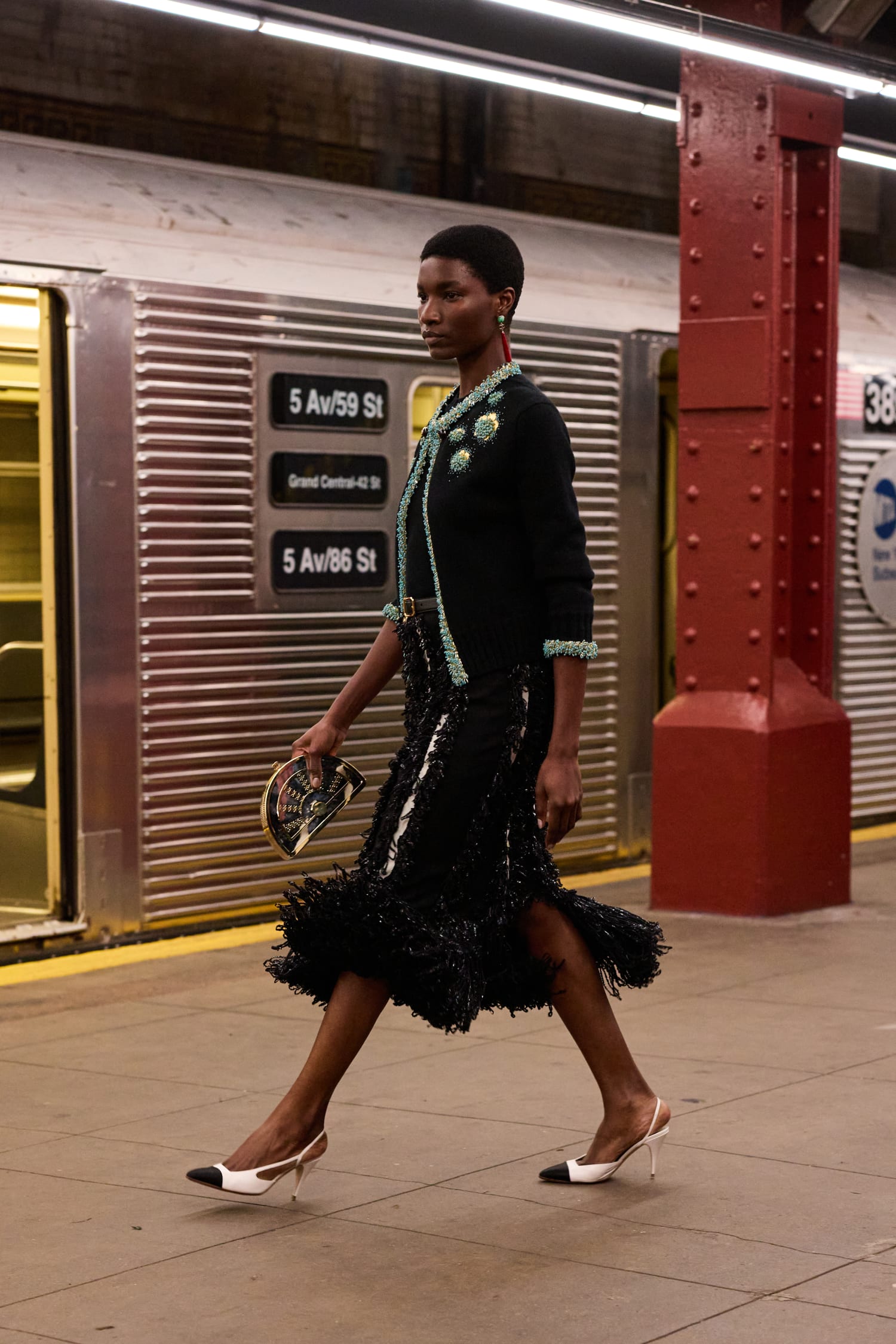


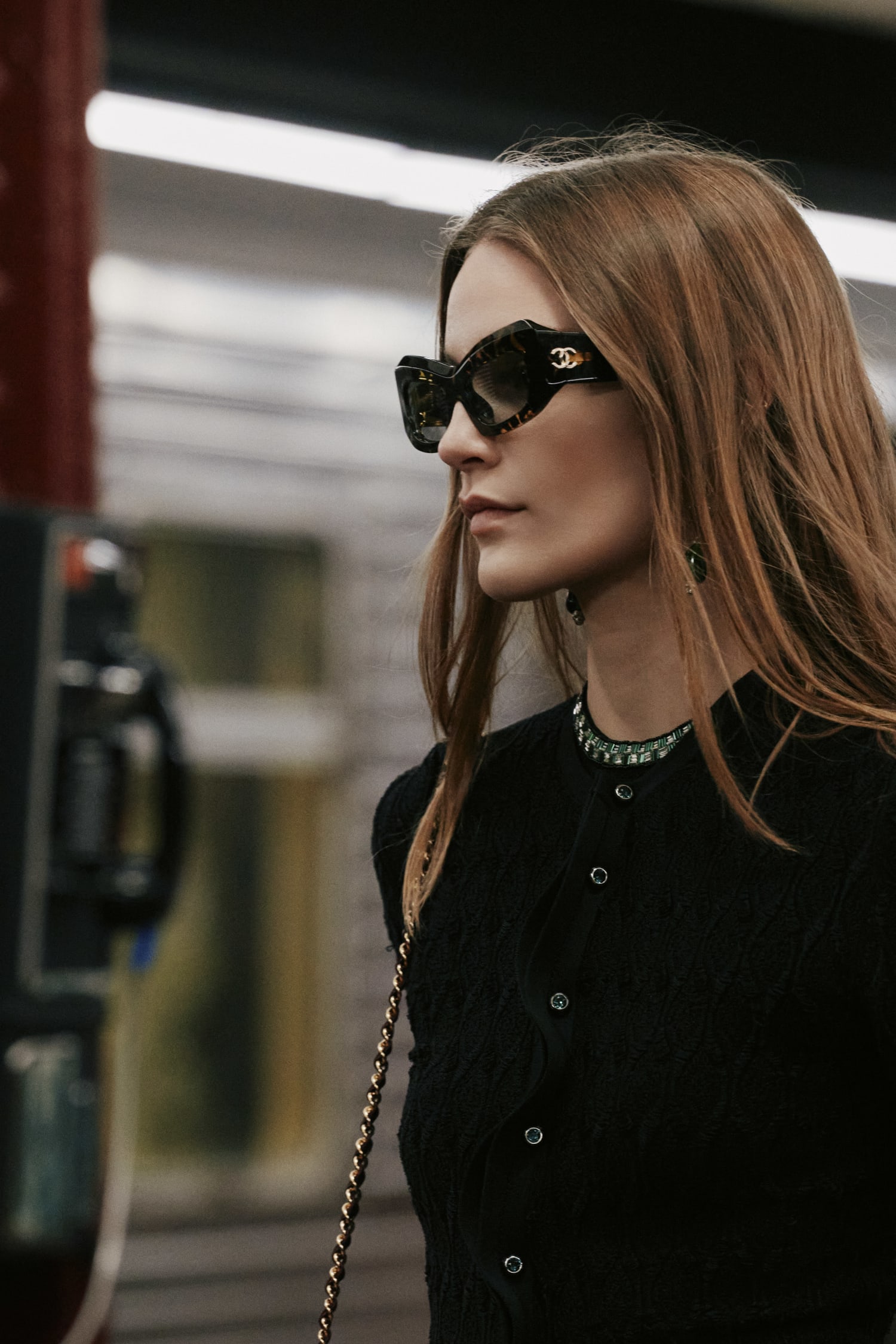
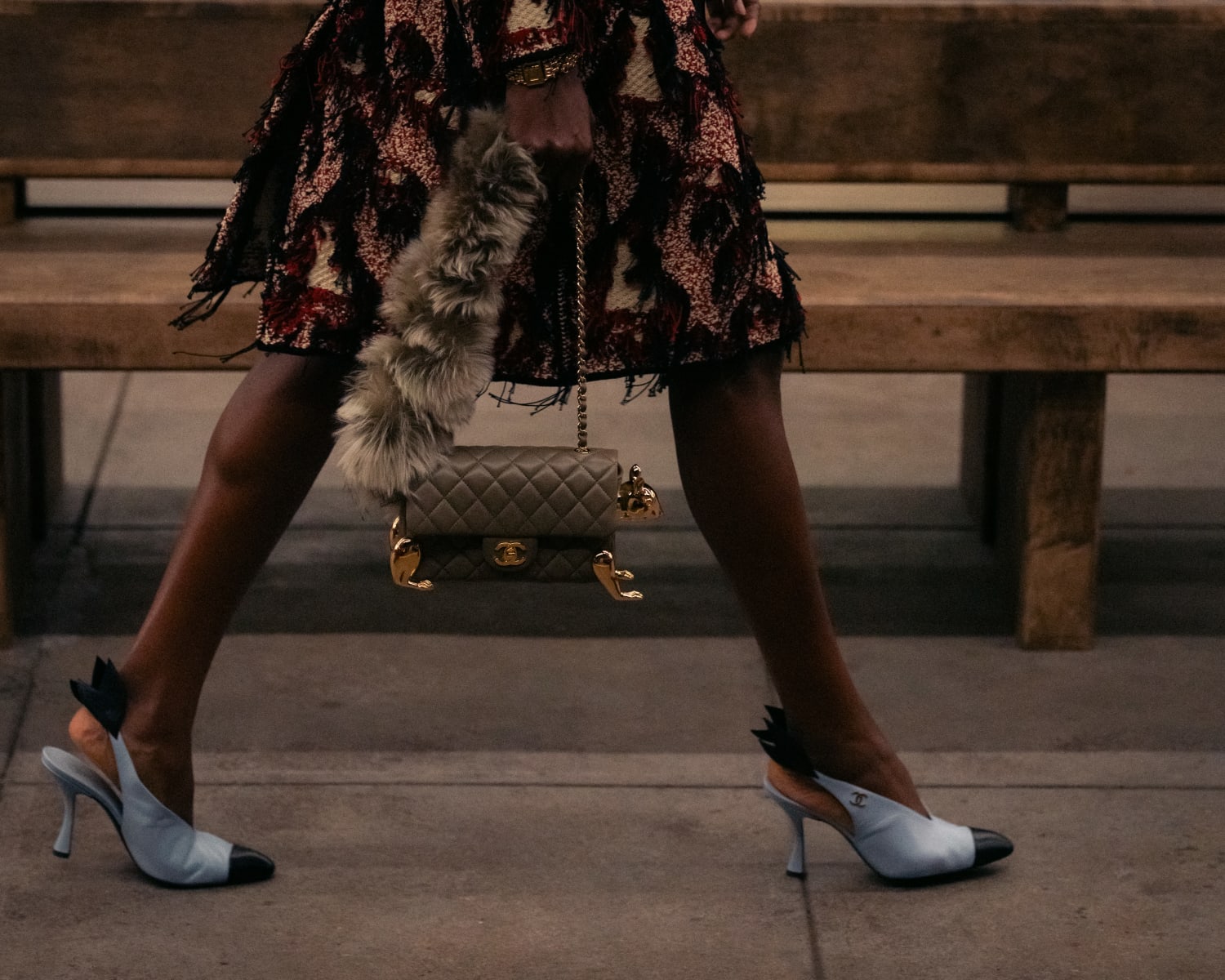
What surprises is not the literalness of the subway but the energy it sets off. In the absence of everyday chaos, the eye becomes more precise: handbags that play with texture, Art Deco dresses, pinstripe suits become a condensed urban portrait. Feathers, embroideries, miniatures and hand-painted linings featuring the New York skyline complete the scene.


In this artificial stillness, Chanel constructs a particular idea of New York: not the real city, but the city one feels while moving through it namelessly, without a clear destination, attuned to the randomness of glances and to that subterranean pulse where the glamorous, the anonymous, the weary, the dangerous and the deeply ordinary coexist.

The subway thus becomes a space where the extraordinary emerges with the same naturalness as a stranger —whether an executive, a socialite or a vulnerable night body— taking a seat in front of us.
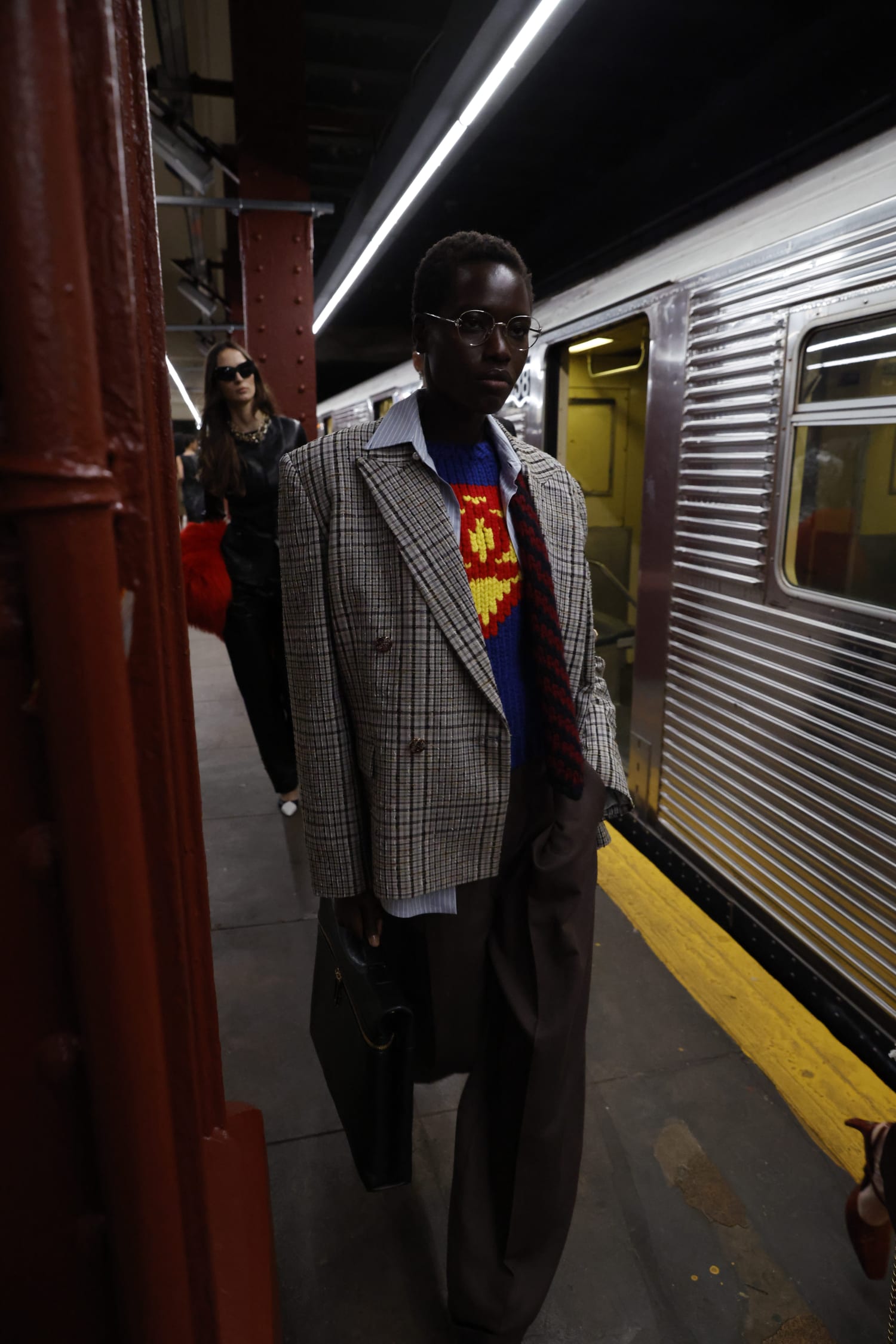
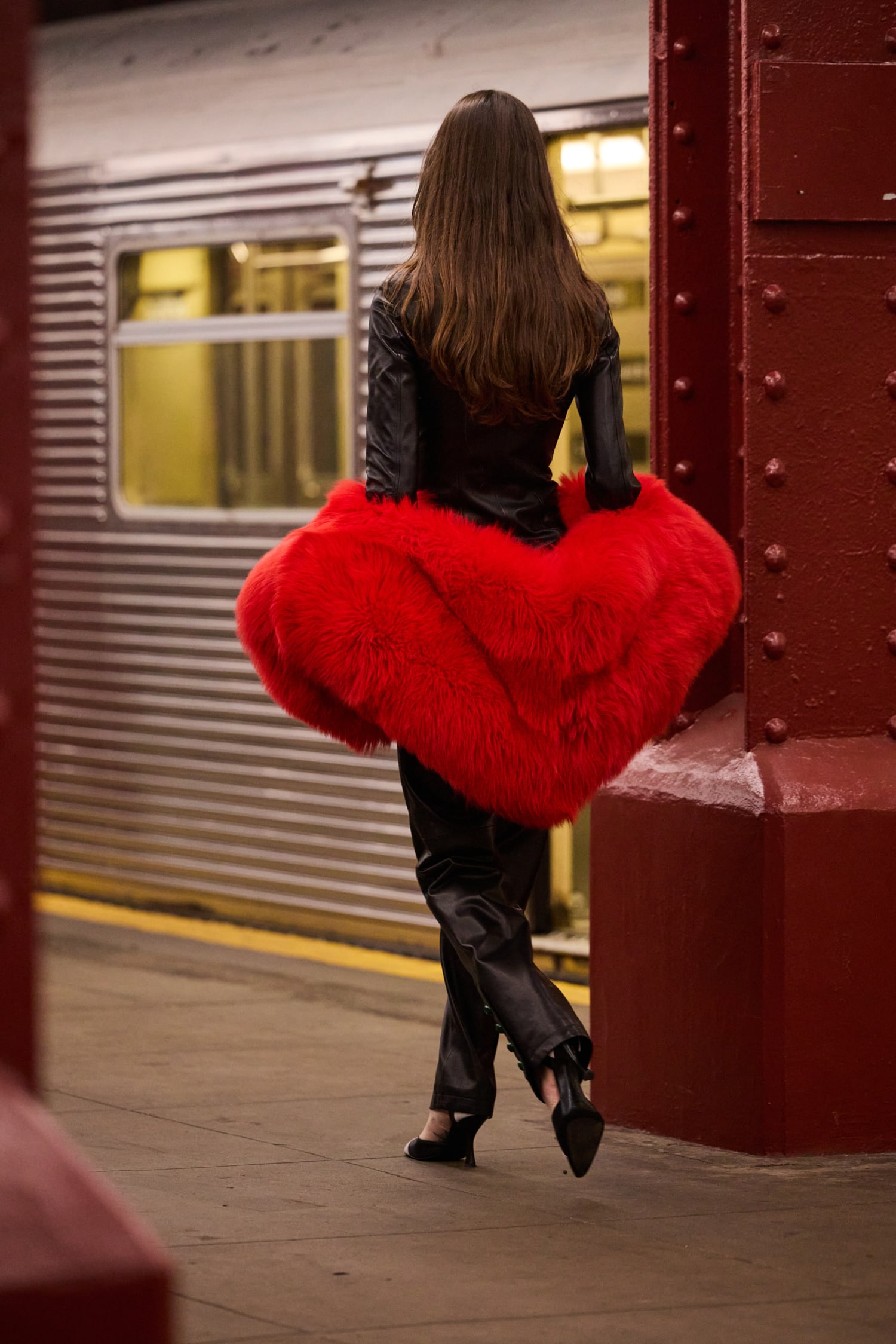
Métiers d’Art 2026 understands that urban identity does not lie in buildings or icons, but in those shared seconds where no one knows each other yet everyone coexists. Chanel takes that minimal pulse; the moment before the next train arrives. And turns it into a gesture of beauty and mastery.
El metro es uno de los pocos espacios donde una ciudad se expone sin filtros. Un territorio compartido sin necesidad de pertenencia, donde las vidas se cruzan en segundos y desaparecen para siempre. Un espacio donde nadie está para ser visto pero todos terminan siendo observados: lo que Marc Augé llamó un no-lugar. Ese paisaje suspendido —ni privado ni del todo público— fue el que eligió Chanel para presentar su Métiers d’Art 2026, bajo la dirección de Matthieu Blazy.
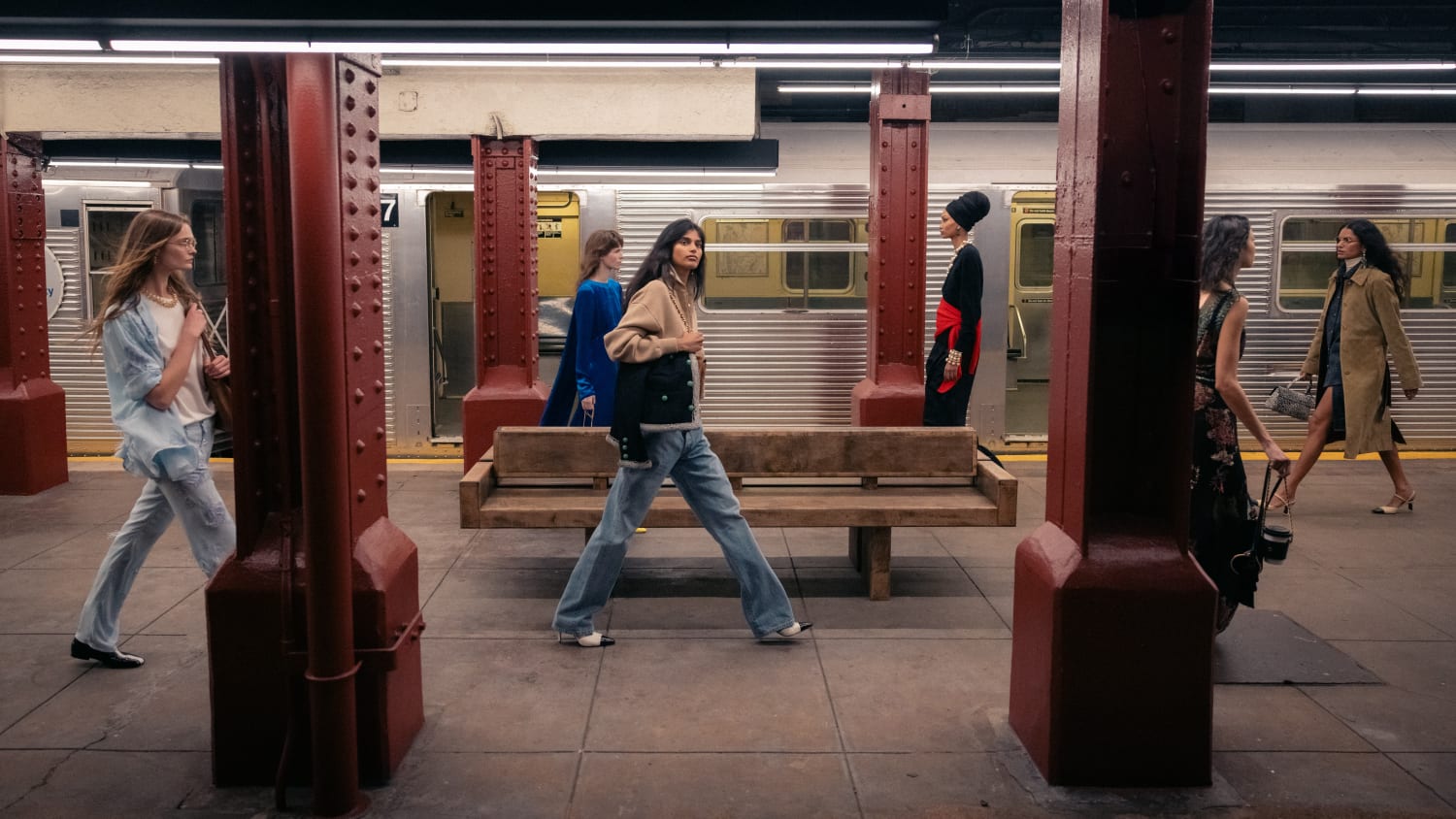
En el andén vacío, sin pasajeros ni ruido, la arquitectura funcional del subway queda desnuda: un sistema de tránsito convertido en silencio. Y en ese silencio, cada figura se recorta con una nitidez inesperada, como ecos de la jungla urbana.
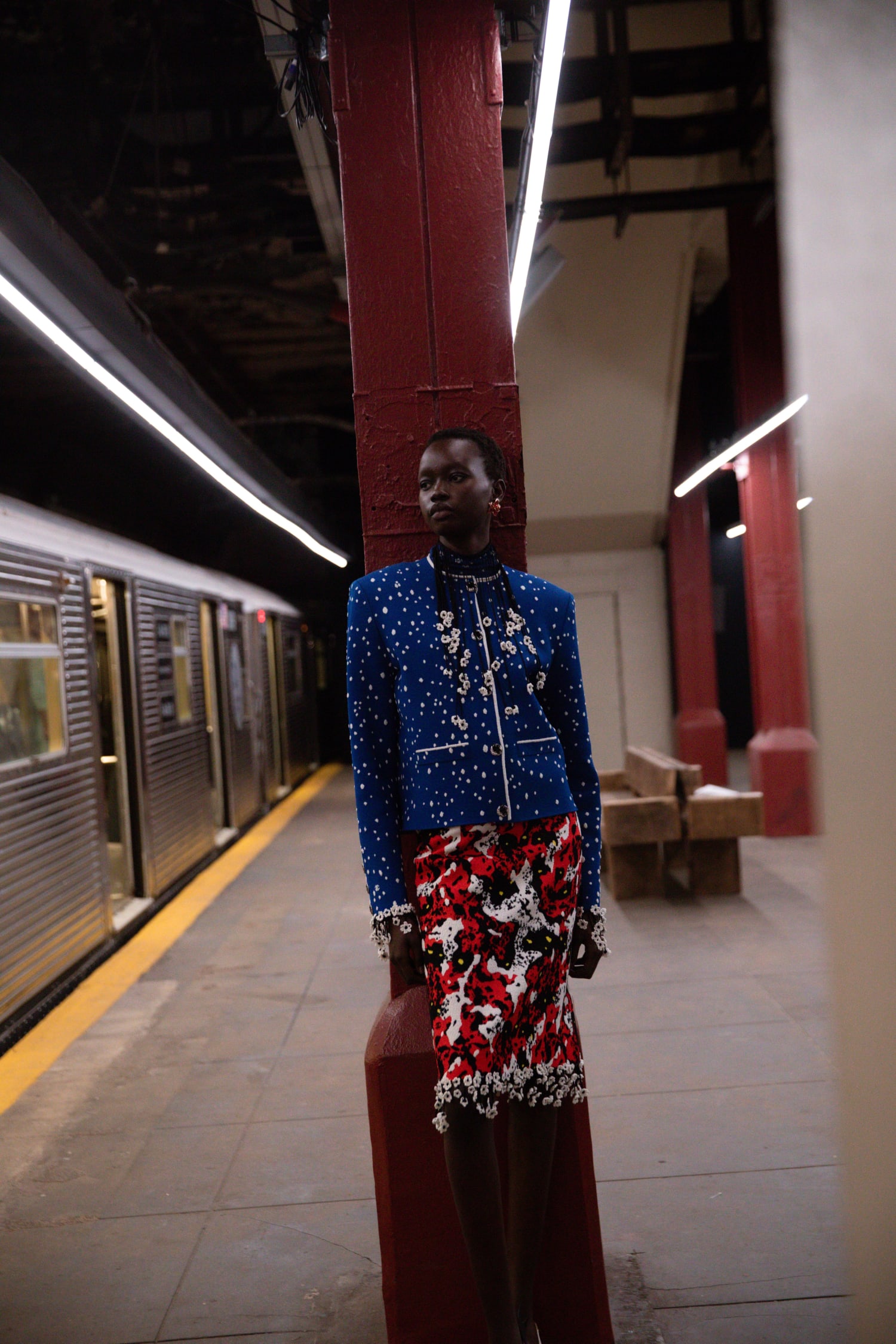
Para Blazy, el metro no es un escenario de exotismo urbano, sino un punto de contacto entre imaginarios. Es un lugar donde cualquiera podría aparecer: la estudiante, la mujer que va al trabajo, la figura excéntrica que parece salida de una película vieja, el yonkee marginal, el grupo de adolescentes alborotados. Esa heterogeneidad latente —que en la vida real sucede en segundos y sin atención— acá toma forma de desfile, como si la ciudad liberara la posibilidad de algunos personajes que siempre estuvieron ahí, ocultos por la multitud.
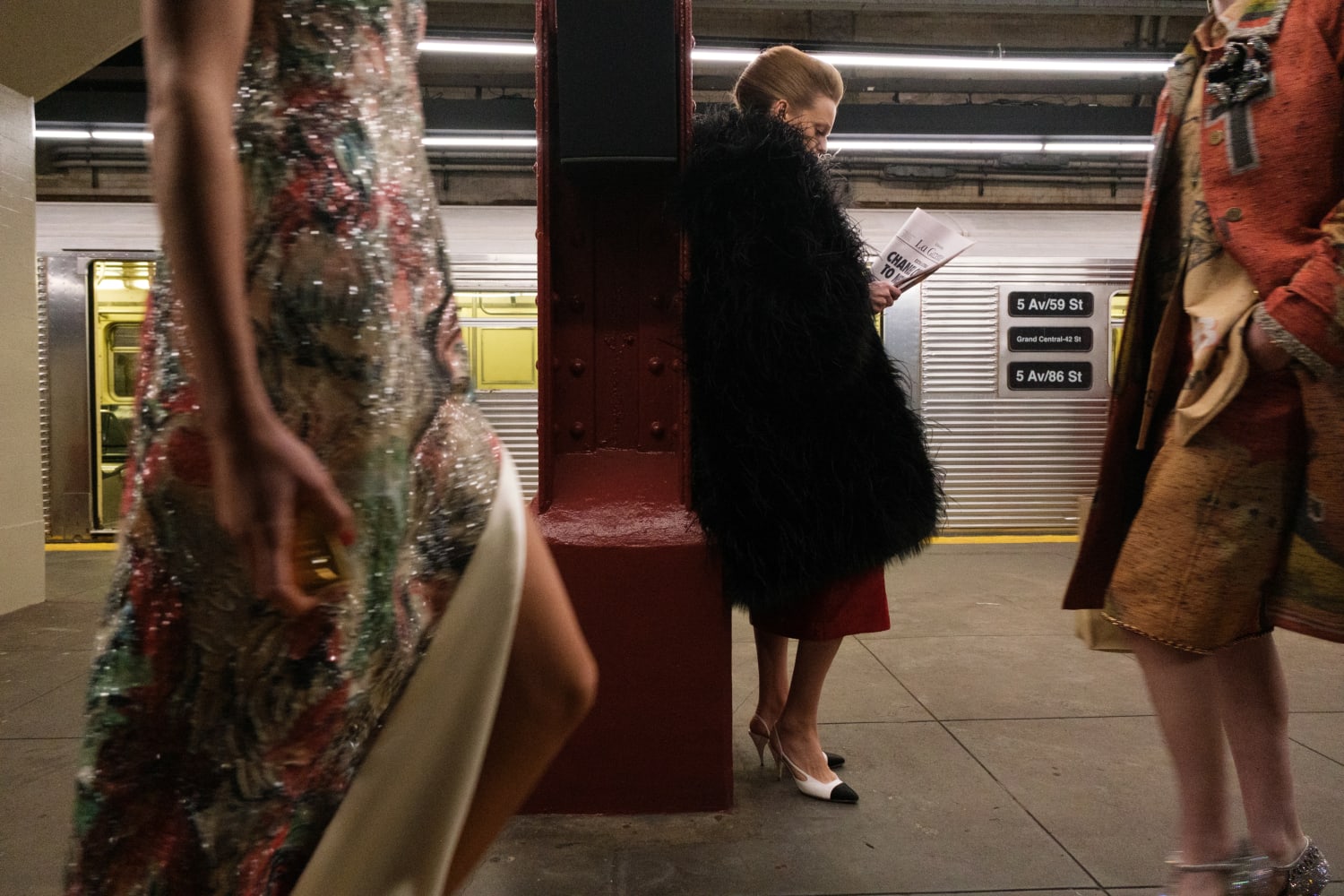
La colección se mueve entre décadas como si todas convivieran en un mismo plano. Hay gestos de los años veinte reimaginados con oficio de Lesage y Lemarié; sombras de los sesenta filtradas en tweeds y flanelas reconfiguradas. Nada aparece como cita directa: cada prenda funciona como una memoria de la ciudad, un fragmento de su archivo emocional.
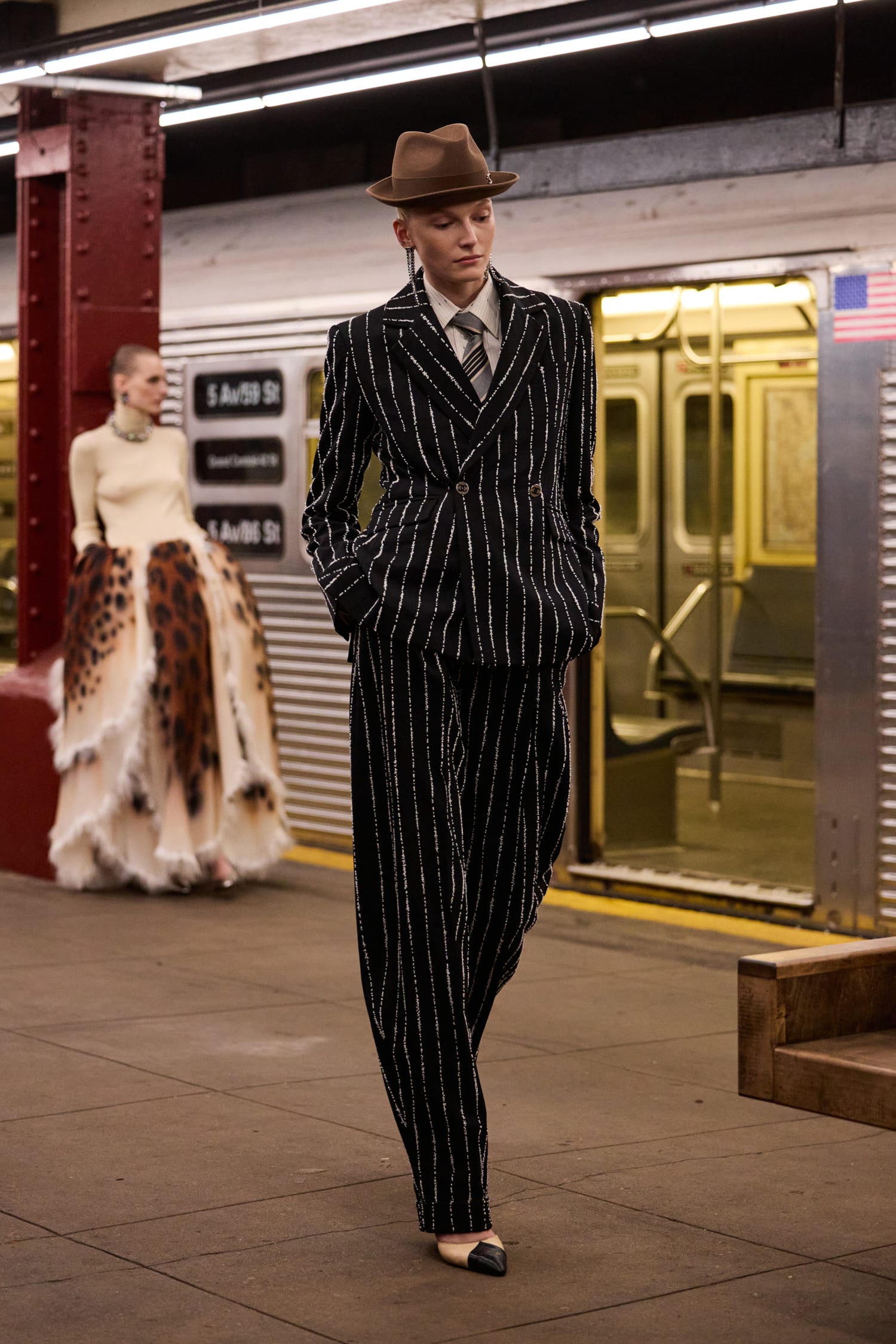
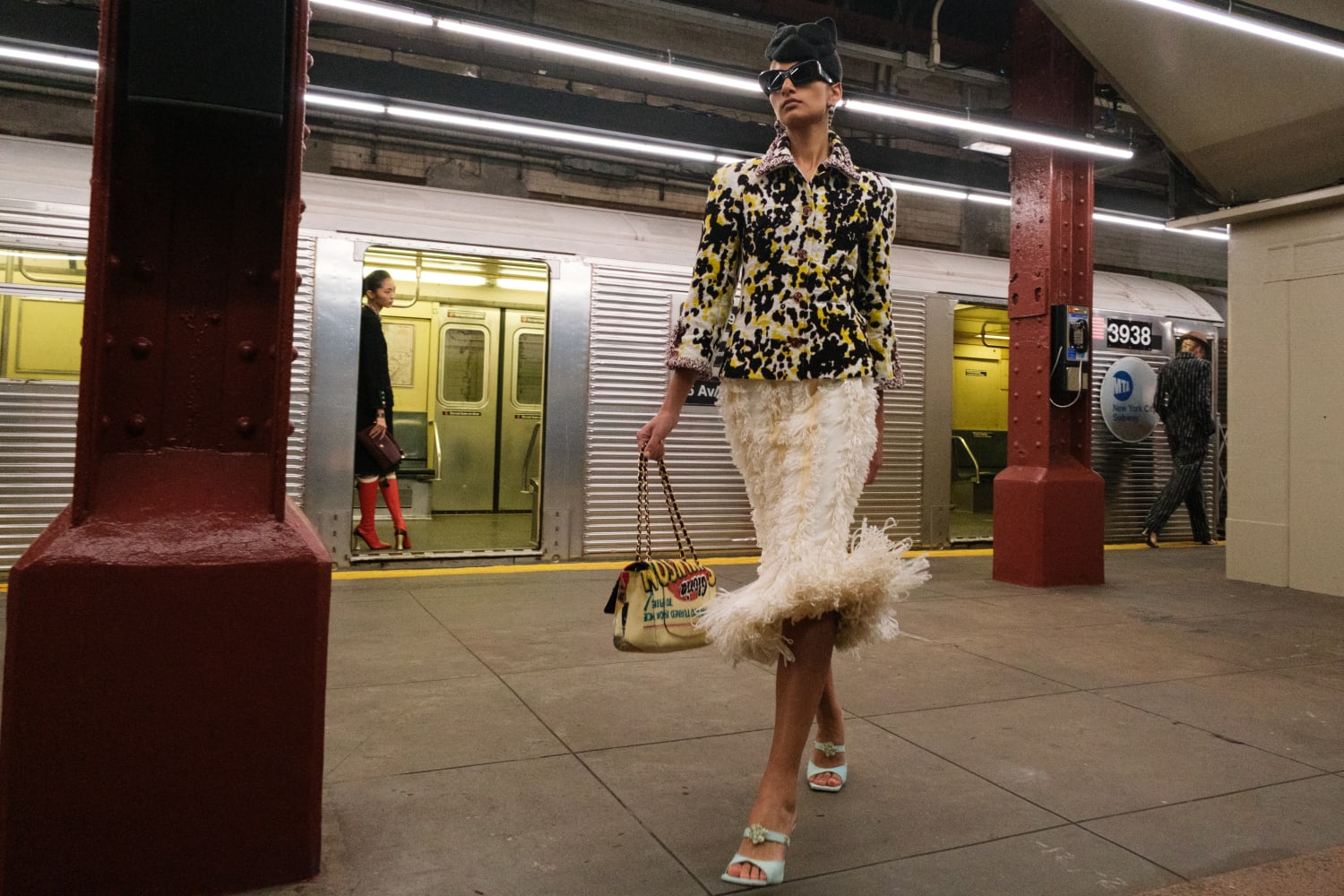
Lo que sorprende no es la literalidad del metro, sino la energía que desencadena. En ausencia del caos cotidiano, la mirada se vuelve más precisa: carteras que juegan con texturas, vestidos Art Deco, trajes pinstripe se vuelven una especie de retrato urbano condensado. Plumas, bordados, miniaturas y linings pintados a mano con la skyline de Nueva York completan la escena.
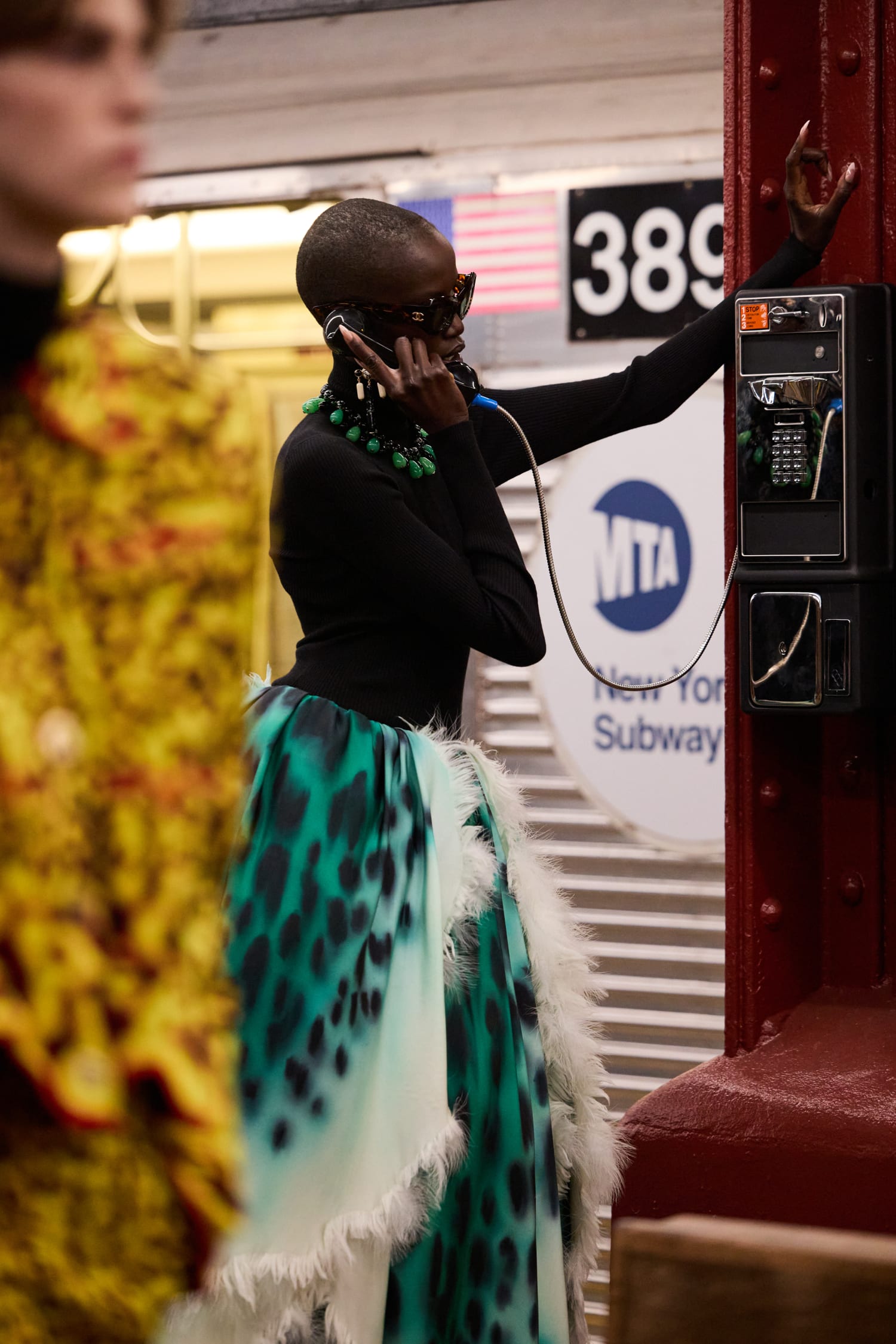
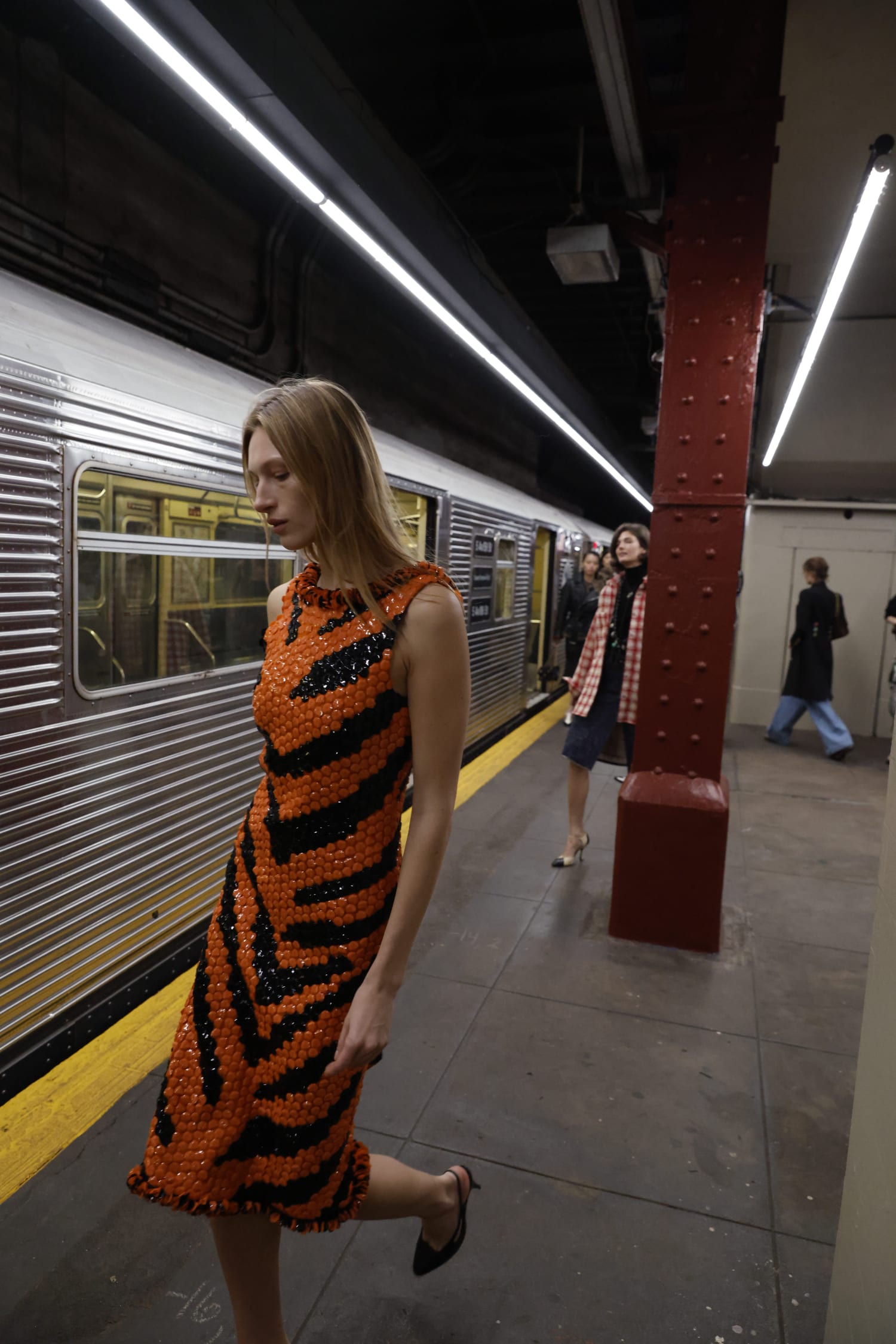
En esa quietud artificial, Chanel construye una idea particular de Nueva York: no la ciudad real, sino la ciudad que se siente cuando uno la transita sin nombre, sin destino preciso, atento al azar de las miradas y a ese pulso subterráneo donde conviven lo glam, lo anónimo, lo cansado, lo peligroso y lo profundamente cotidiano.
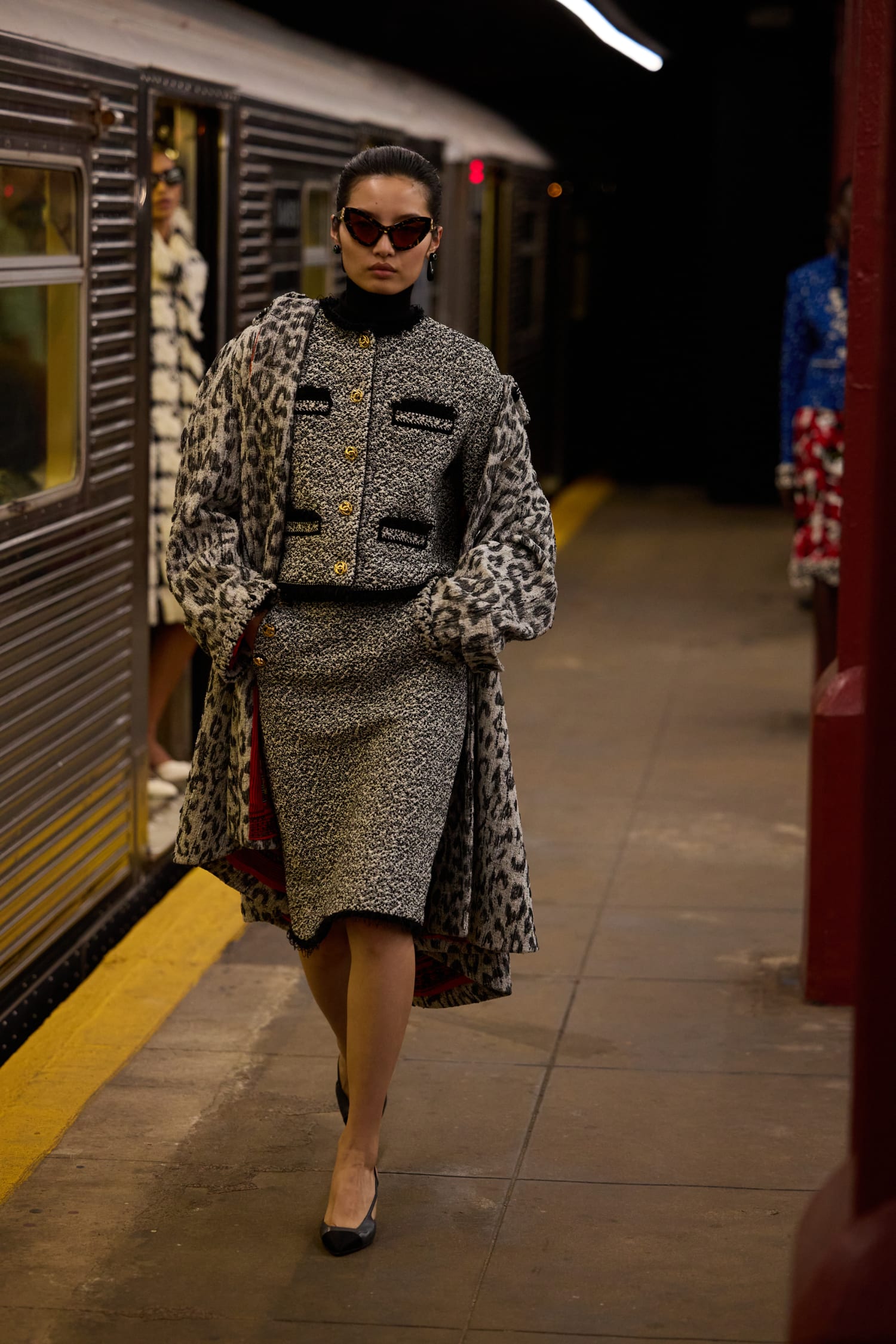
El metro se convierte así en un espacio donde lo extraordinario aparece con la misma naturalidad con la que un desconocido —sea un ejecutivo, una socialite o un cuerpo vulnerable de la noche— toma asiento frente a nosotros.

El Métiers d’Art 2026 entiende que la identidad urbana no está en los edificios ni en los íconos, sino en esos segundos compartidos donde nadie se conoce pero todos coexisten. Chanel toma ese pulso mínimo; el momento antes de que llegue el próximo tren. Y lo transforma en un gesto de belleza y oficio.
Imges Copyright Chanel