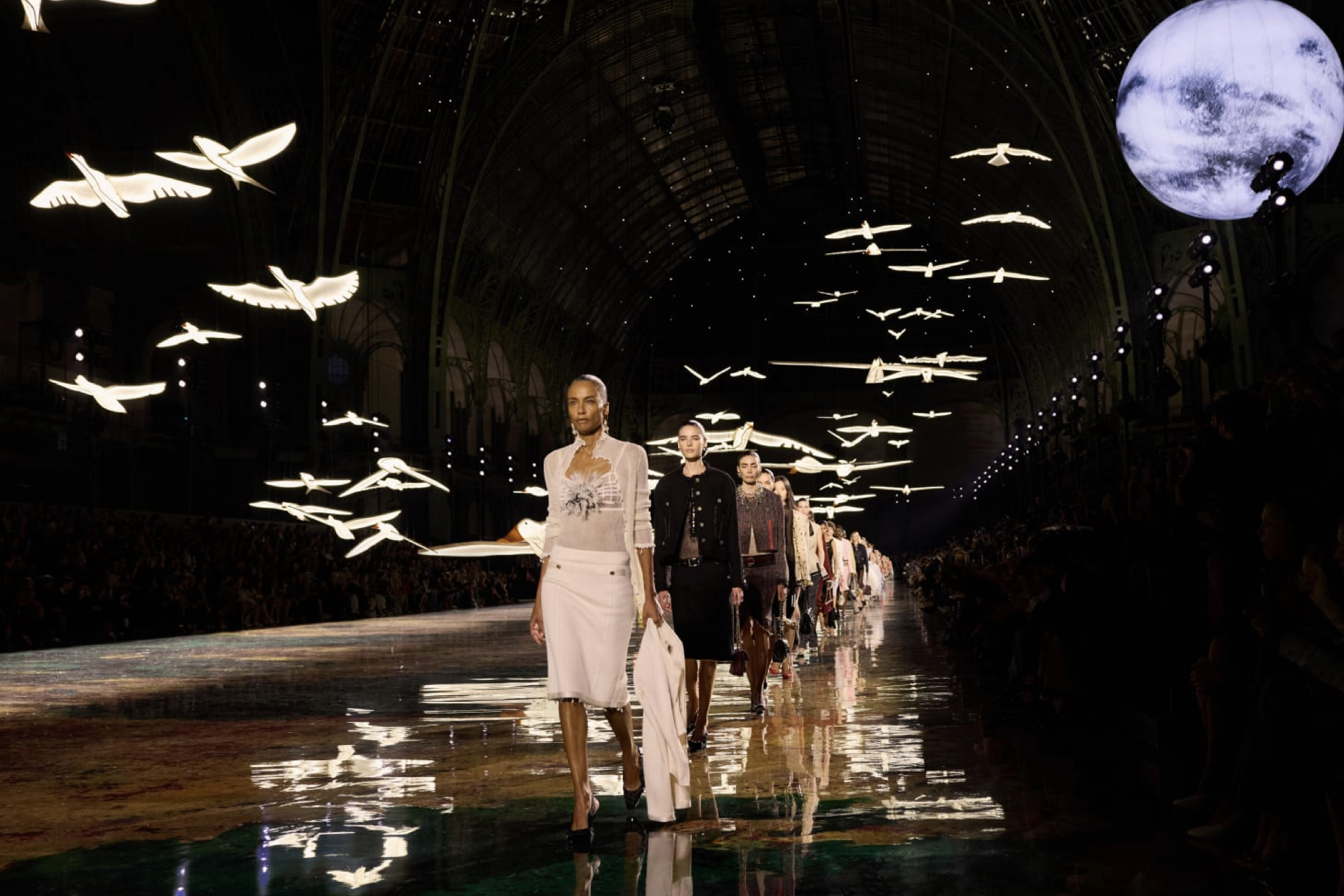

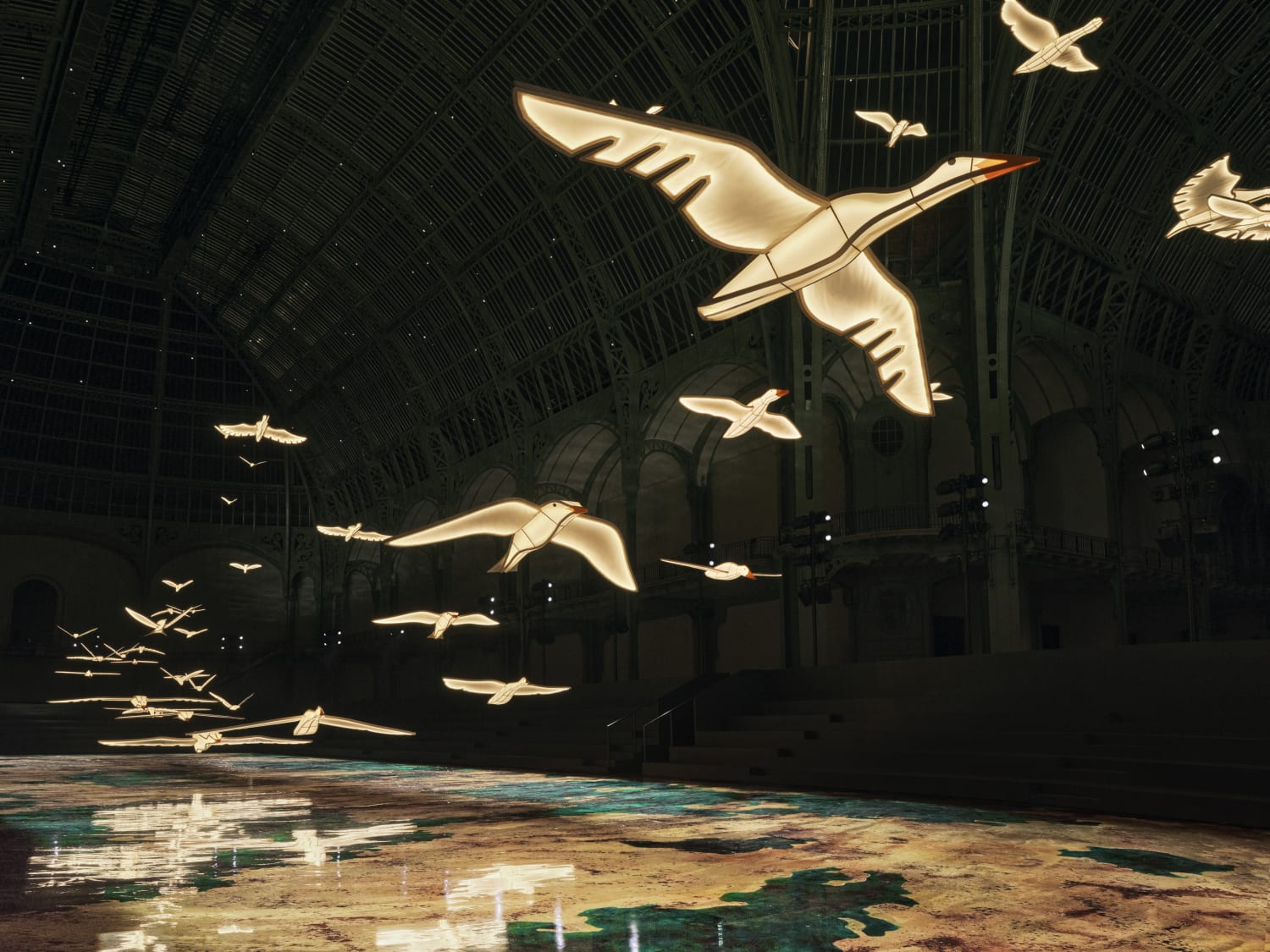
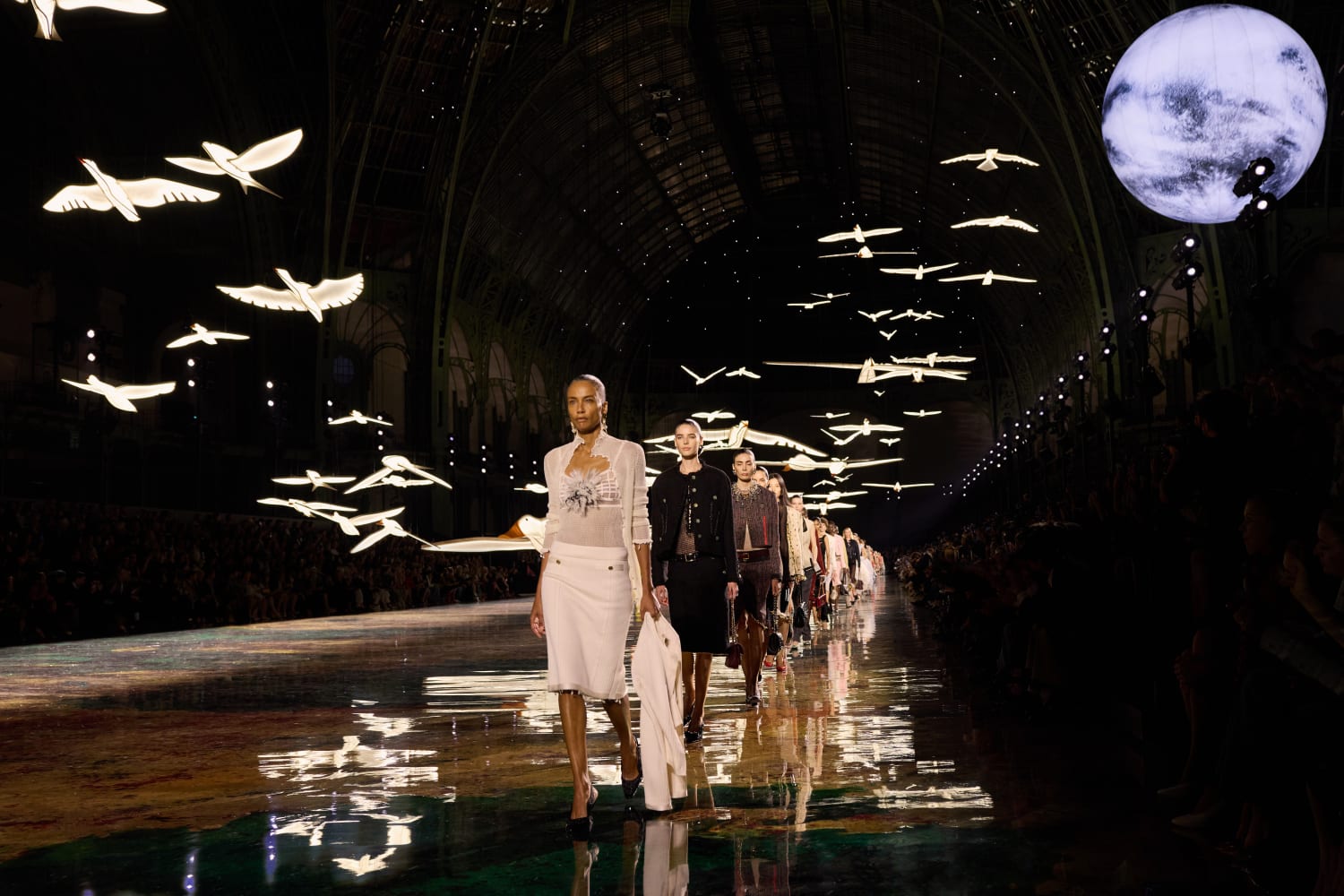
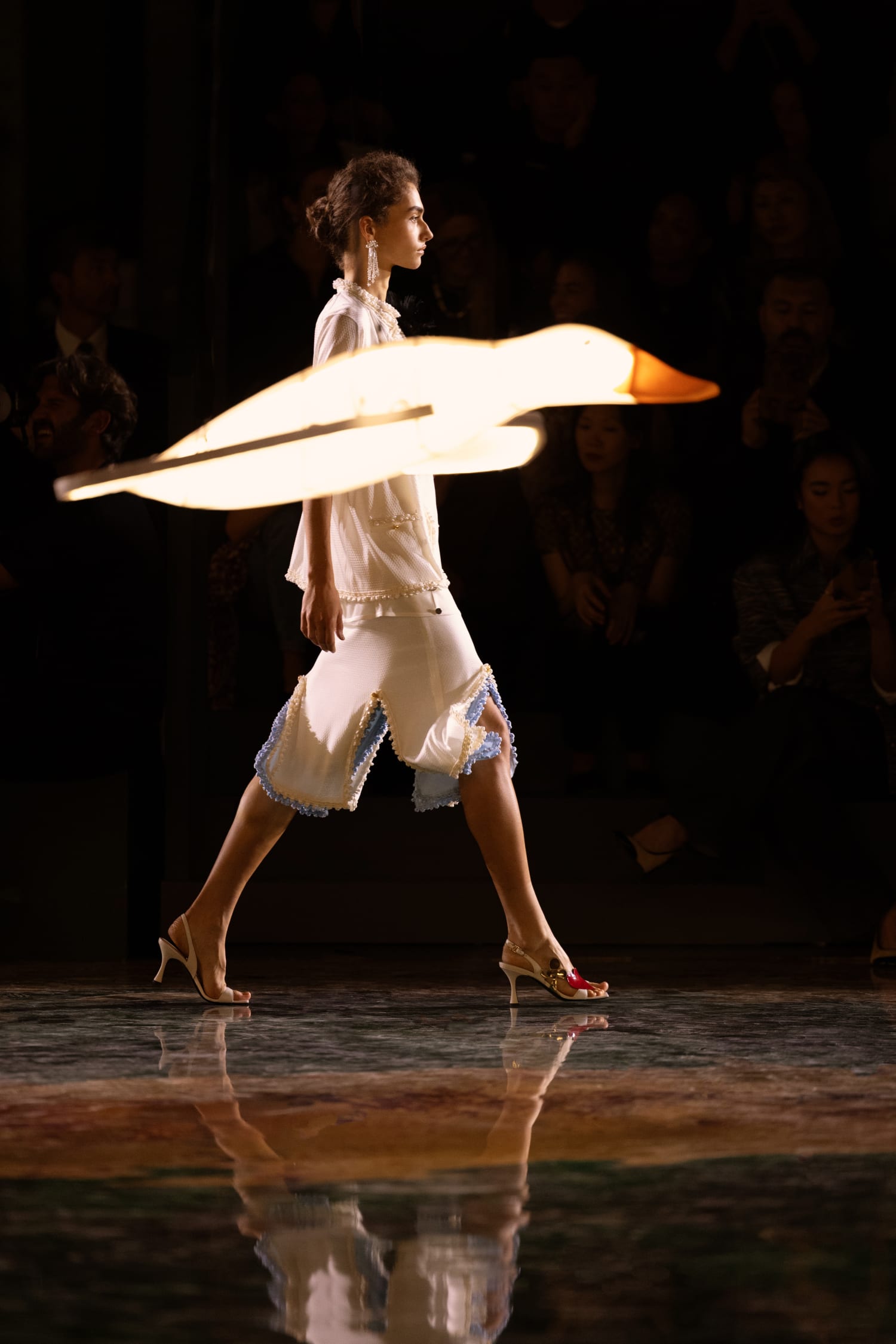
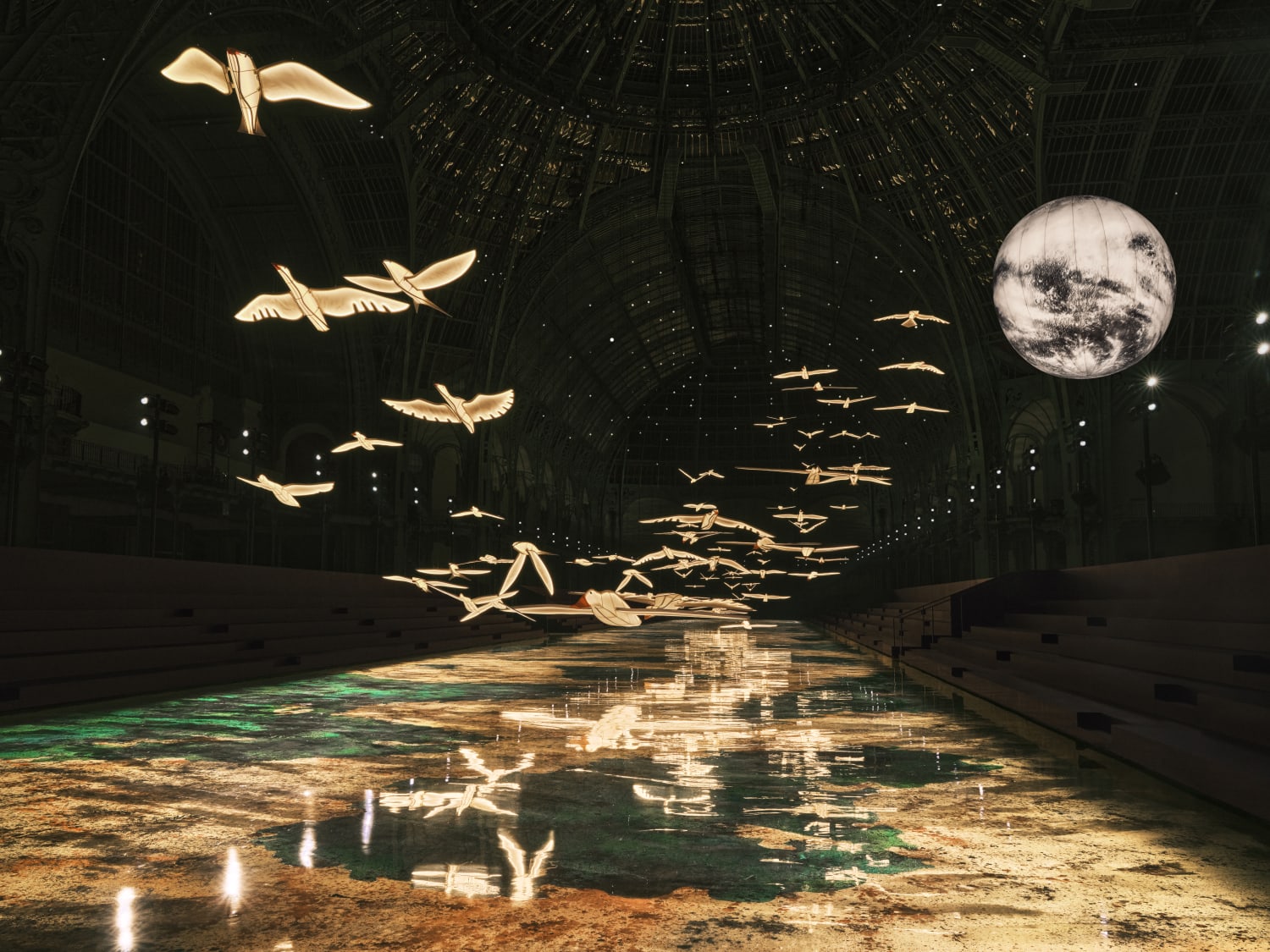
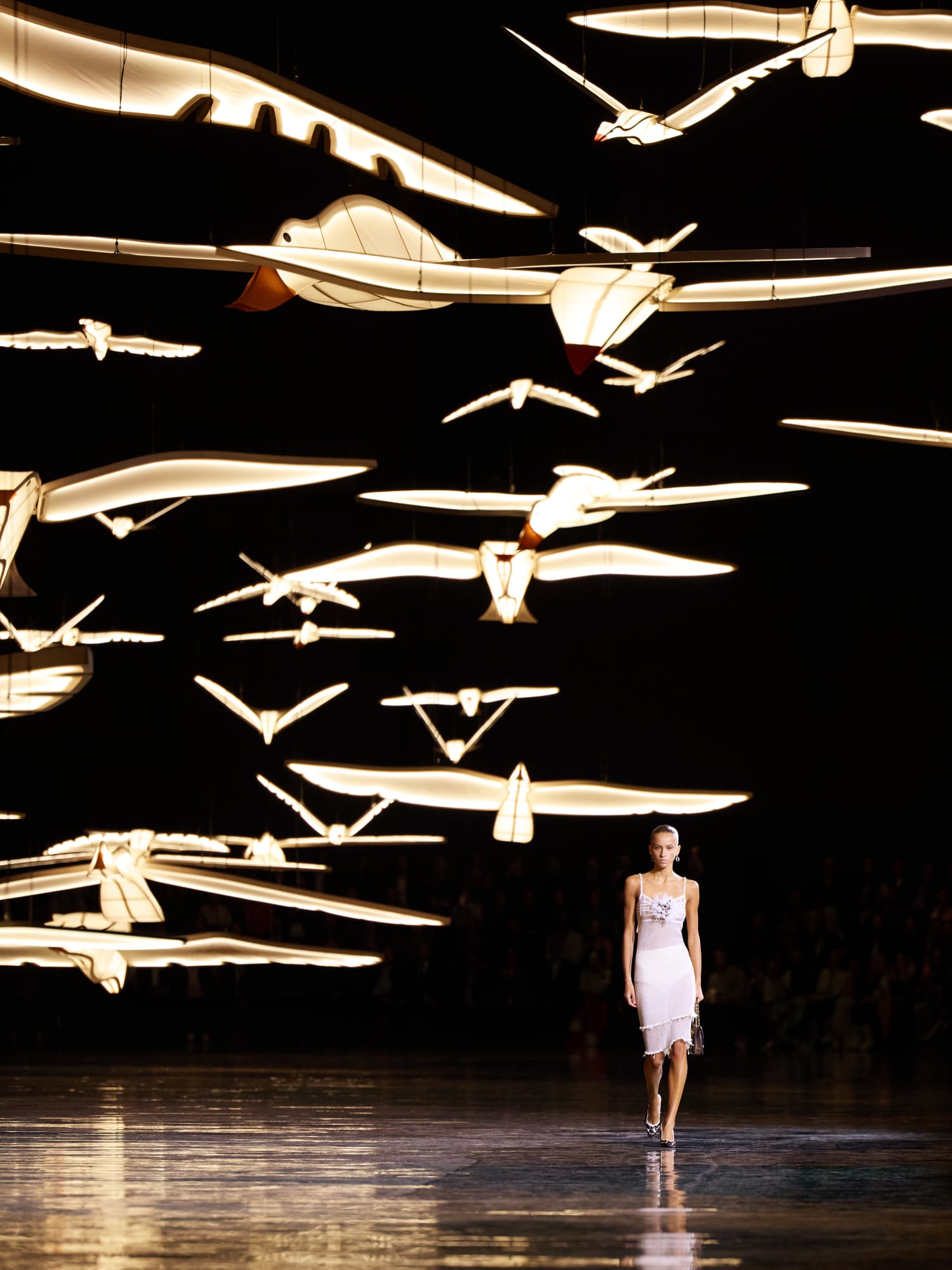
Chanel presented its Spring-Summer 2027 collection at the Grand Palais, in a visually striking setting that accompanied, rather than competed with, a proposal built around the maison’s historical codes and a contemporary reading of femininity. The floor was covered in an abstract painterly composition in shades of orange, terracotta, blue, yellow, red and green, while a large moon and suspended birds occupied the height of the Grand Palais. A monumental scenography that established the universe of the show before the first look appeared.
Once the collection began, attention quickly returned to the clothes. Matthieu Blazy worked from a clearly defined mix of registers: tailoring and fluidity, structure and transparency, classic Chanel elements and much freer gestures. One of the most visible focuses was the silhouette, with waists dropping towards the hips and emphasised through wide belts, hooks and details that altered the usual proportions. This construction gave dresses, trousers and ensembles a more relaxed yet sensual attitude.
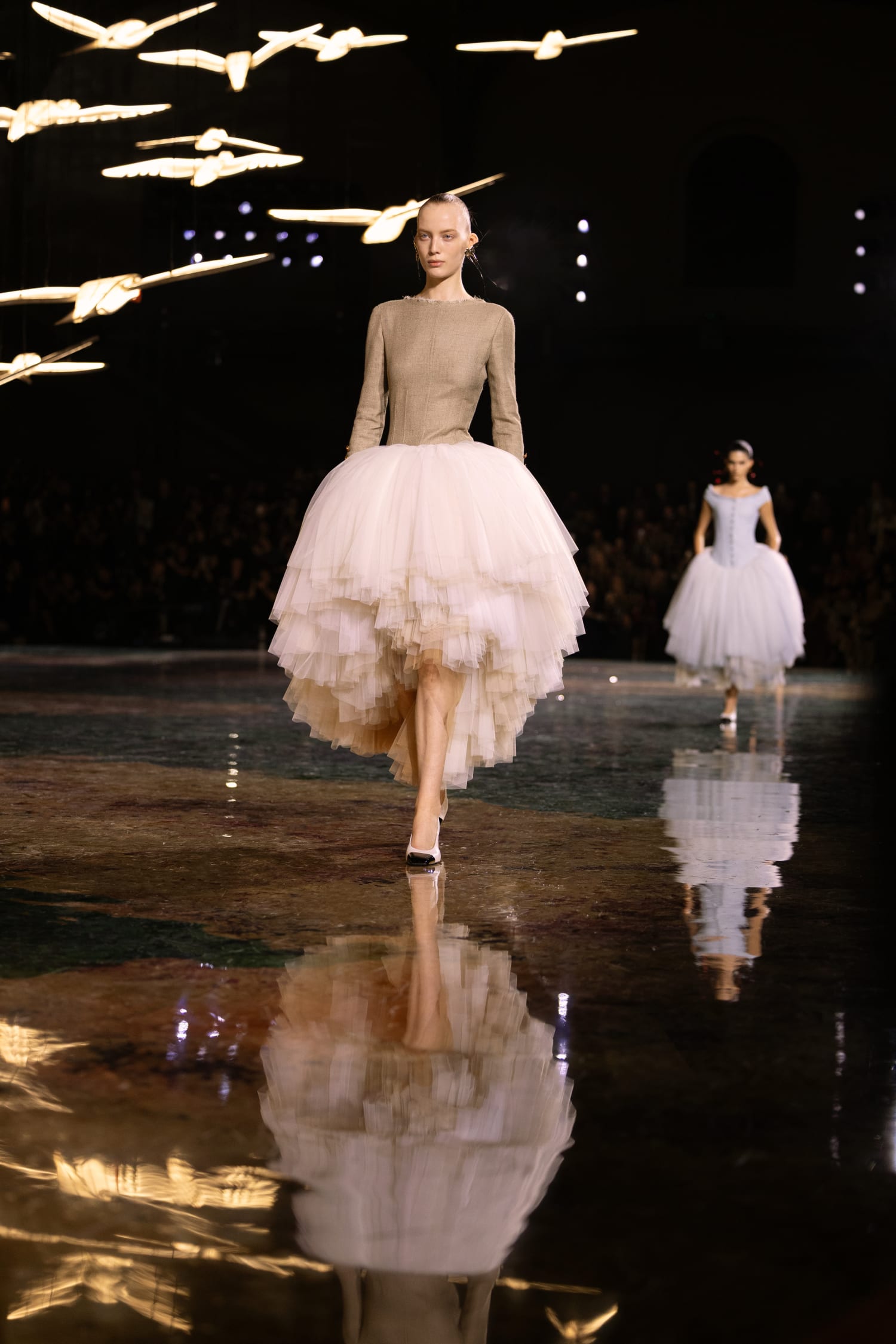
Tailoring played an important role, with structured jackets, wide-leg trousers and black pieces contrasting with the lightness of tulle, silks and sheer fabrics. Elements associated with the world of the ballerina also appeared: fluid layers, pieces with natural drape and volumes designed to follow the movement of the body. However, Blazy avoided an overly romantic interpretation by introducing patent leather, leather and metallic surfaces, creating a constant tension between delicacy and strength.
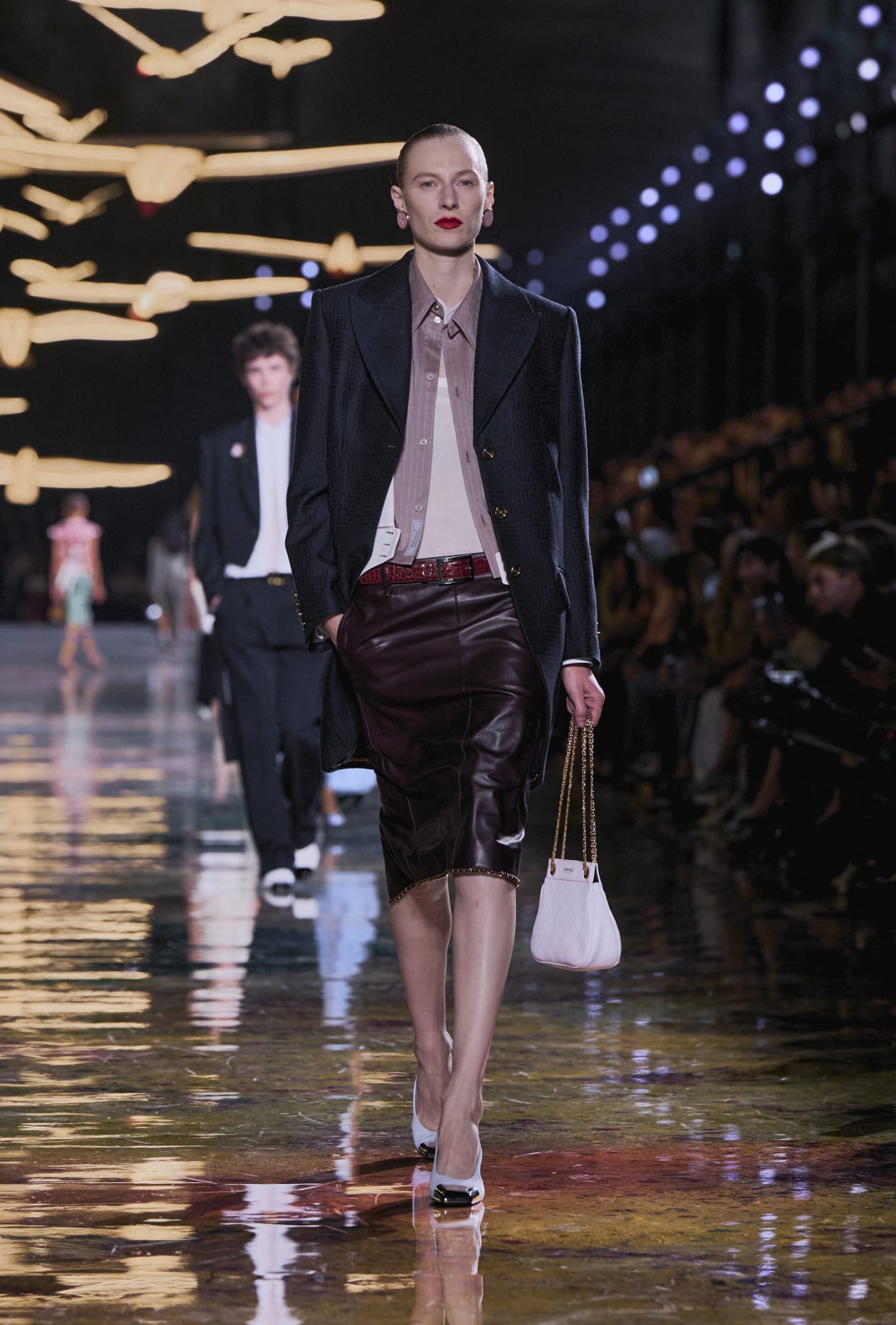
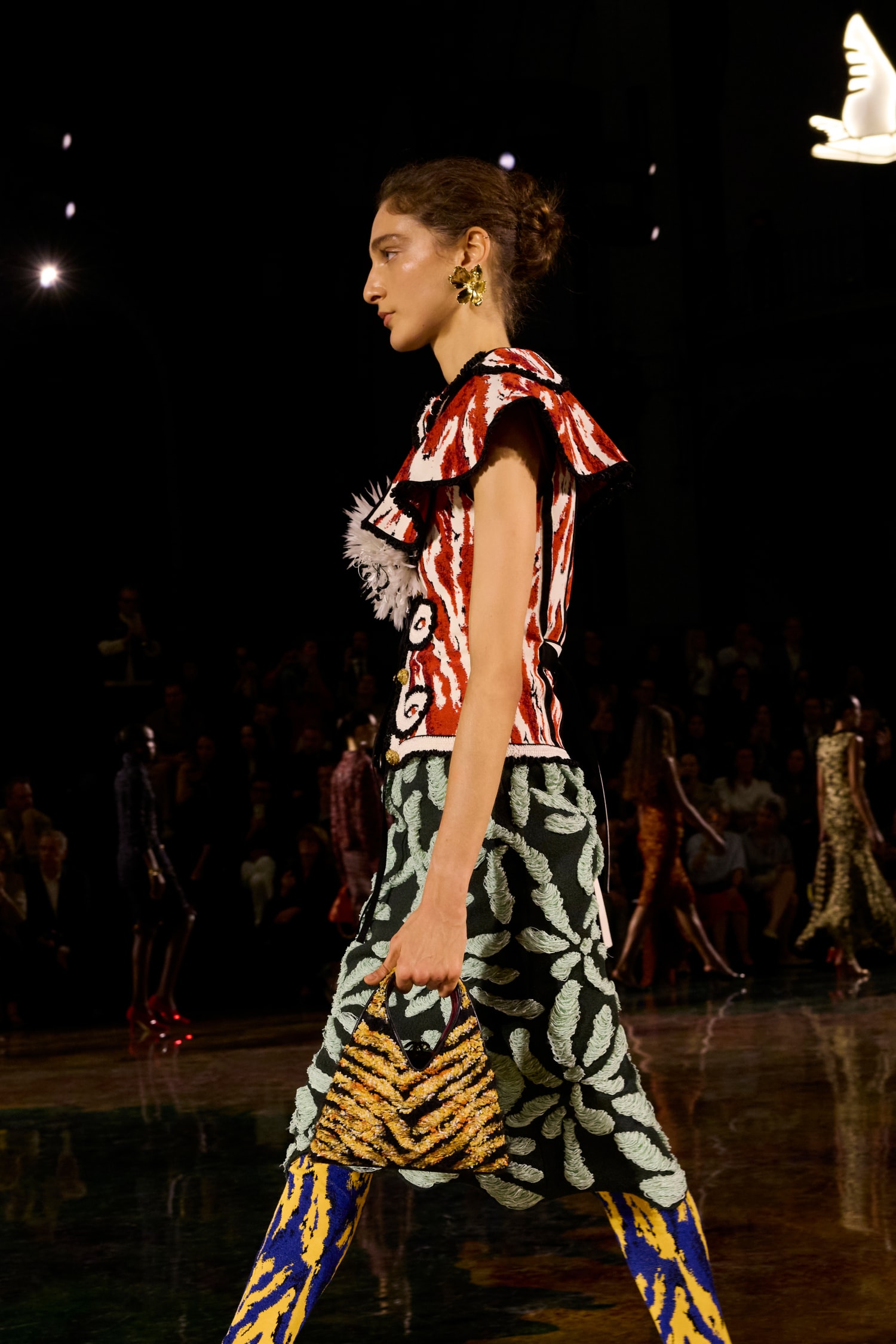
Chanel’s traditional codes remained immediately recognisable, but were treated with a less rigid attitude. Tweed appeared in shorter proportions, across shorts, skirts and compact ensembles, while the richness of the surfaces extended to embroidery, appliqués, glossy finishes and tortoiseshell details. Gold and silver appeared across footwear and accessories, alongside unexpected bursts of colour, particularly intense blues, breaking up more classic combinations.
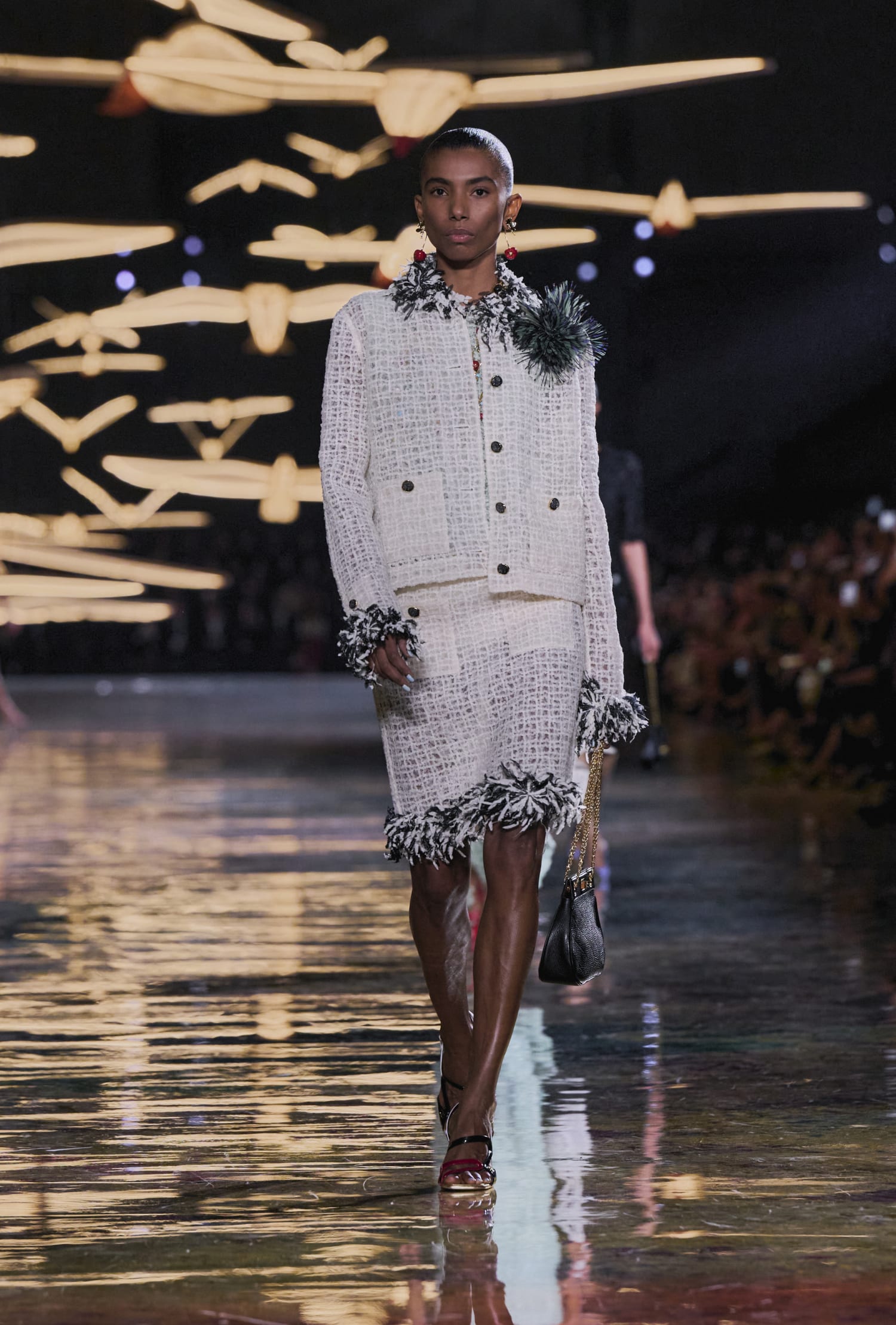
This attention to material also reminds us that, at Chanel, the value of a piece does not lie solely in its final image. Behind a tweed, an embroidery, an appliqué or an accessory lies a sum of techniques, craftsmanship and hours of work that form part of the maison’s savoir-faire and the world of its Métiers d’art. At a time when fashion is increasingly consumed at speed, this dimension takes on a particular meaning: choosing a luxury piece can also mean choosing history, craftsmanship, time and knowledge.
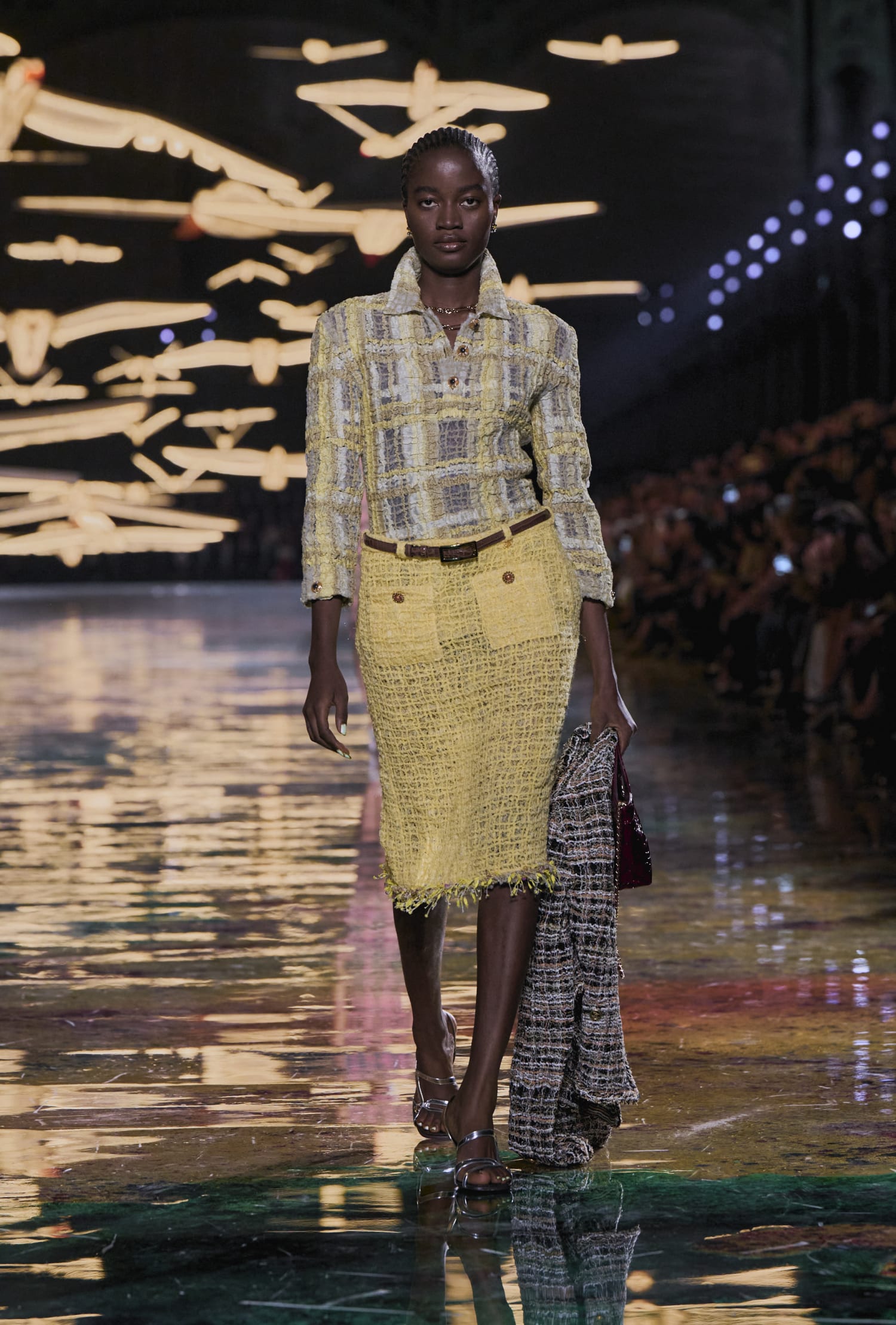
It is also a way of understanding luxury as a lifestyle rather than simply a matter of price. Those who seek these kinds of pieces are not necessarily looking to accumulate objects, but to surround themselves with things that have origin, value and meaning; pieces capable of enduring and of telling something about how they were made. True sophistication is often found in what is not immediately visible: the precision of a finish, a technique passed down through generations or the hours required to make something appear effortless.
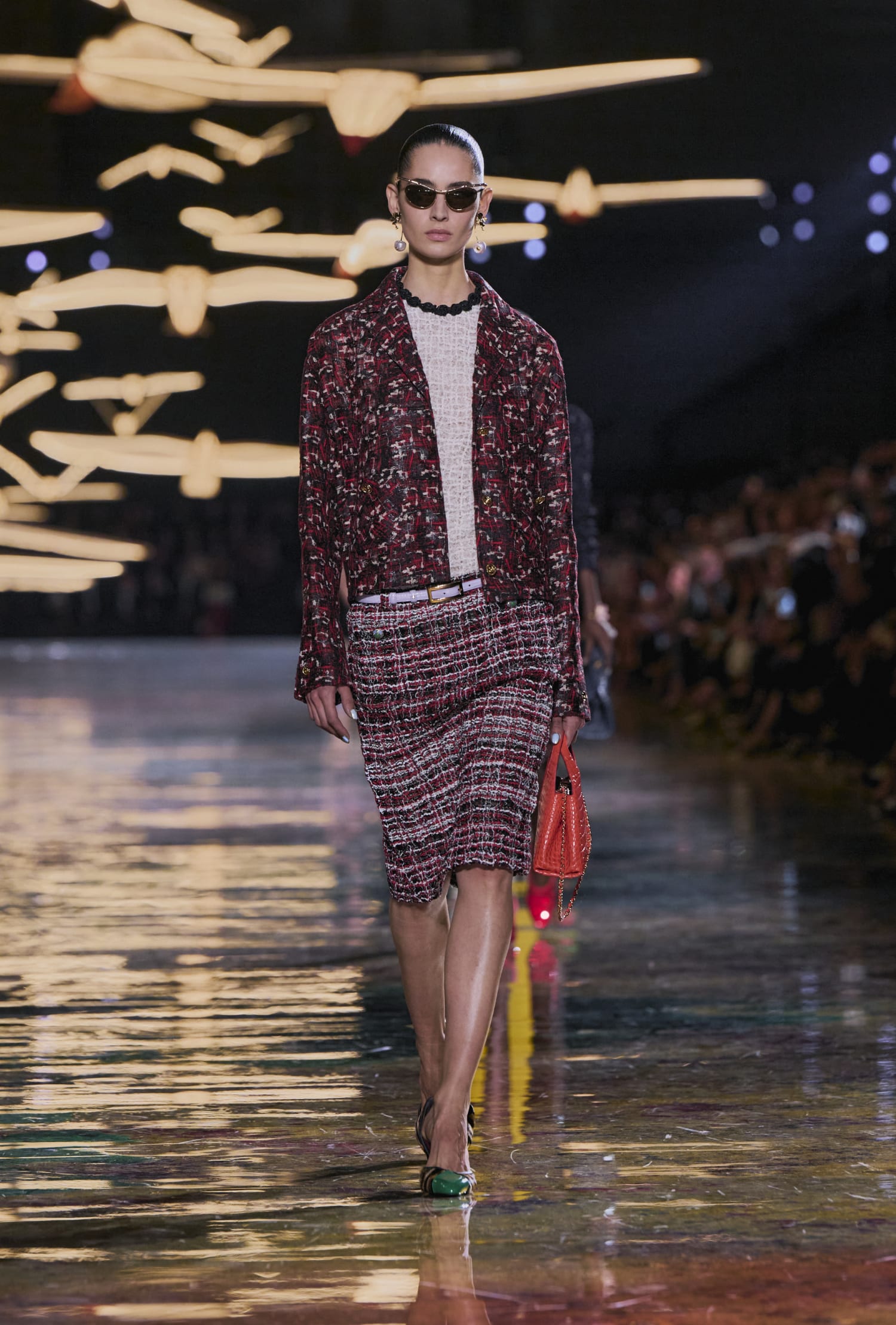
Within the collection, this artisanal depth felt contemporary and light. The richness of the materials and surfaces never functioned as a solemn demonstration of craftsmanship, but rather as an organic part of garments defined by movement, contrast and attitude. Here, tradition and modernity found a point of balance: savoir-faire did not turn the clothes into museum pieces, but gave them the freedom to feel current.
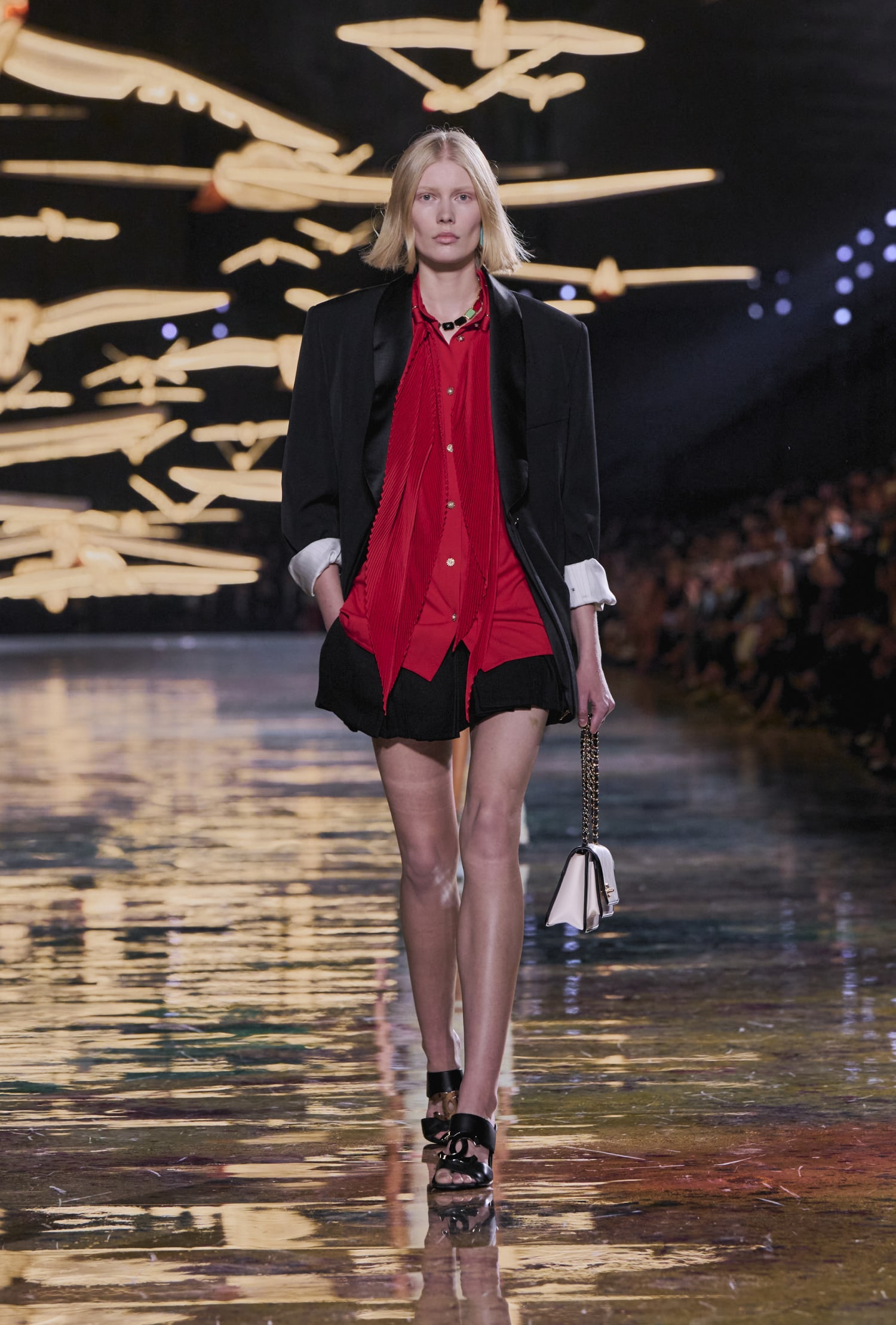
The bags also had an important presence. Structured models appeared alongside small, rigid or decorated pieces that, in some looks, functioned almost like jewellery. More than simple accessories, they formed part of the complete construction of each silhouette and reinforced the visual richness of a collection in which detail carried as much weight as form.
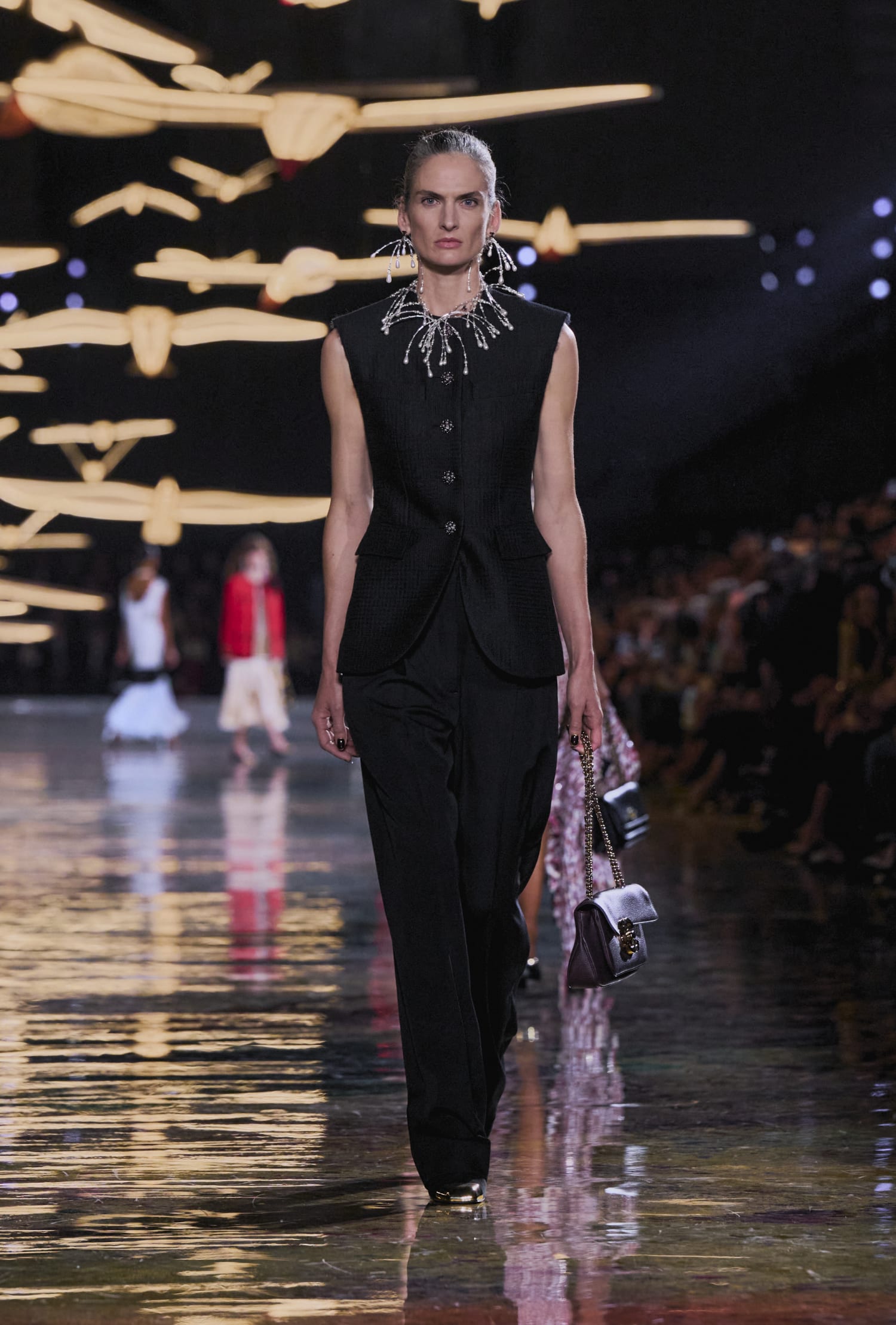
Another of the most notable elements was the casting. The presence of models of different ages, styles and profiles moved the show away from a uniform vision of womanhood. The proposal could shift from a black suit with strict lines to a light and sheer dress, from a more classic silhouette to one that felt much more sensual or experimental. This variety did not feel like a succession of isolated characters, but rather different possibilities within the same idea of the Chanel woman.
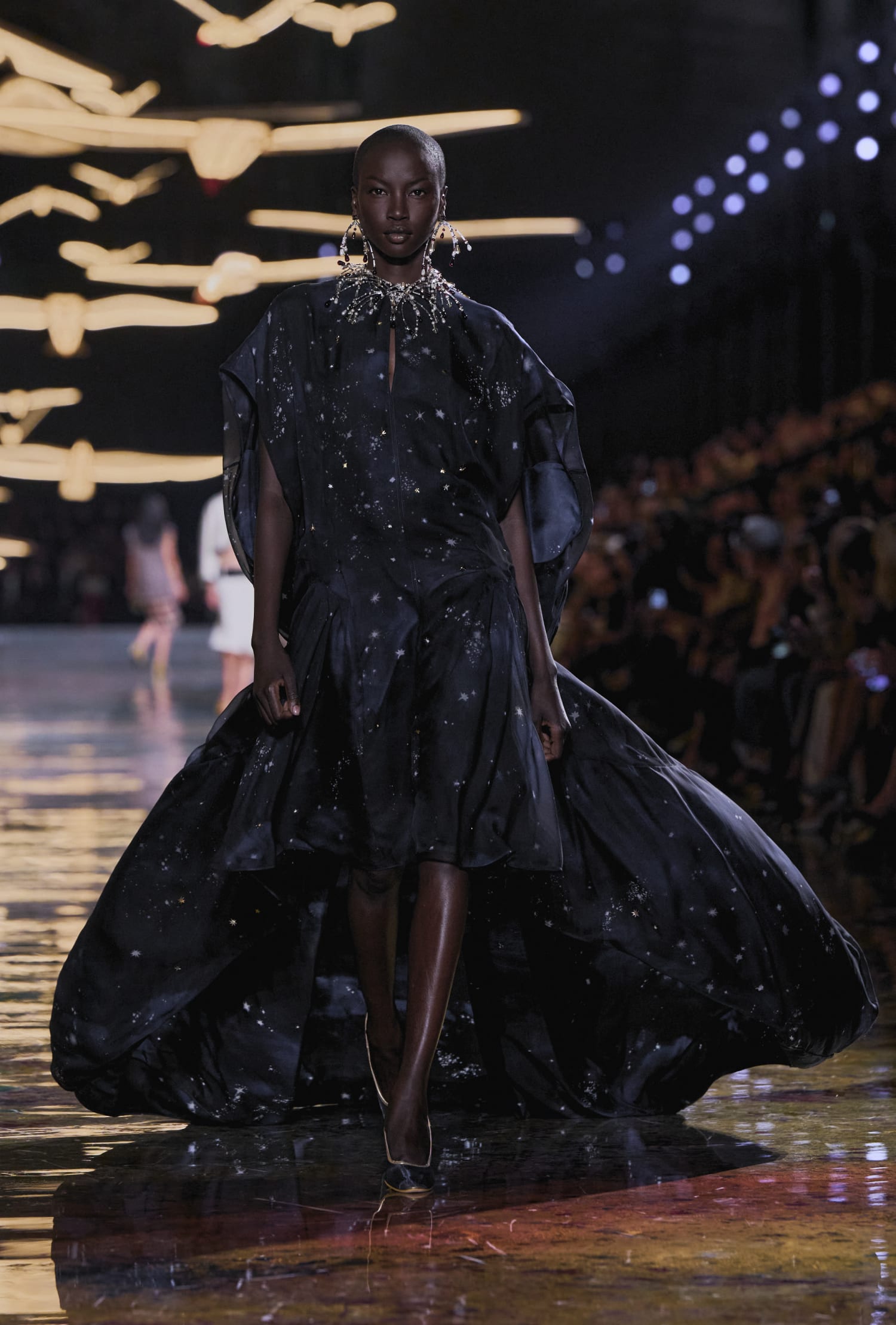
Music ultimately defined this evolution. One of the strongest moments of the show came when Britney Spears’ “Gimme More” began to play. The change in rhythm immediately shifted the energy of the runway: the walk acquired a new sense of confidence, and the looks seemed to reveal a more direct, sensual and assertive dimension. It was one of those moments in which music, attitude and collection naturally came together.
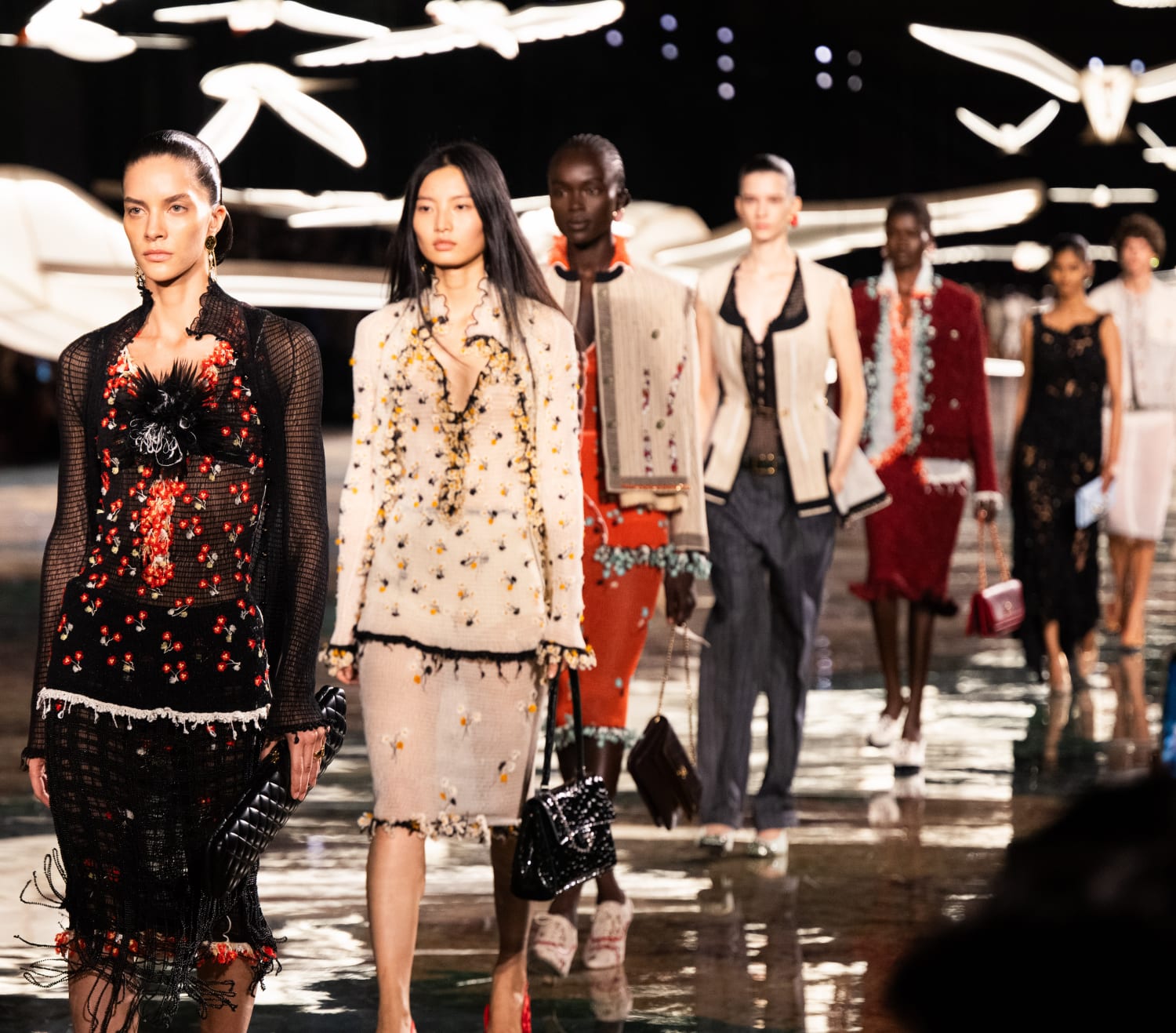
Rather than proposing a break with Chanel’s DNA, Blazy is evolving its codes. The essential elements of the maison remain, but the proportions, associations and, above all, the way they are worn have changed. The result is a Chanel that remains recognisable while feeling less rigid: capable of being young or mature, precise or fluid, restrained or radiant, without being limited to a single definition of elegance.
Spring-Summer 2027 thus confirms the direction Matthieu Blazy is building for Chanel: a renewal that does not need to erase the past in order to move forward, but instead uses the archive, materials and historical codes of the maison as a starting point for a freer, more contemporary and multifaceted woman.
CHANEL SPRING-SUMMER 2027: MATTHIEU BLAZY REAFIRMA UNA NUEVA FEMINIDAD PARA LA MAISON
Por Marcela Mayorga De Meignan, Editor in Chief de REGIA
Chanel presentó su colección Spring-Summer 2027 en el Grand Palais, en una puesta en escena de gran impacto visual que acompañó, sin competir con ella, una propuesta construida sobre los códigos históricos de la maison y una lectura contemporánea de la feminidad. El suelo estaba cubierto por una composición pictórica abstracta en tonos naranjos, terracota, azul, amarillo, rojo y verde, mientras una gran luna y aves suspendidas ocupaban la altura del Grand Palais. Una escenografía monumental que establecía el universo del desfile antes de que apareciera el primer look.
Una vez iniciada la colección, la atención volvía rápidamente a la ropa. Matthieu Blazy trabajó a partir de una mezcla de registros muy definida: sastrería y fluidez, estructura y transparencia, elementos clásicos de Chanel y gestos mucho más libres. Uno de los ejes más visibles estuvo en la silueta, con cinturas que descendían hacia la cadera y aparecían enfatizadas mediante cinturones anchos, ganchos y detalles que modificaban la proporción habitual. Esa construcción daba a vestidos, pantalones y conjuntos una actitud más relajada y, al mismo tiempo, sensual.
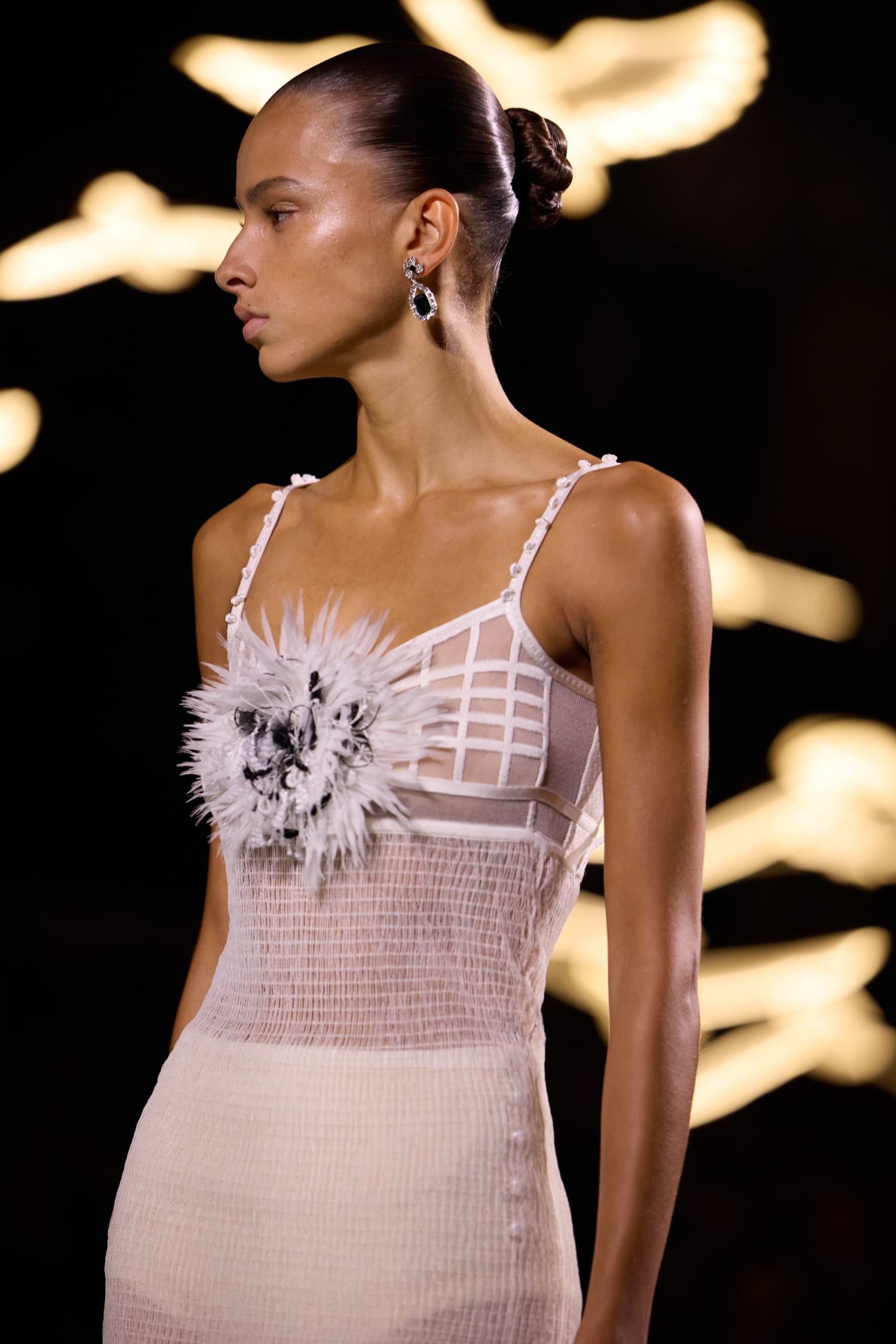
La sastrería tuvo un peso importante, con chaquetas estructuradas, pantalones amplios y piezas negras que contrastaban con la ligereza del tul, las sedas y las transparencias. También aparecieron recursos asociados al universo de la bailarina: capas fluidas, prendas con caída y volúmenes pensados para acompañar el movimiento del cuerpo. Sin embargo, Blazy evitó una lectura excesivamente romántica al introducir charol, cuero y superficies metálicas, creando una tensión constante entre delicadeza y fuerza.
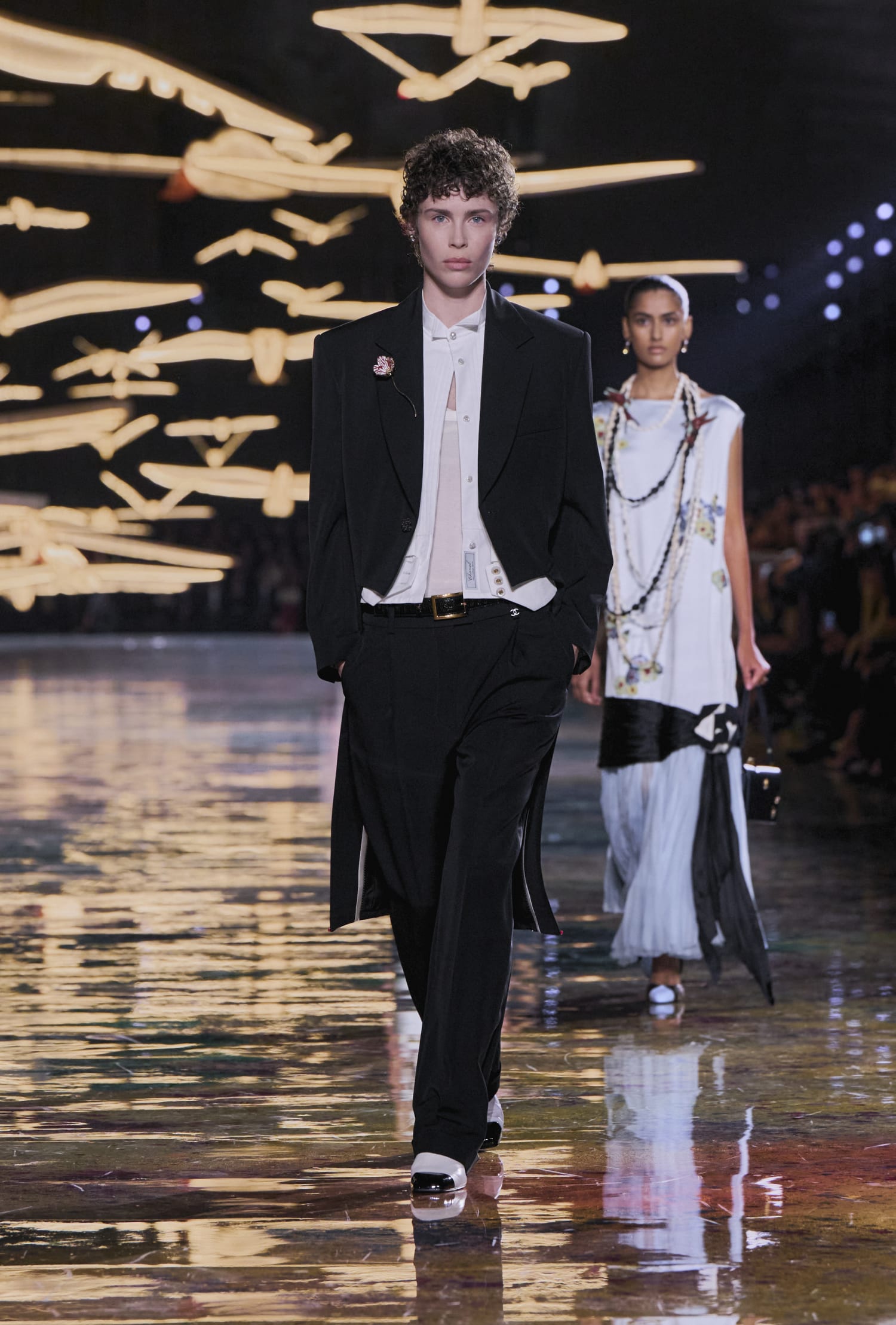
Los códigos tradicionales de Chanel seguían siendo inmediatamente reconocibles, pero eran tratados con una actitud menos rígida. El tweed apareció en proporciones más breves, en shorts, faldas y conjuntos compactos, mientras la riqueza de las superficies se extendía a bordados, aplicaciones, acabados brillantes y detalles de carey. Dorados y plateados aparecieron en el calzado y los accesorios, junto a inesperados golpes de color, especialmente azules intensos, que rompían con las combinaciones más clásicas.
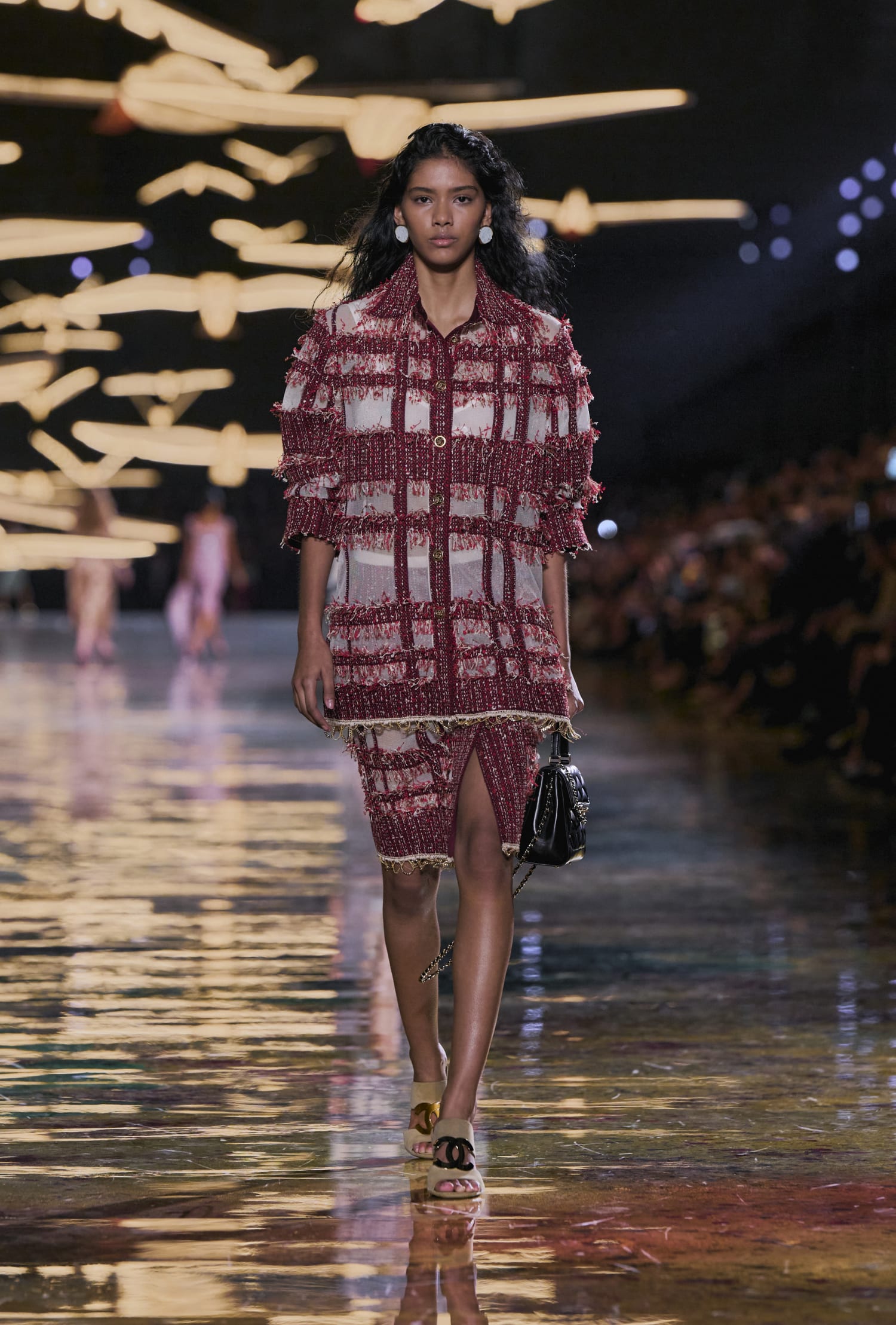
Esa atención a la materia también recuerda que, en Chanel, el valor de una pieza no reside únicamente en su imagen final. Detrás de un tweed, un bordado, una aplicación o un accesorio existe una suma de técnicas, oficios y horas de trabajo que forman parte del savoir-faire de la maison y del universo de sus Métiers d’art. En un momento en que la moda se consume cada vez más rápido, esa dimensión adquiere un significado particular: elegir una pieza de lujo también puede significar elegir historia, artesanía, tiempo y conocimiento.
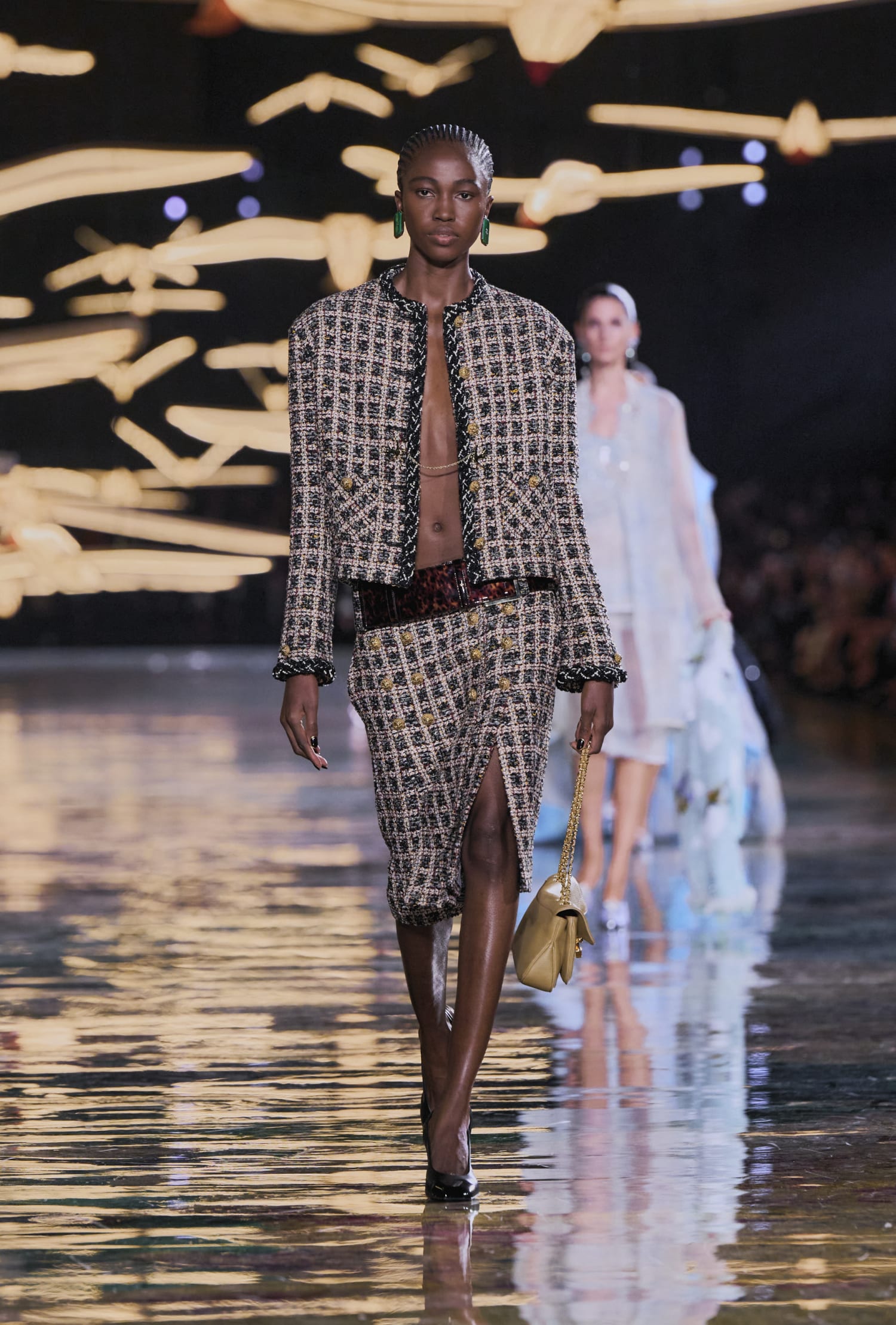
Es, además, una manera de entender el lujo como un estilo de vida y no simplemente como una cuestión de precio. Quien busca este tipo de piezas no necesariamente busca acumular objetos, sino rodearse de cosas con origen, valor y sentido; piezas capaces de permanecer y de contar algo sobre cómo fueron hechas. La verdadera sofisticación está muchas veces en aquello que no se ve a primera vista: la precisión de una terminación, una técnica transmitida durante generaciones o las horas necesarias para conseguir que algo parezca effortless.
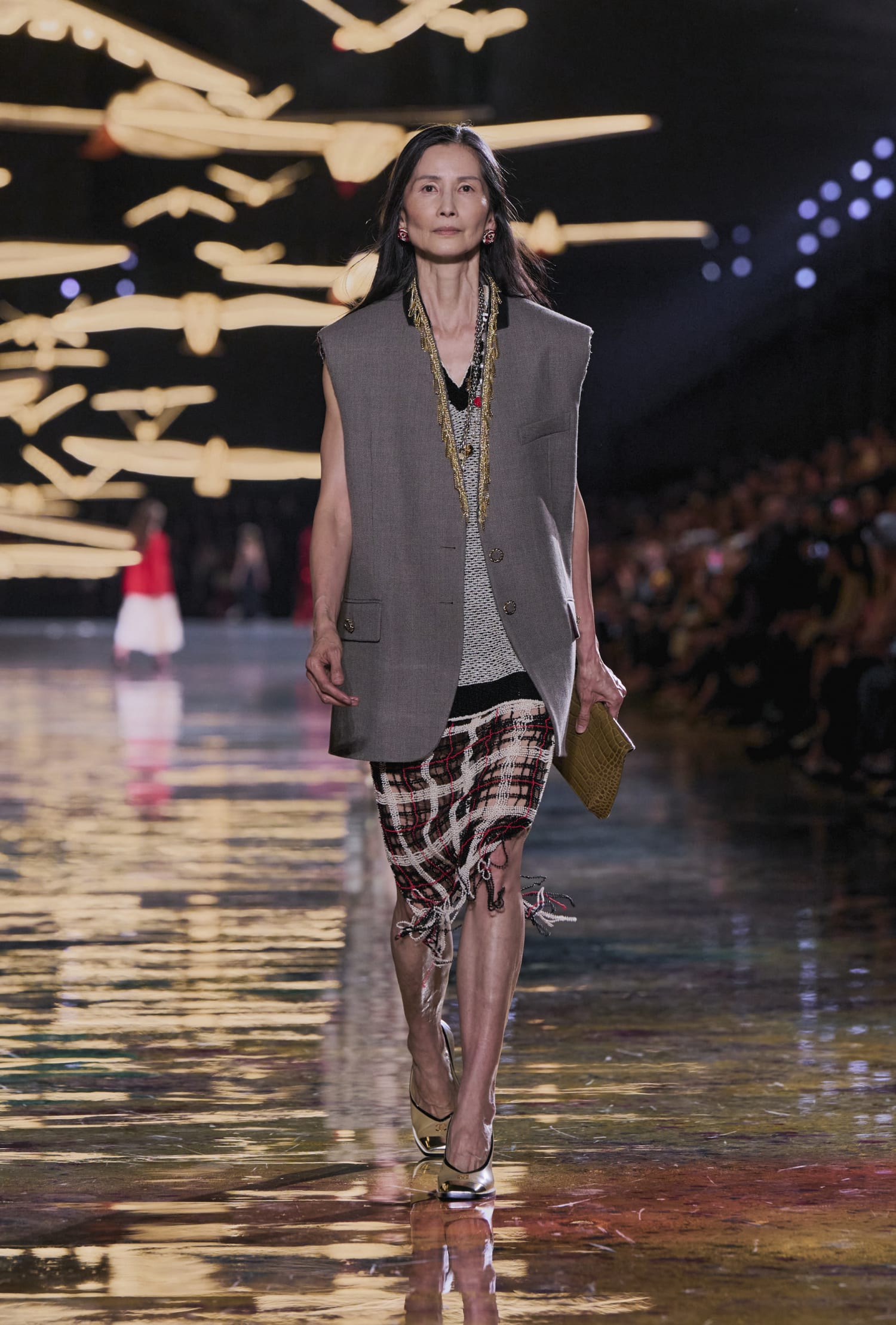
En la colección, esa profundidad artesanal se sentía contemporánea y ligera. La riqueza de materiales y superficies nunca funcionaba como una demostración solemne de oficio, sino como parte orgánica de prendas con movimiento, contraste y actitud. Ahí tradición y modernidad encontraban un punto de equilibrio: el savoir-faire no convertía la ropa en una pieza de museo, sino que le daba la libertad de sentirse actual.
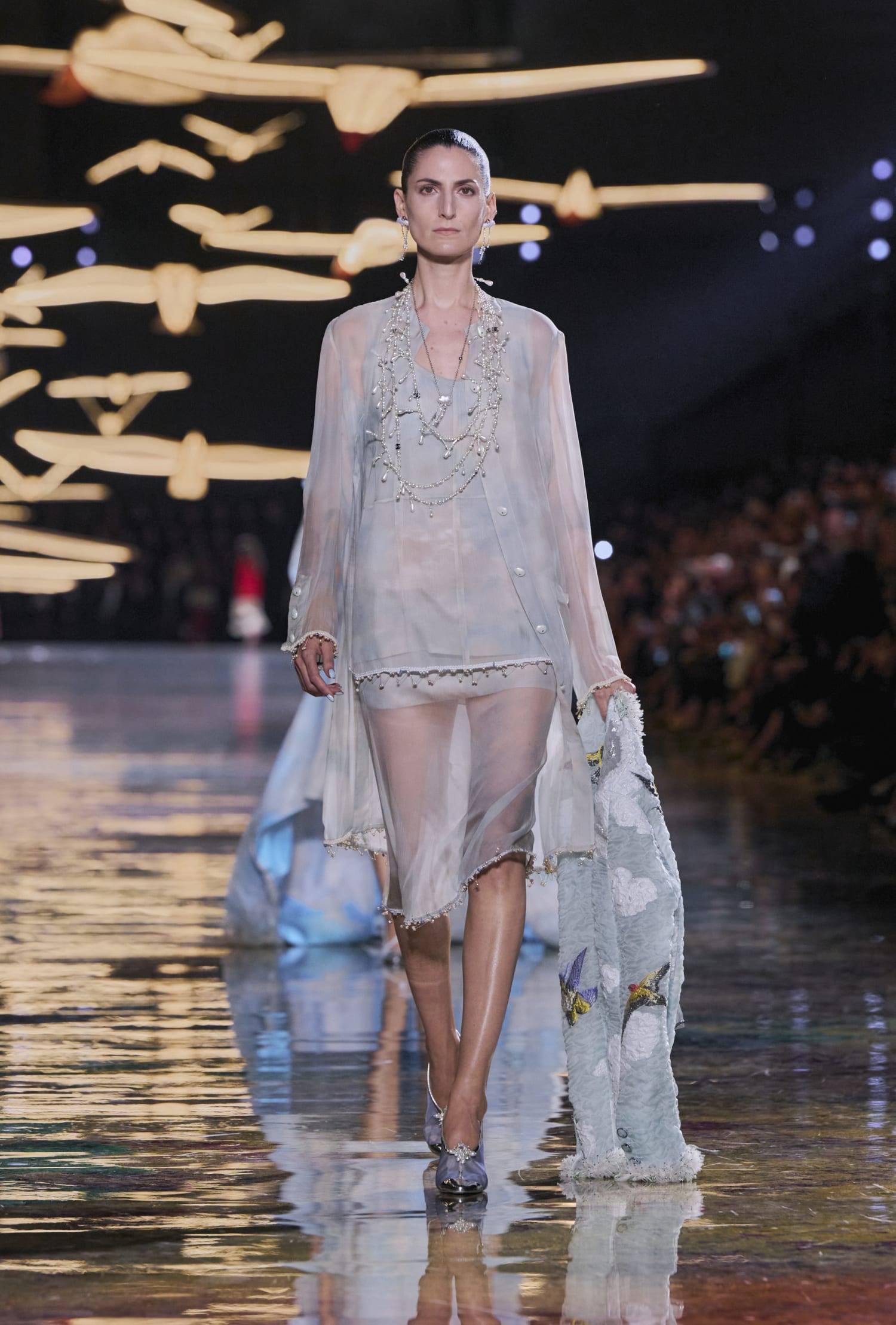
Los bolsos tuvieron igualmente una presencia importante. Modelos estructurados convivían con piezas pequeñas, rígidas o decoradas que, en algunos looks, funcionaban casi como joyas. Más que simples complementos, formaban parte de la construcción completa de cada silueta y reforzaban la riqueza visual de una colección donde el detalle tenía tanto peso como la forma.
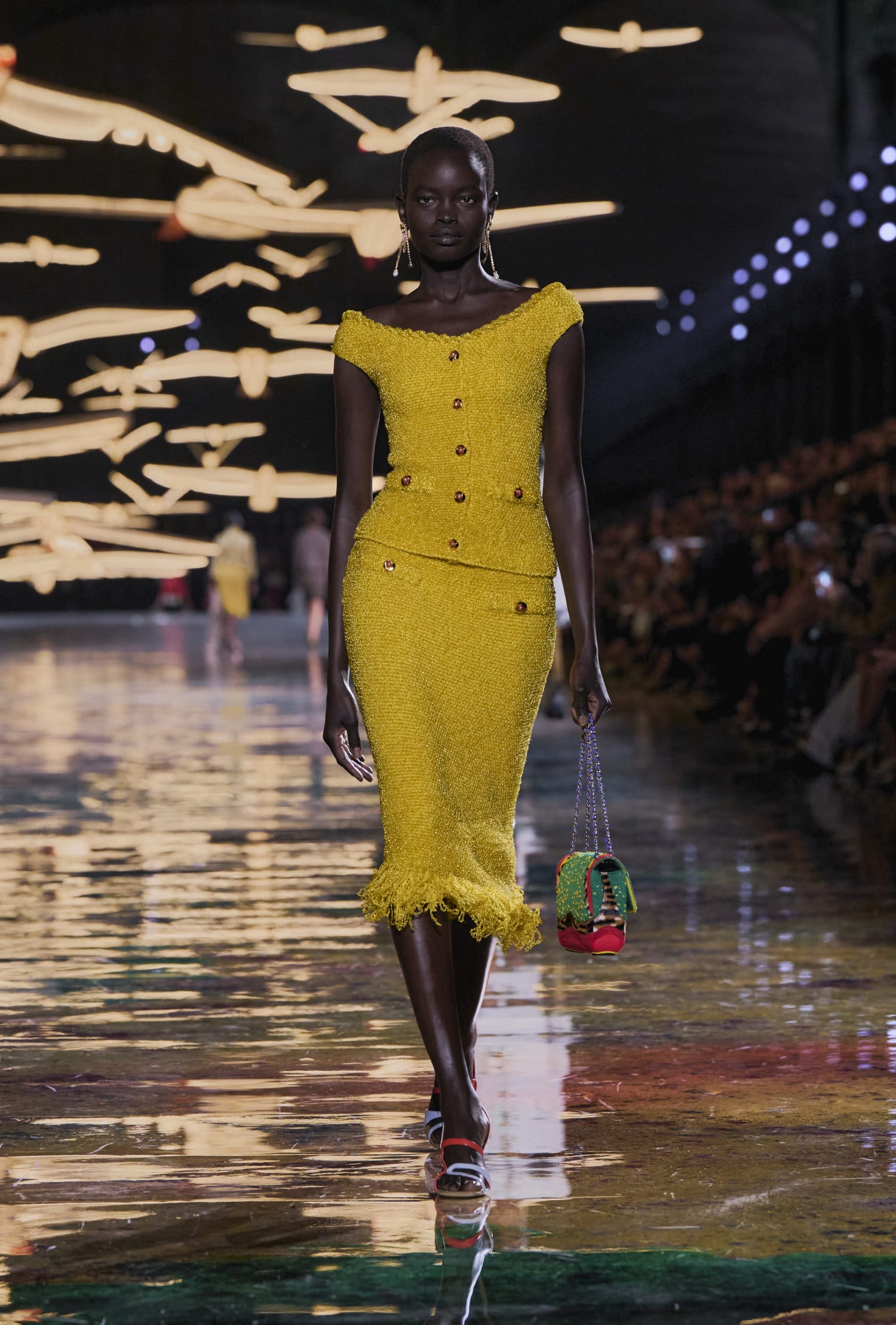
Otro de los elementos más destacables fue el casting. La presencia de modelos de distintas edades, estilos y perfiles alejaba el desfile de una visión uniforme de la mujer. La propuesta podía pasar de un traje negro de líneas estrictas a un vestido ligero y transparente, de una silueta más clásica a otra mucho más sensual o experimental. Esa variedad no se percibía como una sucesión de personajes aislados, sino como distintas posibilidades dentro de una misma idea de mujer Chanel.
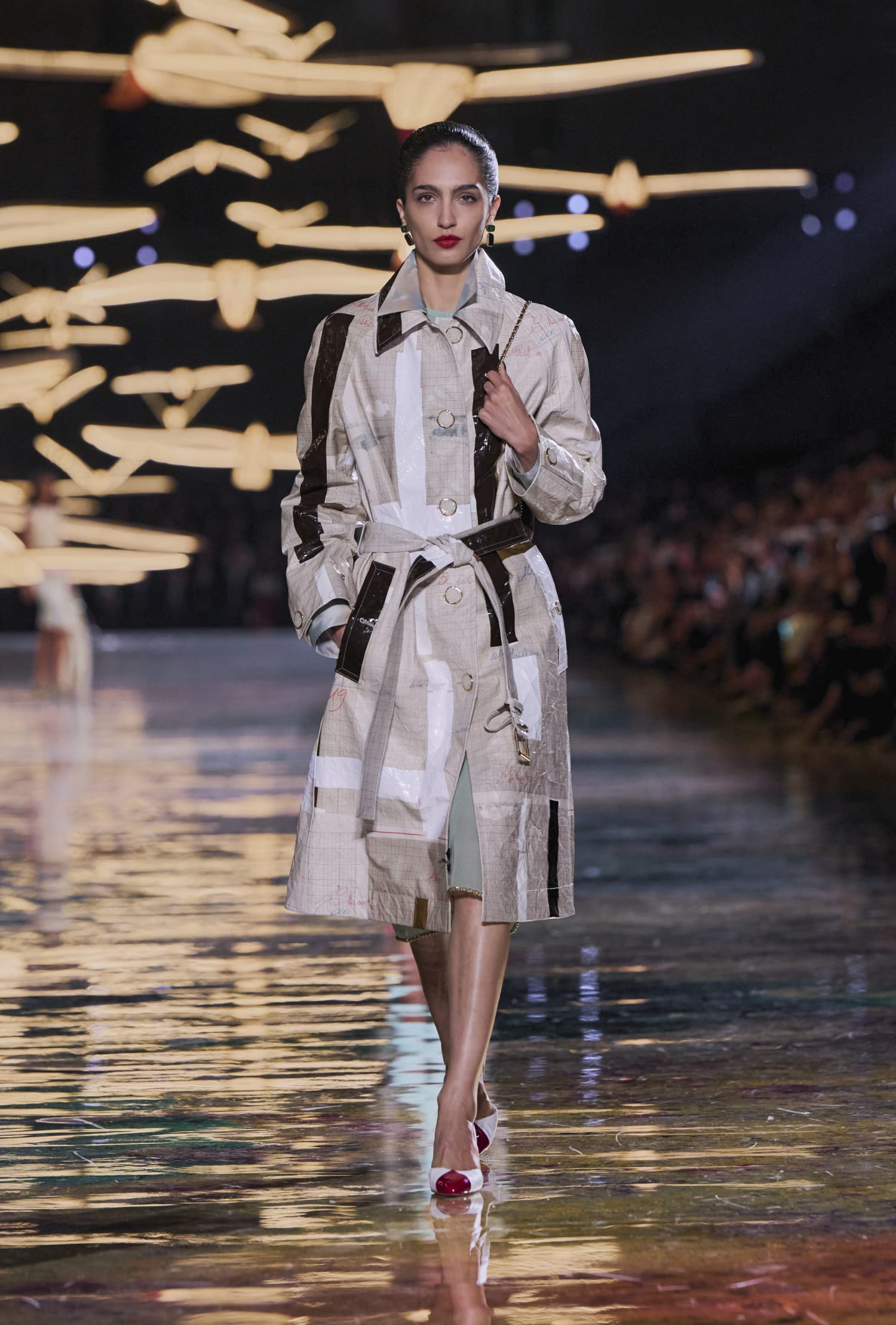
La música terminó de definir esa evolución. Uno de los momentos más fuertes del show llegó cuando comenzó a sonar “Gimme More” de Britney Spears. El cambio de ritmo modificó de inmediato la energía del desfile: la caminata adquirió otra seguridad y los looks parecieron revelar una dimensión más directa, sensual y afirmativa. Fue uno de esos momentos en los que música, actitud y colección terminaron encontrándose de manera natural.
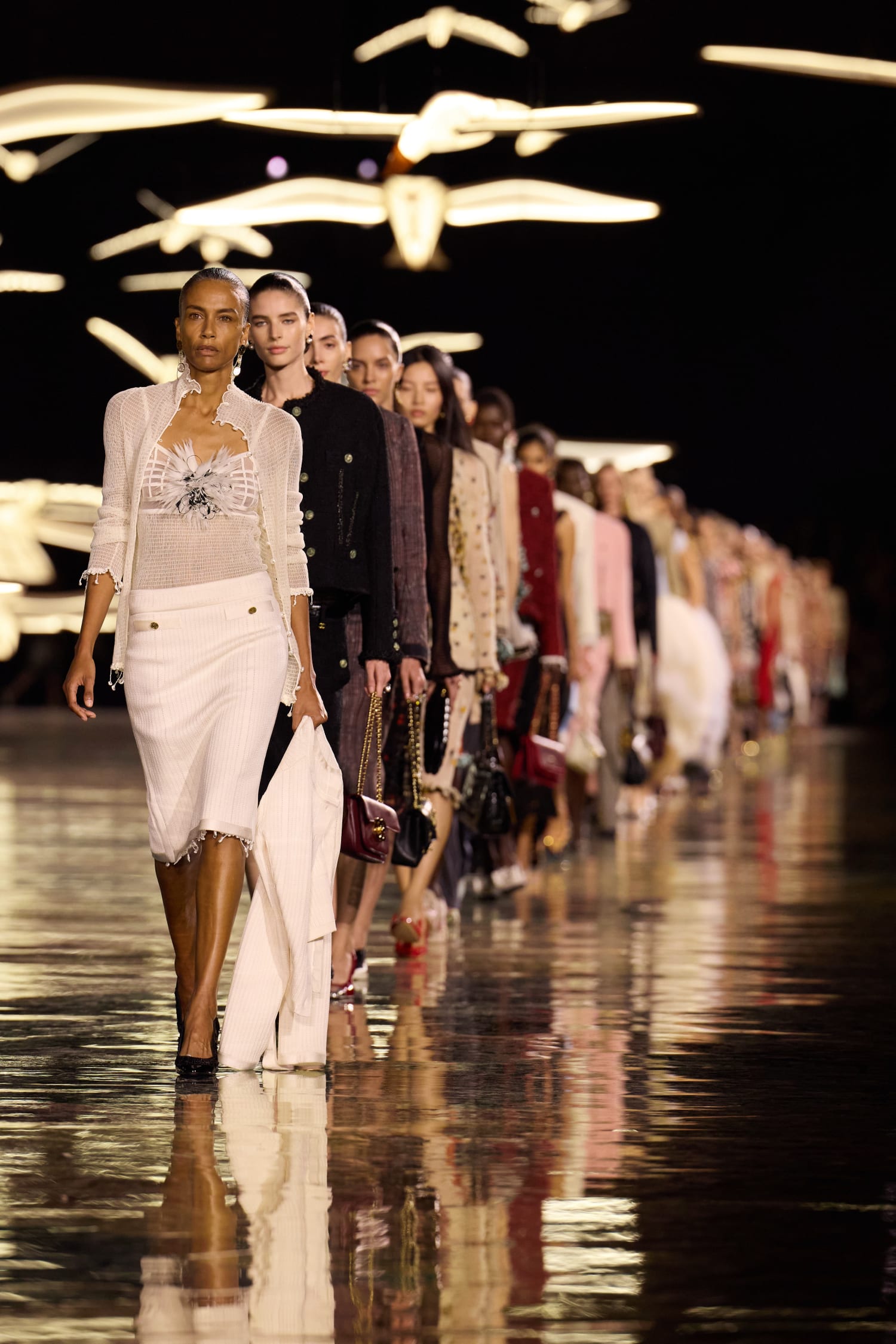
Más que plantear una ruptura con el ADN de Chanel, Blazy propone una evolución de sus códigos. Los elementos esenciales de la maison permanecen, pero cambian las proporciones, las asociaciones y, sobre todo, la manera en que son llevados. El resultado es una Chanel reconocible y al mismo tiempo menos rígida: capaz de ser joven o madura, precisa o fluida, sobria o brillante, sin quedar limitada a una única definición de elegancia.
Spring-Summer 2027 confirma así la dirección que Matthieu Blazy está construyendo para Chanel: una renovación que no necesita borrar el pasado para avanzar, sino que utiliza el archivo, los materiales y los códigos históricos de la maison como punto de partida para una mujer más libre, contemporánea y múltiple.
Photos: Copyright CHANEL