
Interview by Catalina Roman
Faye Toogood wants a chair to feel “almost like a hug”. She also wants it to be something you are still using in thirty years. Comfort, for her, has as much to do with the life of an object as with the first moment you sit down.
Her work moves between furniture, interiors, art and fashion. The British artist and designer studied art history, spent eight years at The World of Interiors and established her London studio in 2008. When we talk about where a design begins, she returns to small things: clay, wire, cardboard and the surprises that happen while making.
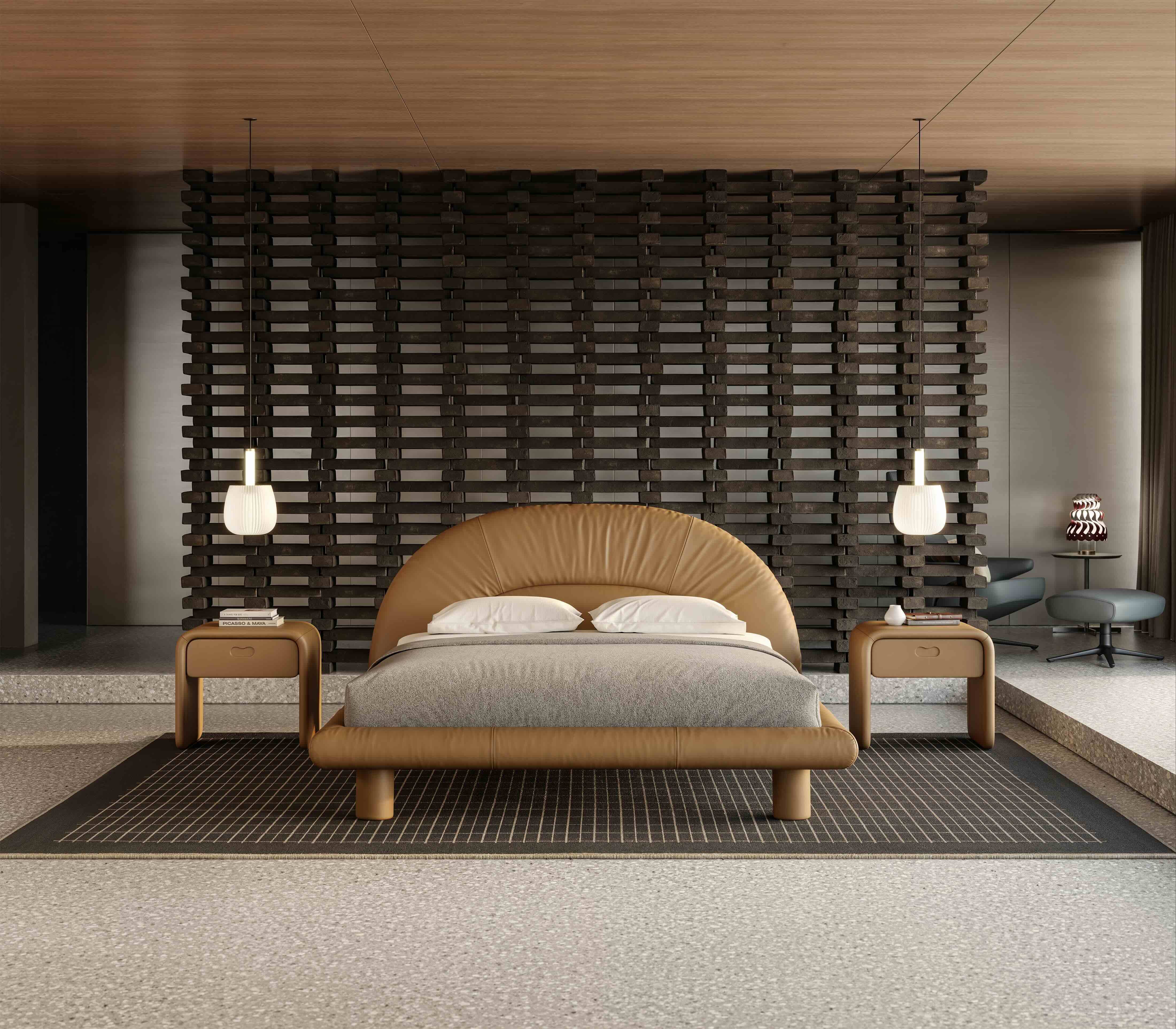
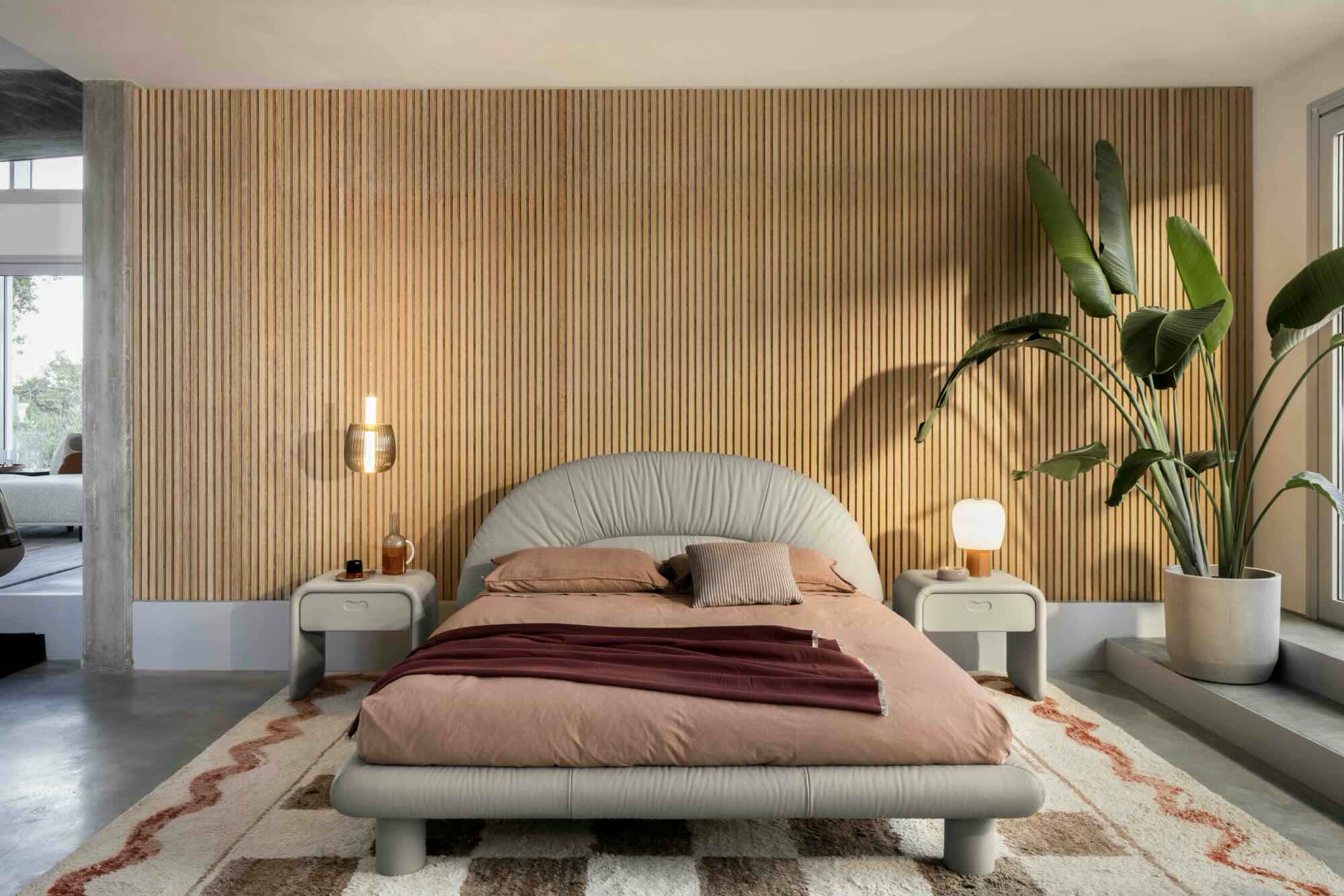
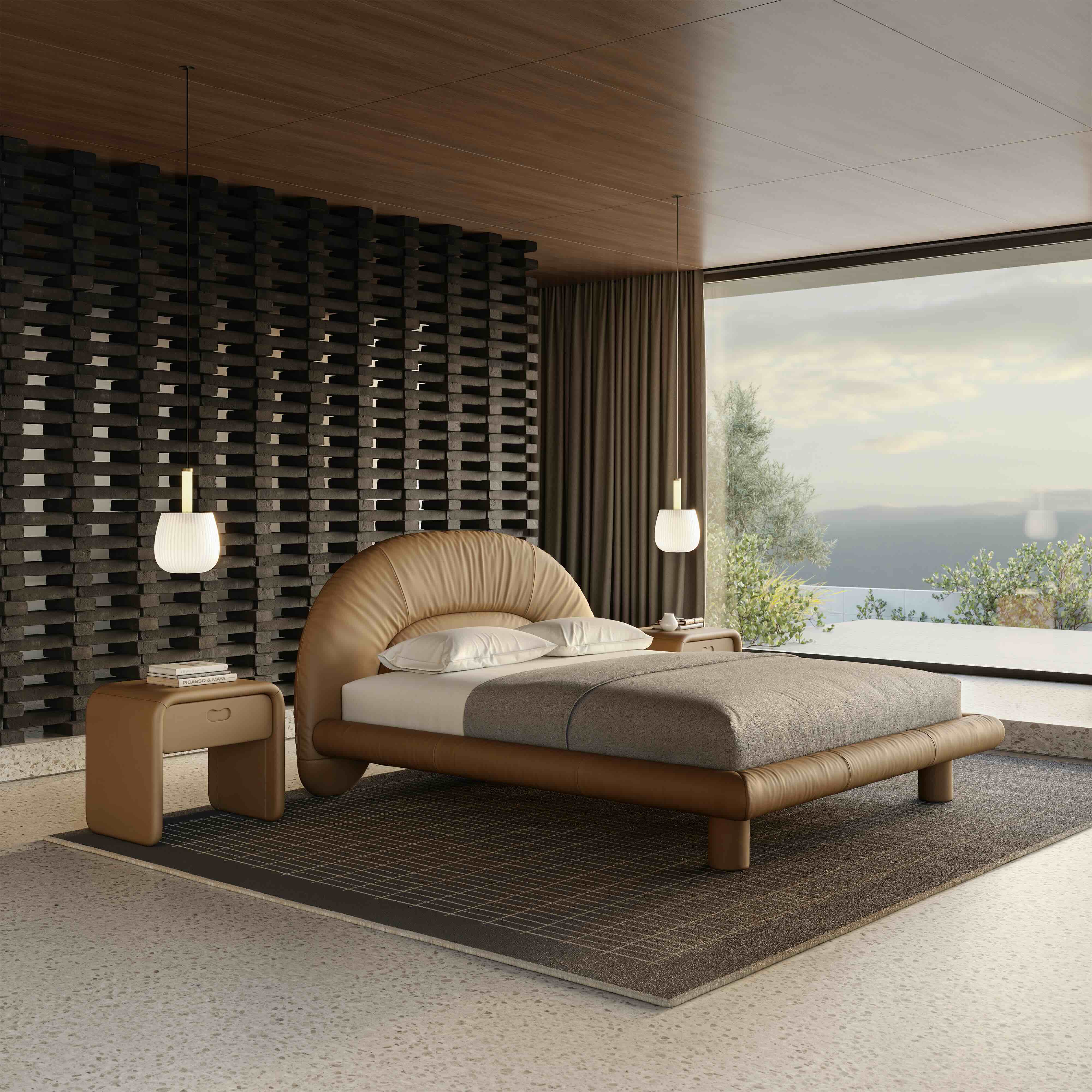
In her collaboration with Poltrona Frau, that approach gives leather room to gather, fall and move. Squash, launched in 2024, brought generous, inviting forms to the armchair. The LieLow bed and bedside tables followed in 2026. In the bed’s curved, padded headboard, leather gathers into folds that are deliberately part of the design. In Milan, we talked about learning through making, dressing a room as you would dress yourself, and why she sees her future in craft.
Beginning a project can be the hardest part. Where does your design process start?
For me, the process always starts with making. I spend a lot of time model-making in the studio, making maquettes, small versions of things. We use clay, wire, cardboard, any materials we have to hand, really. They provide the starting points. It is often difficult to get started. You might find something inspiring, but then your work can end up looking like someone else’s. You are trying to feel inspired and develop something without taking directly from another person’s work. The easiest way for me is to generate models, drawings and paintings. From there, I start putting things together, and it begins to make sense. It is about finding those unexpected combinations.
Where do you go when you need inspiration?
Nature and landscape, and also sculpture. Overall, though, nature and landscape provide me with the most inspiration. Sometimes being in a landscape simply gives me clarity; sometimes I am responding to a shape, a material or a colour. I would say about ninety per cent of my inspiration comes from nature and landscape. I love going to museums, galleries and libraries, but I think it is better when I am outside.
Leather is central to Poltrona Frau’s identity. What did you want to do differently with it?
Poltrona Frau is famous for its leather, and they use it beautifully. The craftsmanship is really amazing. But I wanted to use it in a more expressive way. I wanted it to feel more irregular, rather than completely stretched and hard. More human, in a way. The pieces I have designed, the bed and the Squash chair, allow the leather to move and be expressive.
How did the leather itself influence the design process?
It is hard because, at the end of the day, it does not really stretch. If you want it to fall, move and create gathers, you have to allow for that. It does not have that kind of give, so you have to scrunch it to make the shape. There are also so many different types and qualities of leather. If you do not get the right leather for a particular design, it might not work. You have to understand its qualities before deciding which leather suits a piece of furniture.
Do you have a favourite piece, and how should it feel to live with?
For me, it is probably the Squash chair. I want people to use it forever. It needs to feel as though it has been there forever, and that you can still use it in thirty years’ time. I want people to feel super comfortable and relaxed, almost like a hug.
Do you imagine it styled in a particular way?
No. One of the things I love is creating pieces that people can decide how to use. What is nice about Poltrona Frau is that you can choose the colour and the leather, so you can make it very individual to you. I used to design clothes, and I like the idea that you can decide how to dress yourself according to your own individual style. I think it is the same with interiors. You need to decide your own style.
And what would your own choice be?
Personally, I would probably choose cream leather. That would be my ultimate.
What has working with Poltrona Frau taught you about making furniture?
It has been a really good learning curve. Poltrona Frau is such an established Italian manufacturer. For me, it has been about understanding how a big business like this operates, how they work and how they put out collections. They take a lot of time and care. They do things carefully and slowly. They do not release huge numbers of new pieces every year, so they are quite cautious in that way. But they get it right, rather than just doing more and more, which I think is impressive. I work directly with the head of furniture production, so the process is quite direct. I worked on the bed and the bedside table for about a year.
What stands out to you about Italian craftsmanship?
Compared with the UK, I think the craftsmanship and the degree of perfection are on a completely different level. They understand that this is their strength. It is the detail, the attention to detail. A lot of other brands would love to have the level of craftsmanship that Poltrona Frau has, but they cannot access it. It has taken a long time to build that knowledge. I definitely respect their process. The way they develop things is very rigorous compared with a lot of other companies I work with. That has been interesting.
Where do you see design heading, and where do you see yourself in it?
I think design is going to move in two directions. One set of designers will be following technology and AI, investigating those possibilities. Another will be thinking more about the human, the individual and the handmade. There will be room for both, but I think it will separate the ways designers work. For me, I am one hundred per cent in craft and making.
Is there a piece you would like to explore next with Poltrona Frau?
I would love to work on a sofa next, of course.
I’m just starting my career as a designer. Where would you send me to find inspiration?
Japan. Go and see what is happening there. The level of design and craftsmanship is so inspiring.
They are very connected to nature and landscape. There is something about the quietness. They also love materials and have a great passion for them. For me, it is materials and nature. You have to start with Tokyo, but I think going to Kyoto is important because of the heritage and craftsmanship there. Go to Japan.
Faye Toogood: la forma del confort
Entrevista por Catalina Roman
Faye Toogood quiere que una silla se sienta «casi como un abrazo». También quiere que sigamos usándola dentro de treinta años. Para ella, el confort no se define únicamente por la sensación de sentarse por primera vez, sino también por la vida que un objeto construye con nosotros.
Su trabajo cruza el diseño de mobiliario, los interiores, el arte y la moda. Estudió Historia del Arte, pasó ocho años en la revista The World of Interiors y en 2008 fundó su estudio en Londres. Cuando habla del origen de una pieza, vuelve siempre a lo elemental: arcilla, alambre, cartón y todo lo que puede aparecer cuando uno empieza a hacer con las manos.
En su colaboración con Poltrona Frau, esa manera de trabajar encuentra en el cuero un material capaz de plegarse, caer y adquirir movimiento. Lanzado en 2024, el sillón Squash propone formas generosas y envolventes. En 2026 llegaron la cama LieLow y sus mesas de luz. En el respaldo curvo y acolchado de la cama, el cuero se frunce y forma pliegues que no buscan disimularse: son parte del diseño. En Milán, conversamos sobre el aprendizaje a través del hacer, la idea de vestir una casa como uno se viste a sí mismo y un futuro que, para Toogood, sigue estando en el trabajo artesanal.
Empezar un proyecto suele ser lo más difícil. ¿Dónde empieza tu proceso de diseño?
Para mí, siempre empieza haciendo. Paso mucho tiempo en el estudio construyendo maquetas, versiones pequeñas de las cosas. Trabajamos con arcilla, alambre, cartón y cualquier material que tengamos a mano. Esos son los puntos de partida. A veces cuesta mucho arrancar. Podés encontrar algo que te inspire, pero después corrés el riesgo de que tu trabajo termine pareciéndose al de otra persona. Se trata de encontrar inspiración y desarrollar una idea propia sin tomar directamente algo que ya hizo otro. La forma más natural de hacerlo, para mí, es generar modelos, dibujos y pinturas. A partir de ahí empiezo a combinar elementos y las cosas van encontrando su lugar. Se trata de descubrir asociaciones inesperadas.
¿Adónde vas cuando necesitás inspiración?
A la naturaleza, al paisaje y también a la escultura. Pero, en general, la naturaleza y el paisaje son mis mayores fuentes de inspiración. A veces, estar en un paisaje simplemente me ayuda a despejar la cabeza; otras veces, me quedo pensando en una forma, un material o un color. Diría que el noventa por ciento de mi inspiración viene de ahí. Me encanta visitar museos, galerías y bibliotecas, pero creo que las mejores ideas aparecen cuando estoy afuera.
El cuero es central en la identidad de Poltrona Frau. ¿Qué te interesaba hacer de otra manera con este material?
Poltrona Frau es reconocida por su trabajo con el cuero, y lo trabaja maravillosamente. La calidad de su oficio es extraordinaria. Pero yo quería llevar el material hacia un lugar más expresivo. Que se sintiera más irregular, en lugar de estar siempre perfectamente tensado, rígido. Más humano, de alguna manera. Tanto la cama como el sillón Squash permiten que el cuero se mueva y se exprese.
¿Cómo influyó el propio cuero en el proceso de diseño?
Es un material difícil porque, en definitiva, no se estira demasiado. Si querés que caiga, que tenga movimiento y forme pliegues, tenés que contemplarlo desde el principio. No tiene esa elasticidad, así que hay que fruncirlo para conseguir la forma que buscás. Además, existen muchísimos tipos de cuero, con características y calidades diferentes. Si no elegís el adecuado para un diseño en particular, puede que no funcione. Antes de decidir qué cuero usar en un mueble, tenés que entender bien sus propiedades.
¿Tenés una pieza favorita? ¿Cómo te gustaría que se sintiera alguien al convivir con ella?
Probablemente, el sillón Squash. Quiero que la gente lo use para siempre. Que parezca que estuvo ahí desde siempre y que puedas seguir usándolo dentro de treinta años. Quiero que las personas se sientan muy cómodas, relajadas. Casi como si las estuviera abrazando.
¿Te imaginás estas piezas integradas en un interior de una manera particular?
No. Algo que me encanta es crear piezas y dejar que cada persona decida cómo quiere usarlas. Una de las cosas lindas de Poltrona Frau es que podés elegir el color y el tipo de cuero, y hacer que la pieza tenga algo muy propio. Antes diseñaba ropa, y me gusta pensar que cada uno puede vestirse según su estilo, a su manera. Con los interiores pasa lo mismo. Tenés que encontrar tu propio lenguaje.
¿Y cuál sería tu elección personal?
Yo probablemente elegiría cuero color crema. Sería mi opción ideal.
¿Qué aprendiste sobre el diseño de muebles trabajando con Poltrona Frau?
Fue un proceso de aprendizaje muy interesante. Poltrona Frau es una firma italiana con una trayectoria enorme. Para mí, también se trató de entender cómo funciona una empresa de esta escala, cómo trabaja y cómo desarrolla sus colecciones. Se toman mucho tiempo y ponen muchísimo cuidado en lo que hacen. Trabajan de manera meticulosa, sin apurarse. No lanzan una cantidad enorme de piezas nuevas todos los años, así que son bastante cautelosos en ese sentido. Pero prefieren hacer las cosas bien antes que producir cada vez más, y eso me parece admirable. Trabajo directamente con el responsable de producción de mobiliario, así que el proceso es bastante directo. Estuve trabajando en la cama y la mesa de luz durante aproximadamente un año.
¿Qué destacás del oficio artesanal italiano?
En comparación con el Reino Unido, creo que el nivel de artesanía y de precisión está en otro nivel. En Italia entienden que esa es su fortaleza: el trabajo minucioso, la atención al detalle. A muchas otras marcas les encantaría alcanzar el nivel de oficio que tiene Poltrona Frau, pero no pueden acceder a él. Es un conocimiento que llevó muchísimo tiempo construir. Respeto mucho su manera de trabajar. El proceso de desarrollo es muy riguroso en comparación con el de muchas otras empresas con las que trabajo, y eso me resultó muy interesante.
¿Hacia dónde creés que va el diseño y qué lugar te imaginás ocupando en ese escenario?
Creo que el diseño va a tomar dos direcciones. Por un lado, habrá diseñadores que sigan el camino de la tecnología y la inteligencia artificial, explorando todas sus posibilidades. Por otro, estarán quienes se interesen cada vez más por lo humano, lo individual y lo hecho a mano. Va a haber lugar para ambas cosas, pero creo que las maneras de trabajar se van a ir diferenciando. En mi caso, estoy completamente del lado del oficio y del hacer.
¿Hay alguna pieza que te gustaría desarrollar con Poltrona Frau de ahora en adelante?
Me encantaría trabajar en un sofá. Sin dudas.
Estoy empezando mi carrera como diseñadora. ¿Adónde me recomendarías ir en busca de inspiración?
A Japón. Andá a ver qué está pasando ahí. El nivel de diseño y de artesanía es increíblemente inspirador. Tienen una conexión muy fuerte con la naturaleza y el paisaje. Hay algo en esa quietud que me atrae mucho. También sienten un enorme amor por los materiales y una verdadera pasión por ellos. Para mí, todo empieza por ahí: los materiales y la naturaleza. Tenés que empezar por Tokio, pero creo que también es importante ir a Kioto, por su tradición y su herencia artesanal. Andá a Japón.