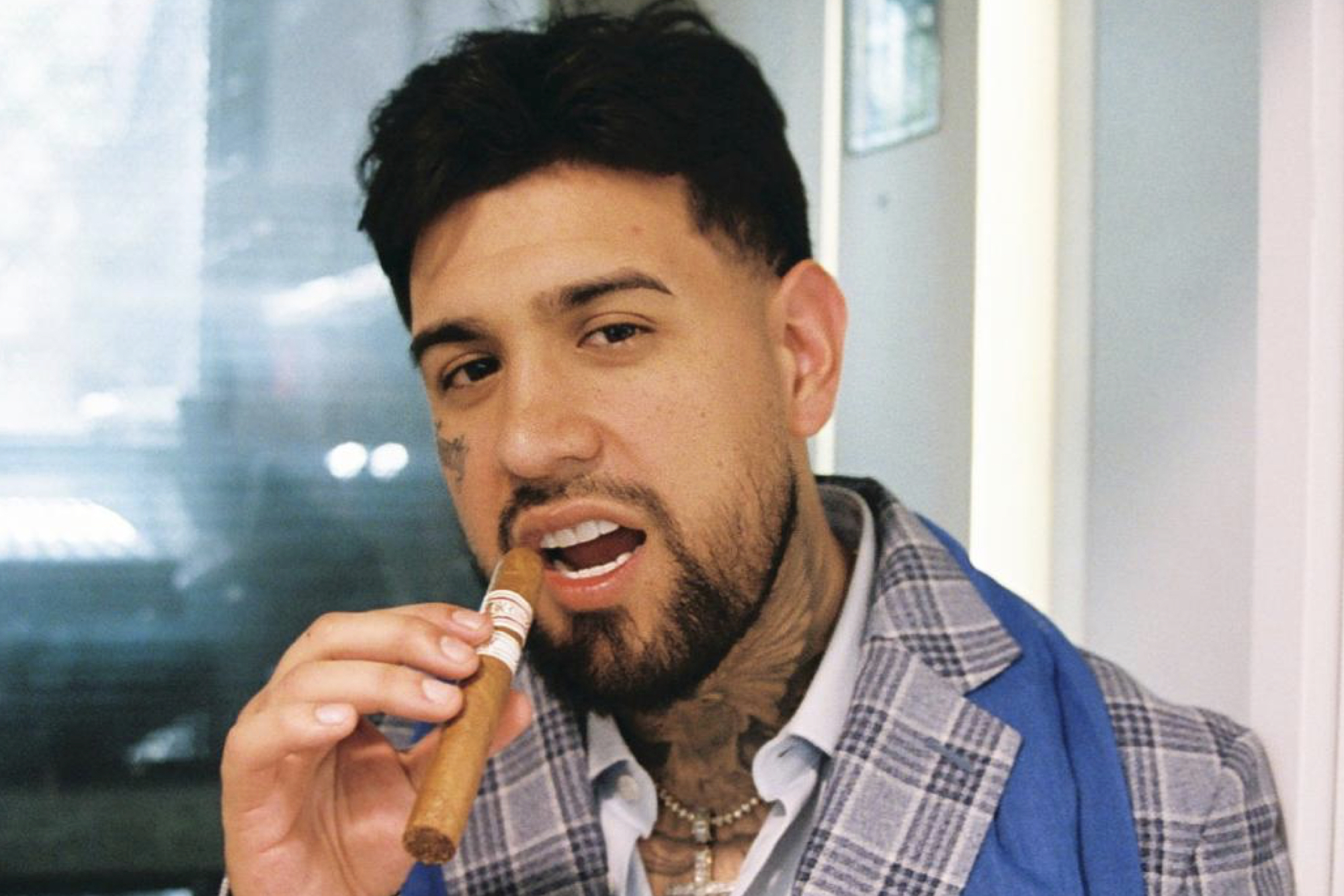

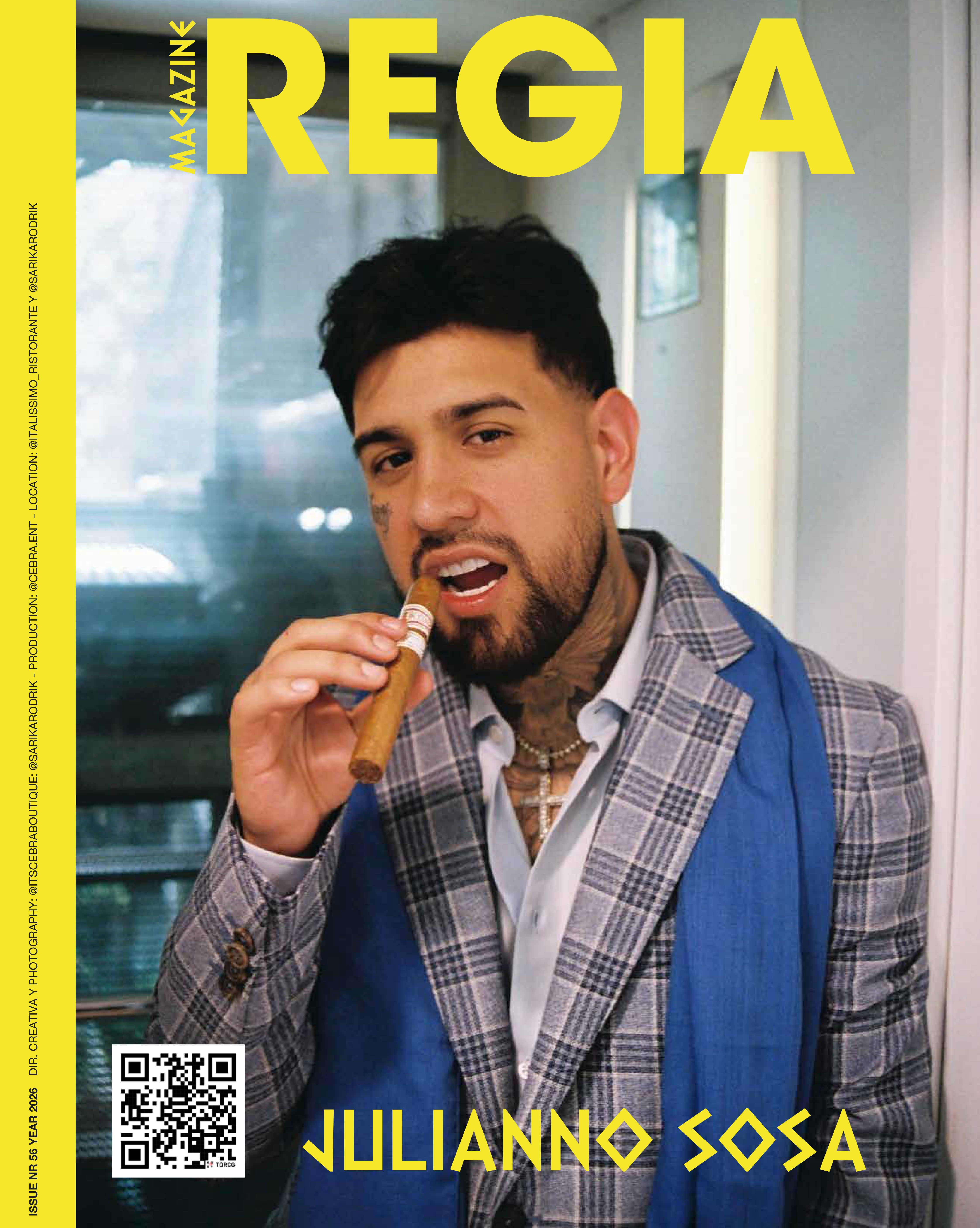
Julianno Sosa built his name from a place where exposure is not always a choice, but a condition. A Chilean artist who emerged from the margins of trap, his trajectory speaks of transition: from the periphery to structure, from instinct to strategy. Today, that energy has taken shape in a career that extends far beyond music, reaching into business and fashion.
Far from excess or easy mythology, Sosa insists on a more uncomfortable idea: power does not need to be displayed. Between the public and the private, between the capital and the border, his narrative is sustained by that balance — where intensity is not performance, but consequence. In conversation with Regia, he speaks about exposure, permanence, and an industry in constant transformation.
You chose Sosa because of Tony Montana’s enemy. Do you identify more with the antagonist than with the protagonist?
In the film, Alejandro Sosa was the one who truly held power. He didn’t need to constantly put himself on display to prove who he was. Quiet power lasts longer than noise.
Some artists say their persona protects them. Is Julianno Sosa a form of protection or exposure?
In some ways, it protects me because it creates boundaries between my personal and professional life. But at the same time, it exposes me because it’s a constant stage. The persona allows me to organize my energy and my narrative, and once I step offstage, I’m just another person: a father, a partner, a friend, a businessman.
Do you feel success forces you to sustain a more intense version of yourself?
It doesn’t force me, because this is what I chose. Thanks to my success in music, I’m now building the biggest entertainment holding company in Chile, and that naturally means I have more going on than I would otherwise. That’s where the intensity comes from.
Are you interested in controlling the narrative around you, or do you prefer to let the myth grow on its own?
In an age of social media, where every person is essentially a media outlet, it’s almost impossible to control the narrative. What I can control are my thoughts and my actions. The myth can grow on its own.
Do you feel part of a generational movement, or do you work more from an individual place?
My core audience is definitely tied to a generational movement, but from my own individuality, I want to reach new communities. My goal is to build something that still works even when generations change.

Trap began as something marginal and is now an industry. Is it still possible to remain uncomfortable when everything becomes mainstream?
Yes, I believe an artist can exist in both worlds. The everyday situations that inspire my lyrics evolve, change, disappear, or emerge — and in all of them, there are endless forms of discomfort. In the end, I believe your essence doesn’t disappear no matter how mainstream you become. It’s about fusing both worlds.
What makes you more uncomfortable: being underestimated or being idealized?
Being idealized, because I don’t intend to be an example for anyone. And when people have underestimated me, it has only motivated me more to achieve my goals. Idealization is dangerous because it distorts reality. I try to idealize myself instead, in order to evolve.
What is the part of this life that no one sees, yet weighs the most?
The part that isn’t on Instagram. The difficult conversations, the pressure of sustaining teams, the human and financial responsibilities. Daily discipline weighs more than the photo from the show. In the end, what weighs most is being accountable to yourself.
If your career were a city, would it be a capital or a border?
It would be the best of both. A capital has structure, industry, and movement. A border has risk and expansion. My career started at the border, and today it’s becoming more organized like a capital.
You survived jail in the U.S. and being shot. How does your perception of success change when death stops being a metaphor?
It changes when success stops being a material issue, and other priorities begin to matter more. Being at home with my daughter and my wife, having everything we need, being able to go out for a good meal, take a walk, enjoy life — that matters more to me than material success.
Are there things you used to romanticize that you no longer do?
Yes. I used to romanticize excessive luxury. Today, I value my family life and sports much more. For me, luxury stopped being about showing off and became about peace of mind.
In “X dinero” there is guilt, but also conviction. Do you feel money justifies everything when you come from nothing?
Money doesn’t justify everything, even though there are moments in life when you might think it does. Over time, you understand that the cost of certain decisions is higher than any profit. Your perspective changes when you build a family and when you start thinking about leaving a positive legacy.
Tell us about your move into fashion through Sosa Mafia. At what point did you realize fashion could become a platform for economic growth and a way to deconstruct your personal brand beyond the stage?
When I stopped dressing the way I used to. Since I was a child, I grew up with the reality that “how people see you is how they treat you,” and fashion is tied to that. There’s a huge market that still hasn’t found a style it truly identifies with, and we want to fill that gap. For me, fashion is not merchandising; it’s a language, an industry, a way of creating your own style and evolving it. That’s why we’re looking at international production and higher standards.
I know you’re about to release a track with Mar3ela. How did this collaboration come about, and what can we expect from that union?
A year ago, Mar3ela and I were introduced through a close mutual friend, and we got along so well that we ended up making music together in the studio. It happened organically. We connected alongside Fran C, and the track turned out really well. I don’t want to reveal too much, but I can say I love it because it blends different languages.
What is luxury to you?
Having quality time and a family to enjoy it with. Being able to choose who I spend my time with and how I use it. Educating myself, continuing to learn. To me, that is true luxury.
Julianno Sosa construyó su nombre desde un lugar donde la exposición no siempre es elección, sino contexto. Artista chileno surgido desde los márgenes del trap, su recorrido habla de tránsito: de lo marginal a la estructura, de la intuición a la estrategia. Hoy, esa energía se ordena en una carrera que no se limita a la música, sino que también se proyecta hacia los negocios y la moda.
Lejos del exceso o la mitología fácil, Sosa insiste en una idea más incómoda: el poder no necesita mostrarse. Entre lo público y lo privado, entre la capital y la frontera, su narrativa se sostiene en ese equilibrio — donde la intensidad no es pose, sino consecuencia. En conversación con Regia, habla de exposición, permanencia y de una industria en constante cambio.
Elegiste Sosa por el enemigo de Tony Montana. ¿Te sentís más identificado con el antagonista que con el protagonista?
En la película, Alejandro Sosa era quien realmente tenía el poder. No necesitaba mostrarse todo el tiempo para demostrar quién era. El poder silencioso es más duradero que el ruido.
Hay artistas que dicen que el personaje los protege. ¿Julianno Sosa es una protección o una exposición?
Por un lado hay protección, porque establece límites entre mi vida personal y profesional, y por otra parte me expone porque es un escenario constante. El personaje me permite ordenar mi energía y mi narrativa, y ya cuando bajo del escenario soy un humano más, papá, pareja, amigo, empresario, etc.

¿Sentís que el éxito te obliga a sostener una versión más intensa de vos mismo?
No me obliga, porque es lo que elegí. Gracias al éxito musical es que estoy construyendo el mayor holding de entretenimiento en Chile, y por consecuencia hace que tenga más actividades que si no estuviera en esto, por ahí va la intensidad.
¿Te interesa controlar la narrativa sobre vos o preferís que el mito crezca solo?
En estos tiempos de redes sociales en que cada persona es un medio de comunicación, es prácticamente imposible controlar la narrativa. Lo que sí puedo controlar son mis pensamientos y acciones. El mito puede crecer solo.
¿Te sentís parte de un movimiento generacional o trabajás más desde lo individual?
Mi público más directo tiene que ver con un movimiento generacional, pero desde mi individualidad quiero trascender a nuevas comunidades . Mi meta está en construir algo que funcione incluso cuando cambien las generaciones.
El trap empezó como algo marginal y hoy es industria. ¿Se puede seguir siendo incómodo cuando todo es mainstream?
Sí, yo creo que un artista puede convivir en ambas, porque las situaciones cotidianas que inspiran mis letras evolucionan, cambian, desaparecen o aparecen, y en cada una de ellas hay infinitas incomodidades. finalmente creo que la esencia no se pierde por más mainstream que uno pueda llegar, va en fusionar ambos mundos.
¿Qué te incomoda más: que te subestimen o que te idealicen?
Que me idealicen, porque no pretendo ser un ejemplo para nadie. Y cuando me han subestimado, finalmente me terminan motivando más a lograr mis objetivos. La idealización es peligrosa porque distorsiona la realidad. Trato de idealizarme a mi mismo para poder evolucionar.
¿Cuál es la parte de esta vida que nadie ve y que más pesa?
La que no está en Instagram. Las conversaciones difíciles, la presión de sostener equipos, las responsabilidades humanas y financieras. La disciplina diaria pesa más que la foto del show, finalmente pesa mas cumplirse a uno mismo.
Si tu carrera fuese una ciudad, ¿sería una capital o una frontera?
Sería lo positivo que tiene la suma de ambas. La capital tiene estructura, industria y movimiento. La frontera tiene riesgo y expansión. Mi carrera empezó en la frontera y hoy se está organizando como capital.
Sobreviviste a la cárcel en EE.UU. y a un baleo. ¿Cómo cambia la percepción del éxito cuando la muerte deja de ser metáfora?
Cambia cuando el éxito deja de ser una cuestión material, y florecen otras prioridades más importantes. Estar en mi casa con mi hija y mi señora sin que nos falte nada y poder salir a comer algo rico, pasear, disfrutar para mi es más importante que el éxito material.
¿Hay cosas que antes romantizabas y hoy no?
Sí, antes romantizaba el lujo excesivo. Hoy valoro más mi vida familiar y el deporte. El lujo para mí dejó de ser ostentación y pasó a ser tranquilidad.
En “X dinero” hay culpa, pero también decisión. ¿Sentís que el dinero justifica todo cuando venís de cero?
El dinero no justifica todo, aunque haya momentos de la vida en que uno pueda creer que sí. Con los años entiendes que el costo de ciertas decisiones es más alto que cualquier ingreso. La perspectiva cambia cuando formas familia y cuando piensas en dejar un legado positivo.
Cuéntanos sobre tu incursión en la moda a través de Sosa Mafia. ¿En qué momento entendiste que la moda podía ser una plataforma de proyección económica y deconstrucción de marca personal más allá del escenario?
Cuando dejé de vestirme como lo hacía antes. Desde niño viví con la realidad de “como te ven te tratan” y la moda tiene que ver con eso. Existe un mercado grande que todavía no logra identificarse con un estilo determinado y queremos llenar ese vacío. Para mí la moda no es merchandising; es un lenguaje, industria, es crear un estilo propio y evolucionarlo. Por eso estamos mirando producción internacional y estándares más altos.
Sé que estás por lanzar un tema con Marc3ela. ¿Cómo surgió esta colaboración y qué podemos esperar de esa unión?
Hace 1 año nos presentaron con Mar3ela, una buena amiga que tenemos en común, y nos llevamos tan bien que terminamos grabando música en el estudio. Se dio orgánico, conectamos junto a Fran C y quedó muy bueno el tema, no quiero adelantar mucho, solo decir que me gusta porque mezcla lenguajes.
¿Qué es el lujo para vos?
Tener tiempo de calidad y una familia para disfrutarlo. Poder elegir con quién estar y cómo usar mi tiempo, educarme, tener aprendizajes. Eso, para mí, es el verdadero lujo.
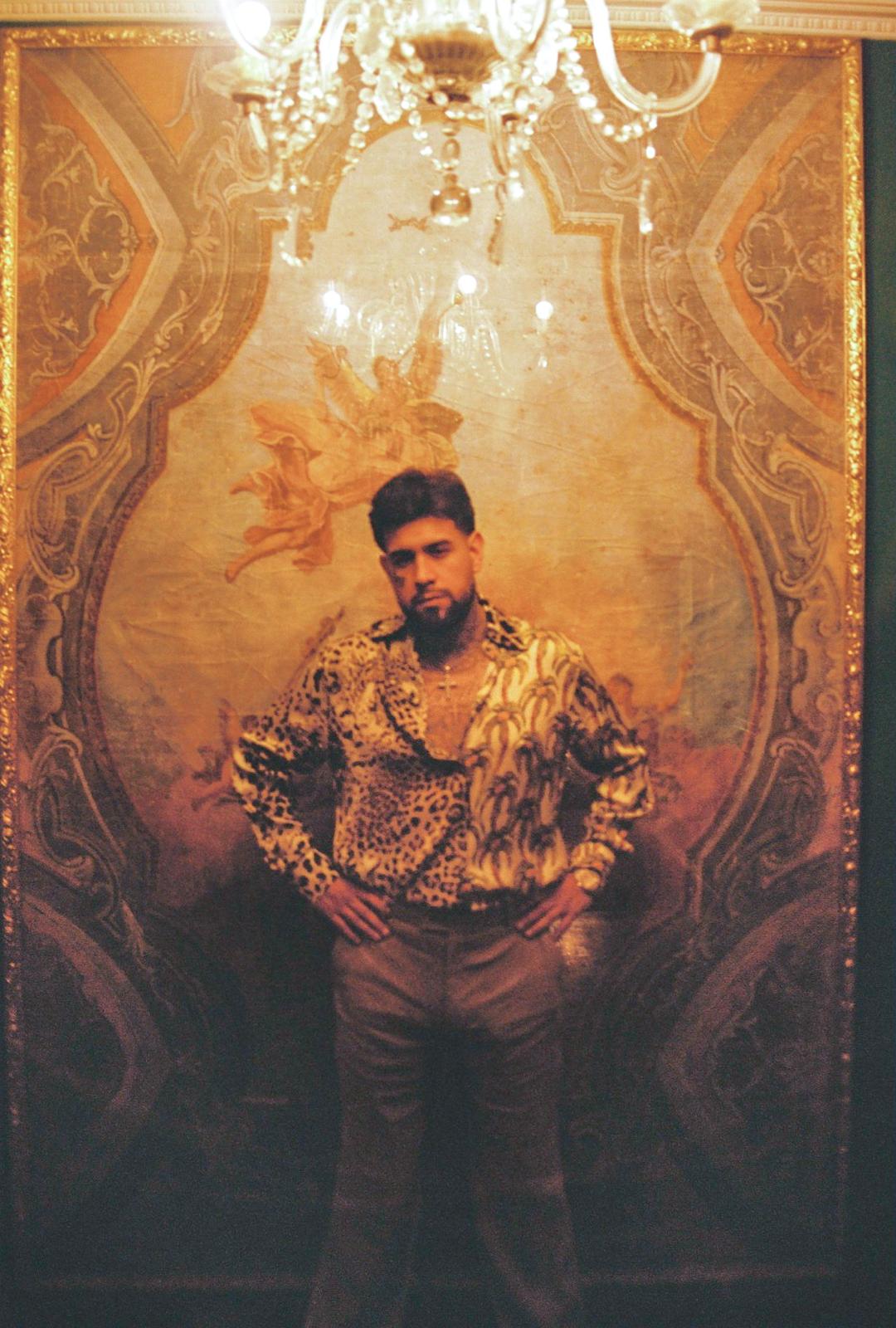
Production: @cebra.ent
Creative Direction y Photography: @itscebra
Editor @marcelamayorgameignan
Boutique: @sarikarodrik
Location: @italissimo_ristorante y @sarikarodrik