
At their Viale Piave venue, in a grey and rainy Milan, Dolce & Gabbana presented THE PORTRAIT OF MAN, a show marked by a strong audience presence and a steady energy that held throughout the entire runway. The collection set out to place the individual back at the center of menswear. Not as a decorative statement, but as a starting point: each man understood as a universe of his own, shaped by contradictions, desires, memories and intimate gestures.
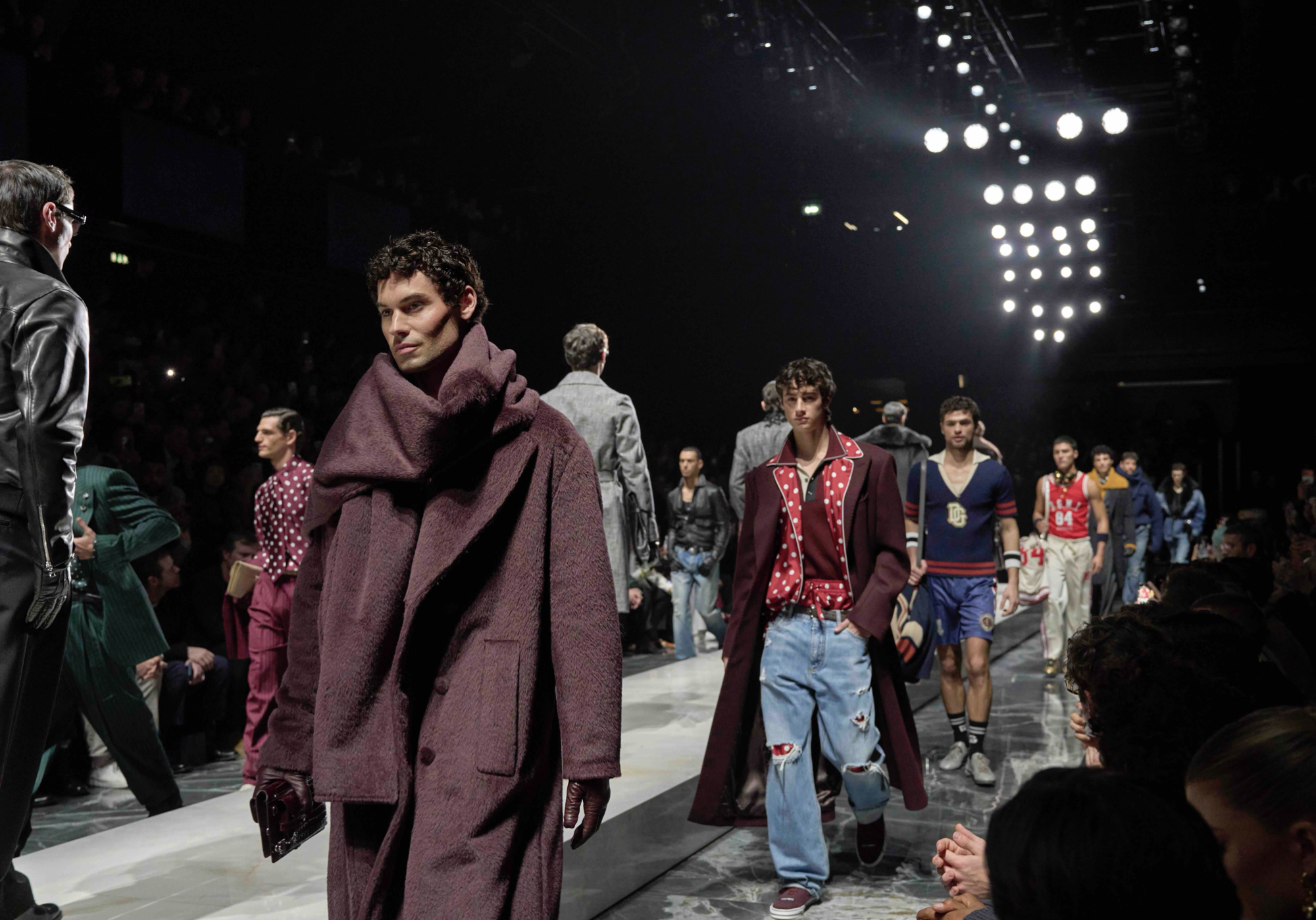
Far from a typical traditional runway, the catwalk functioned as a gallery. Models emerged from within the audience, moved across the space and only then stepped onto the central path, as if each one were entering the scene with his own story. The set — a marble-effect runway — created a certain visual friction, while reinforcing the idea of a contemporary portrait: figures in motion, crossing paths, observing one another. From the outset, the message was clear: the focus was on the casting, on the singularity of each model as the absolute protagonist of his look.
The music supported that spirit with a vibrant, theatrical imprint, closer to the imagery of The Great Gatsby than to a classic runway soundtrack. A lively, almost tropical atmosphere that contrasted with the weather outside and injected dynamism into a long, intense show that never seemed in a rush to end.
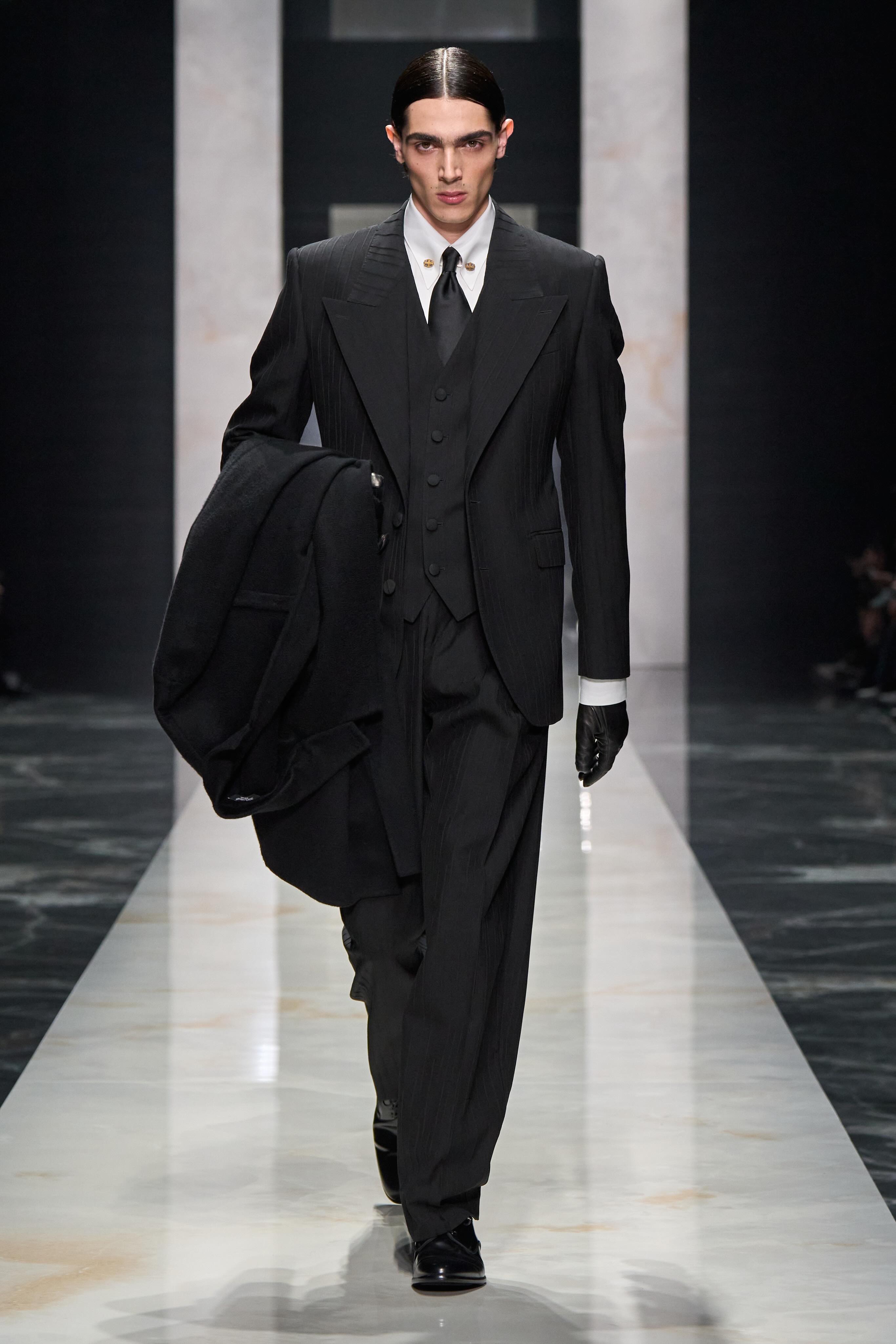
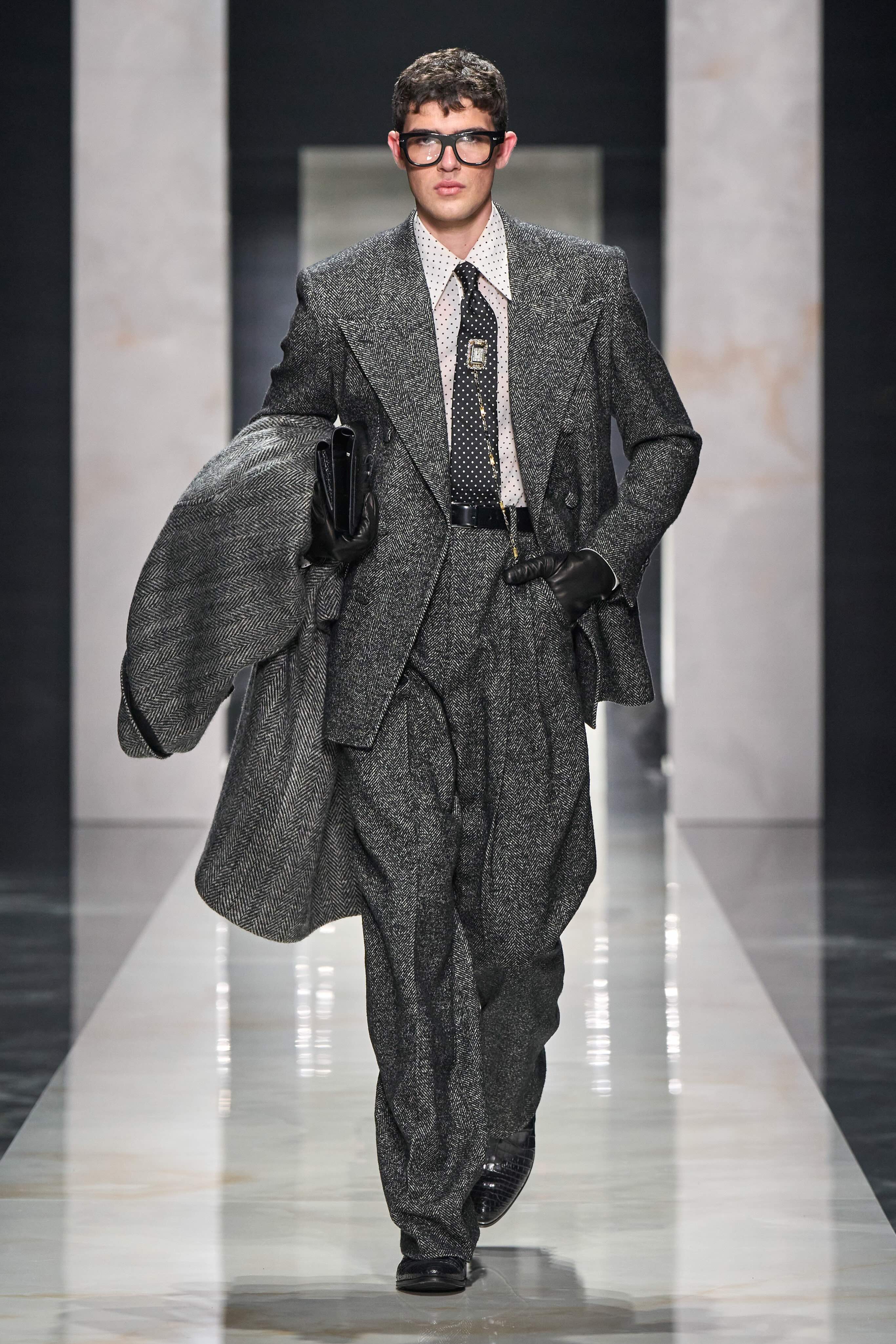
Tailoring was, once again, the strongest point of Domenico Dolce and Stefano Gabbana. Speckled Donegal tweed suits, wool and cashmere blends, impeccably constructed coats. A stone-grey suit with an almost gangster silhouette, wide lapels and relaxed trousers marked one of the most precise moments at the opening. A three-piece variation also stood out, where the jacket gave way to a black mohair sweater.
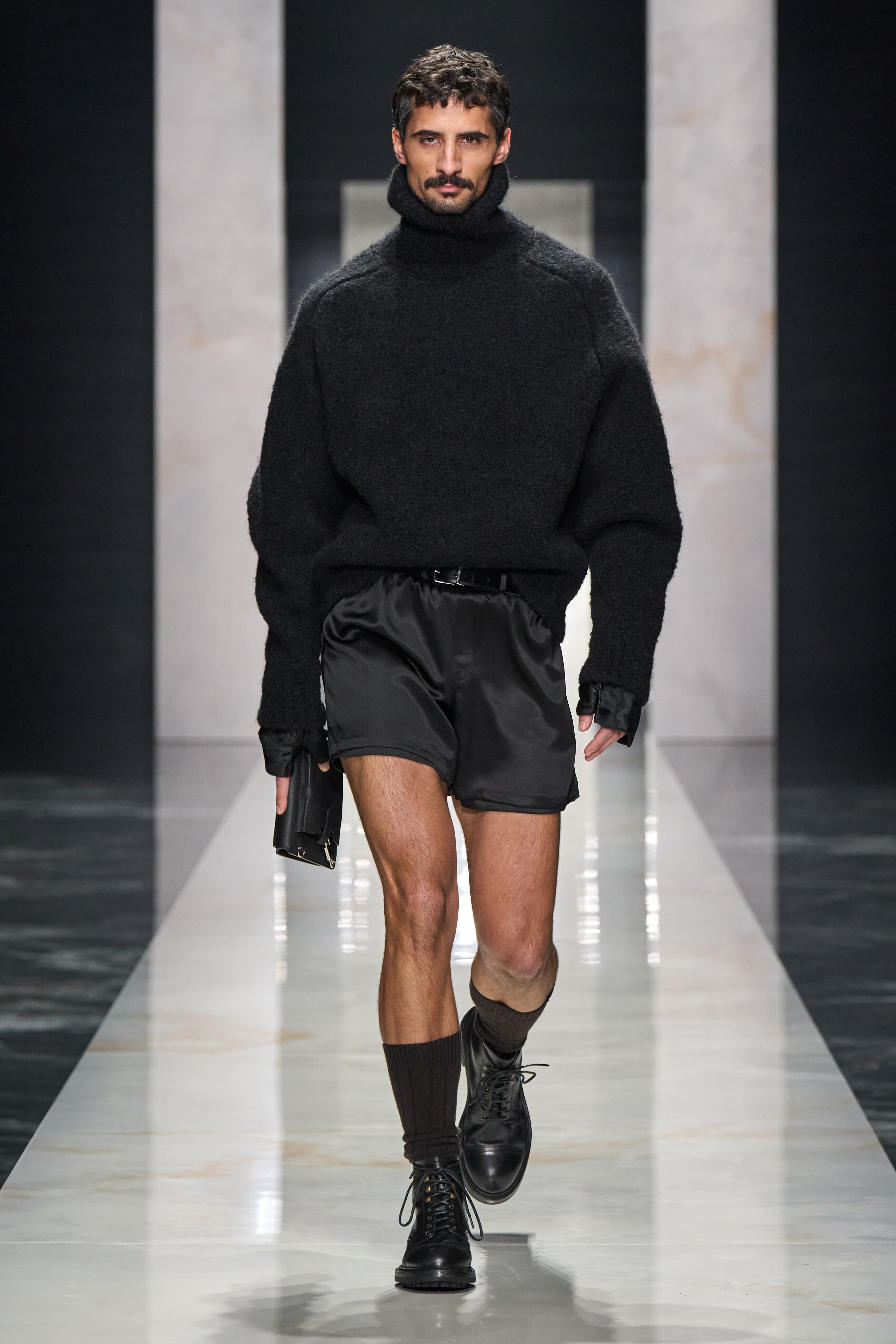
The journey, however, was not linear. In the midst of daywear, a black matelassé tuxedo paired with pajama trousers and slippers appeared, shifting the tone toward a more theatrical form of dandyism.
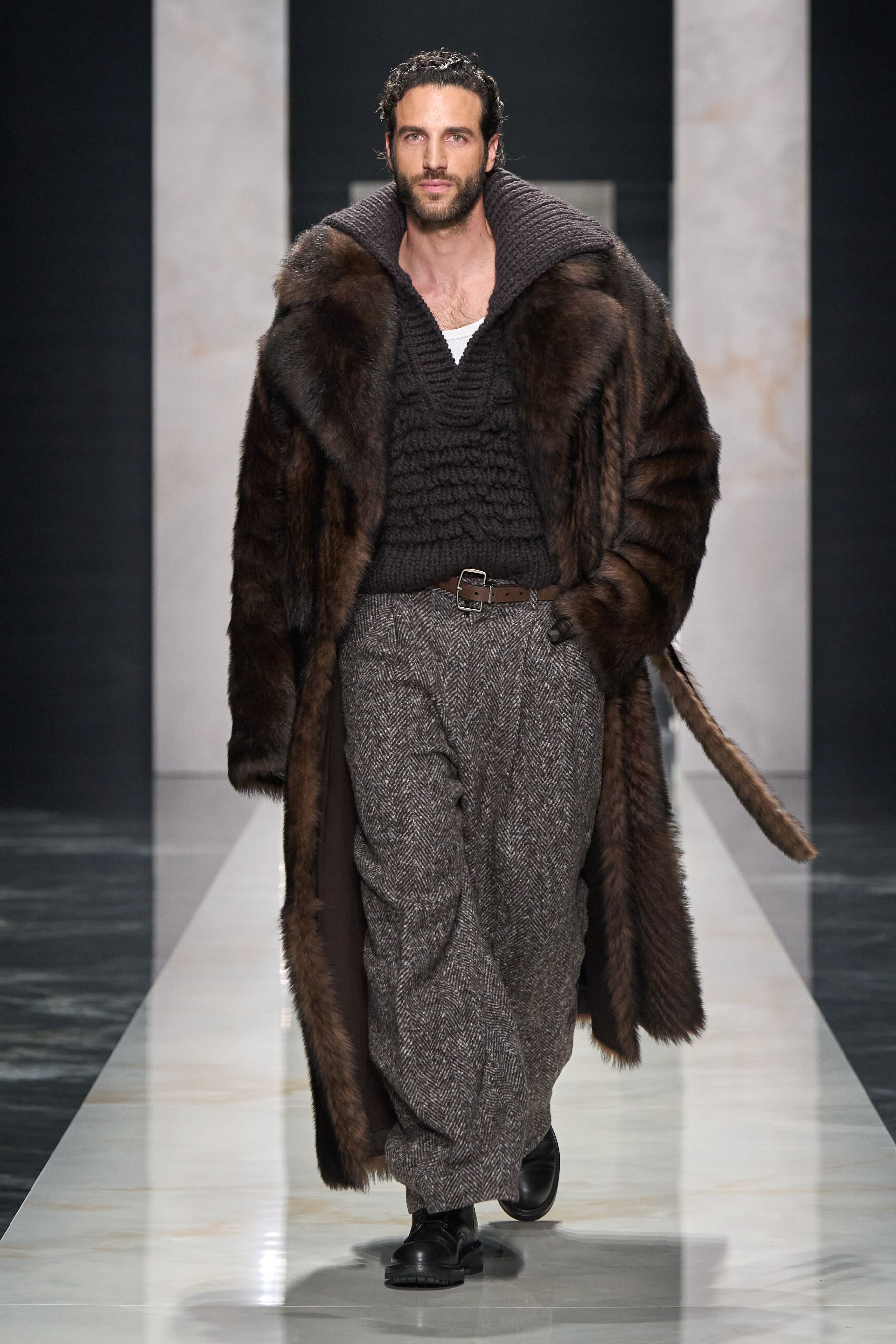
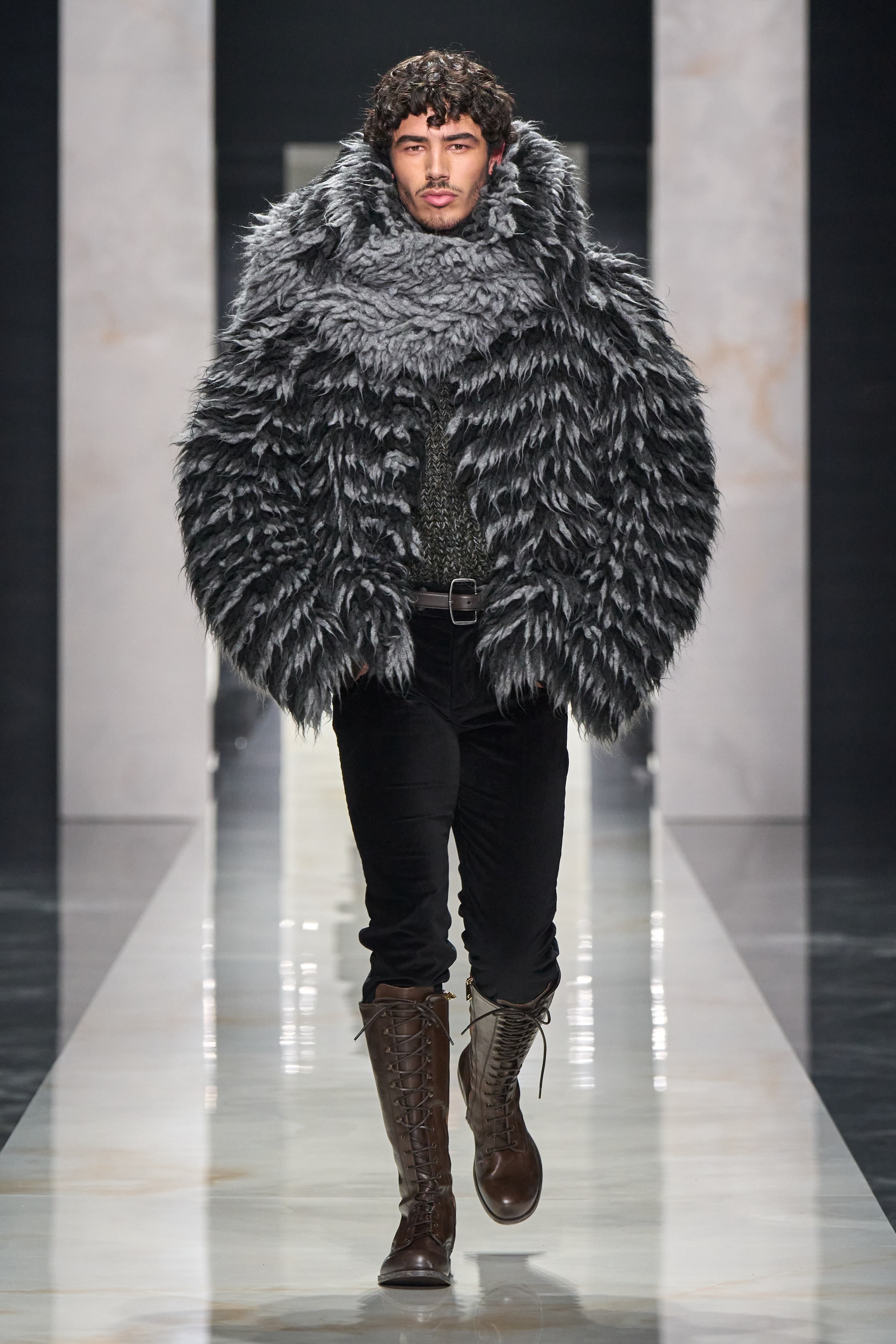
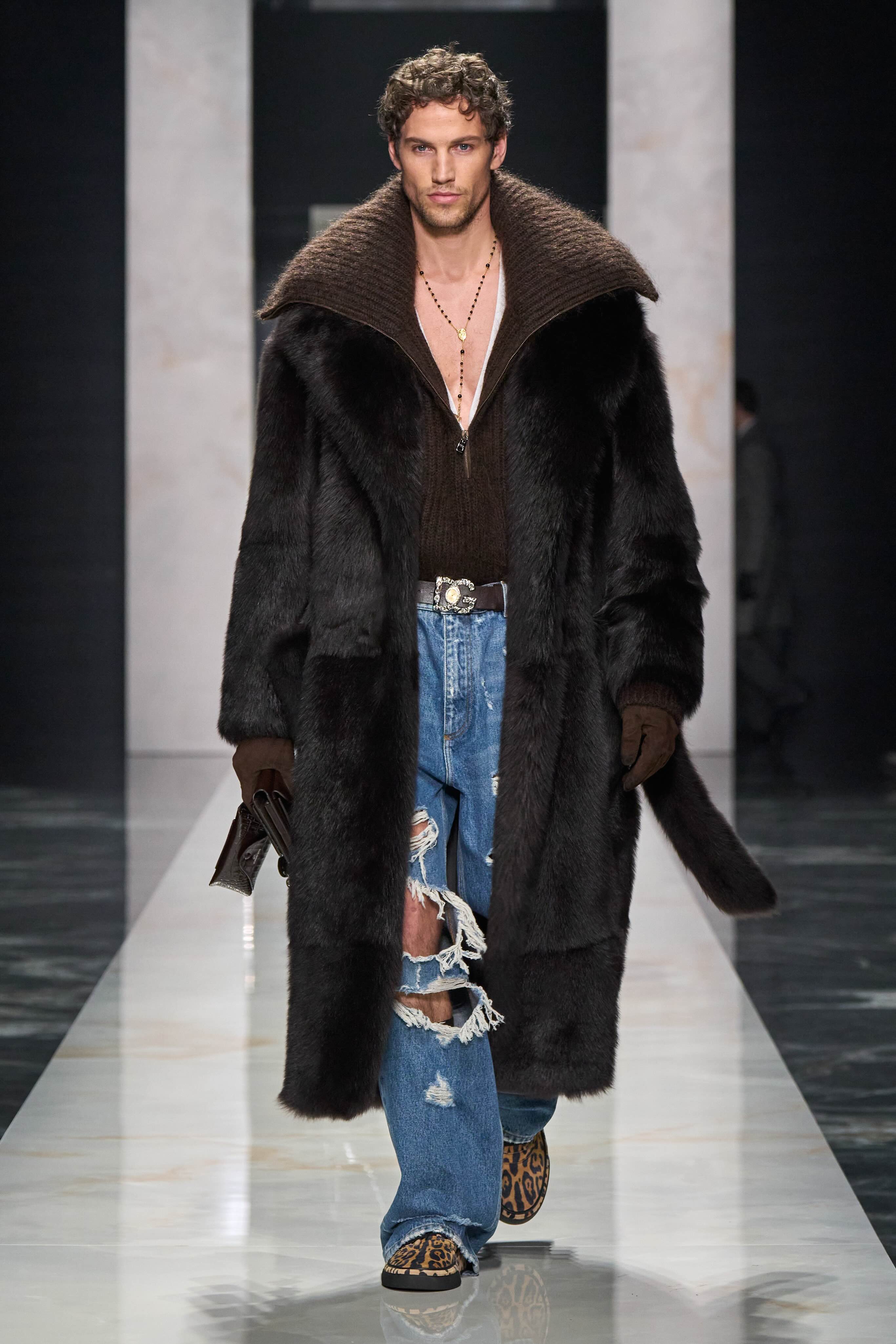
For night and winter, there were shearling coats of strong presence, oversized leather jackets trimmed with fur and pieces designed for visual impact. At the opposite end, house robes with animal prints and clearly Mediterranean references. Military coats, velvet jackets with piping, hussar-style pieces and sporty nods also appeared: football jerseys with inscriptions such as Soccer Club or 84, the year the house was founded.
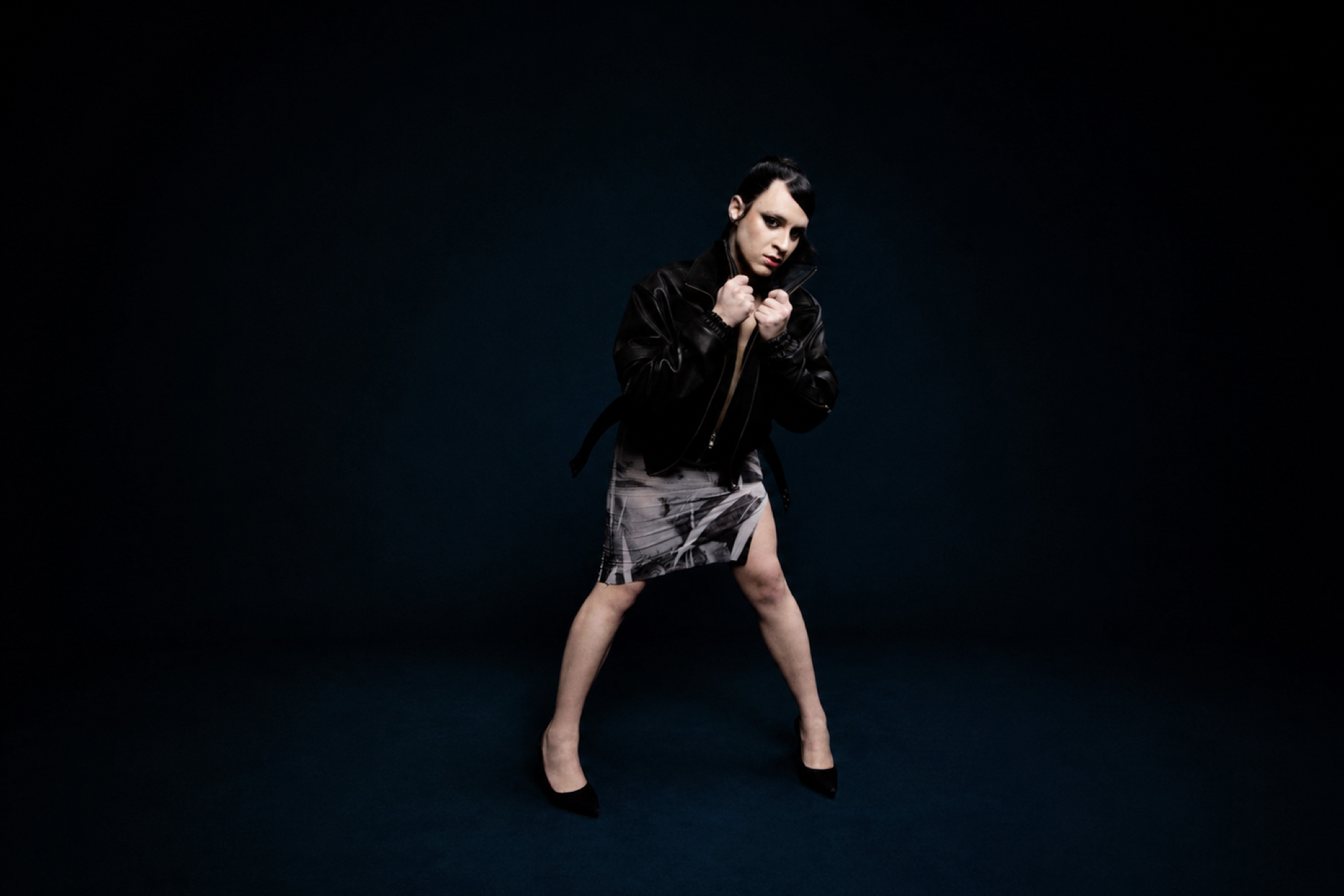
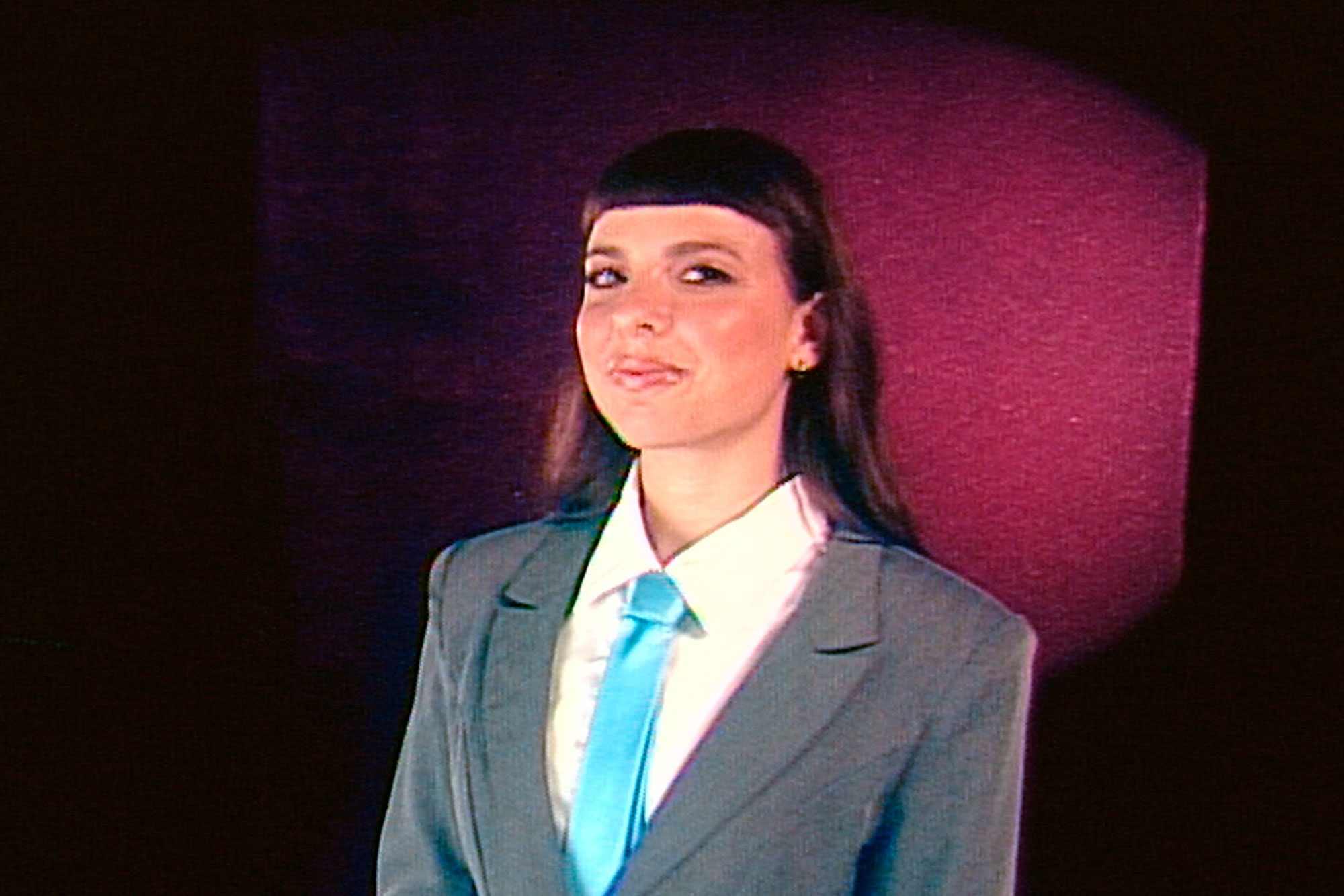
The narrative accompanying the show insisted on the idea of multiple portraits: each model representing a type of man, an attitude, a way of inhabiting style. Rather than closed stereotypes, these were clearly defined presences.
At the end, Domenico Dolce and Stefano Gabbana stepped out to thank the audience, closing a show as extensive as it was ambitious. It became clear that there is no single way of being a man, nor a single way of dressing. In an increasingly homogeneous context, Dolce & Gabbana once again bet on personal gesture, controlled excess and identity as a scene.
En su espacio de Viale Piave, en una Milán gris y lluviosa, Dolce & Gabbana presentaron THE PORTRAIT OF MAN, un desfile marcado por una fuerte presencia de público y una energía constante que se sostuvo durante todo el recorrido. La colección se propuso volver a poner al individuo en el centro del menswear. No como consigna decorativa, sino como punto de partida: cada hombre entendido como un universo propio, atravesado por contradicciones, deseos, recuerdos y gestos íntimos.
Lejos del típico desfile tradicional, la pasarela funcionó como una galería. Los modelos aparecían desde el público, se desplazaban por el espacio y recién después tomaban el recorrido central, como si cada uno entrara en escena con su propia historia. El set, una pasarela de efecto mármol, generó cierta fricción visual, pero reforzó la idea de retrato contemporáneo: figuras que se mueven, se cruzan, se observan. Desde el inicio, el mensaje fue claro: el foco estaba puesto en el casting, en la singularidad de cada modelo como protagonista absoluto de su look.
La música acompañó ese espíritu con una impronta vibrante y teatral, más cercana al imaginario del Gran Gatsby que a una banda sonora clásica de pasarela. Una atmósfera vivaz, casi tropical, que contrastaba con el clima exterior y aportaba dinamismo a un desfile largo, intenso, sin apuro por terminar.
La sastrería fue, una vez más, el punto más sólido de Domenico Dolce y Stefano Gabbana. Trajes de tweed Donegal moteado, mezclas de lana y cashmere, abrigos de construcción impecable. Un traje gris piedra, de silueta casi gangster, con solapas amplias y pantalón ancho, marcó uno de los momentos más precisos del inicio. También funcionó una versión tres piezas donde el saco cedía su lugar a un sweater negro de mohair.
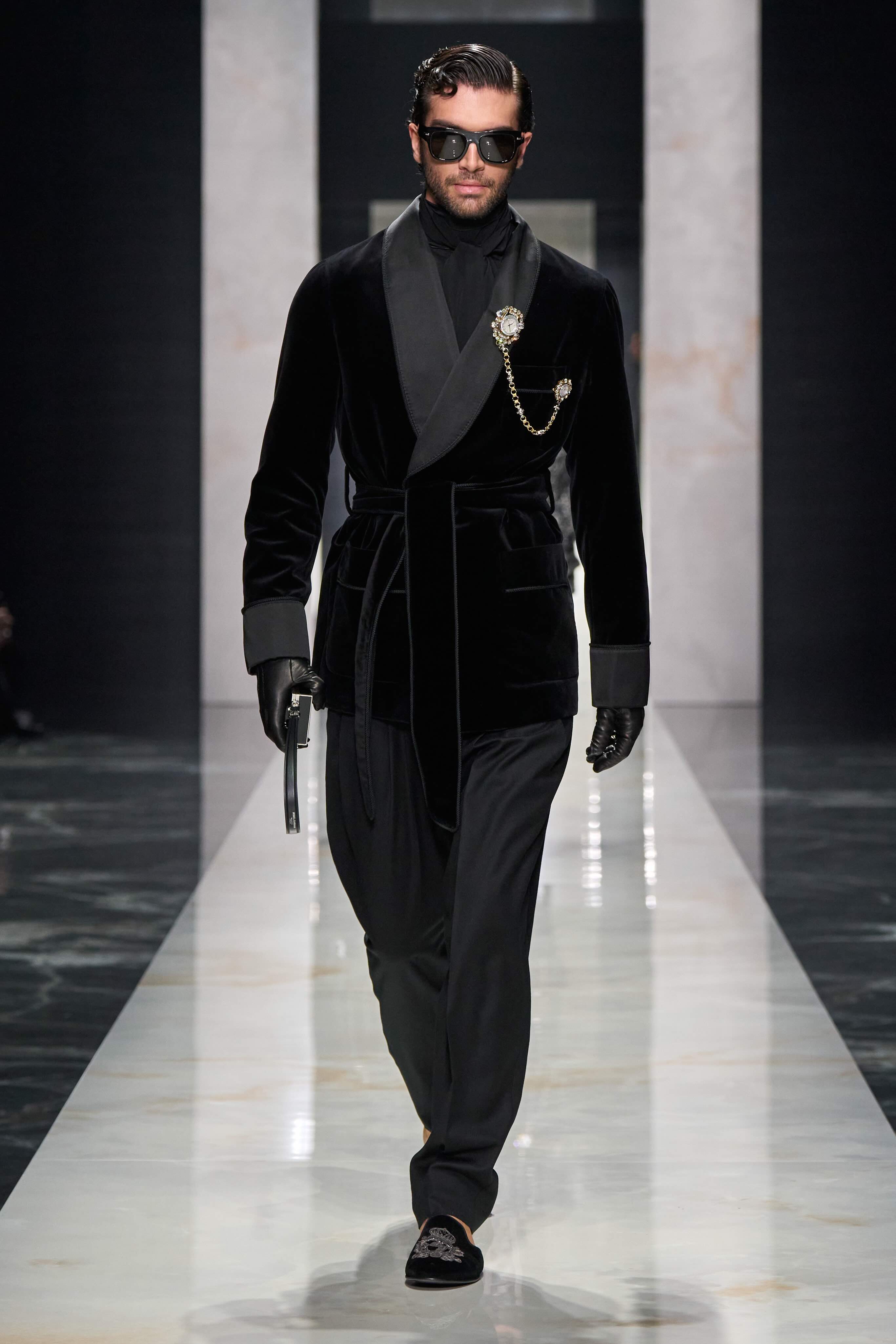
El recorrido, sin embargo, no fue lineal. En medio del daywear apareció un smoking matelassé negro combinado con pantalones pijama y pantuflas, desplazando el tono hacia un dandismo más teatral.
Para la noche y el invierno, hubo abrigos de shearling de gran presencia, chaquetas de cuero oversized con piel y piezas de fuerte impacto visual. En el otro extremo, batas de estar en casa con estampado animal y referencias claramente mediterráneas. También aparecieron tapados militares, sacos de terciopelo con vivos, chaquetas tipo húsar y guiños deportivos: camisetas de fútbol con inscripciones como Soccer Club o 84, el año de fundación de la casa.
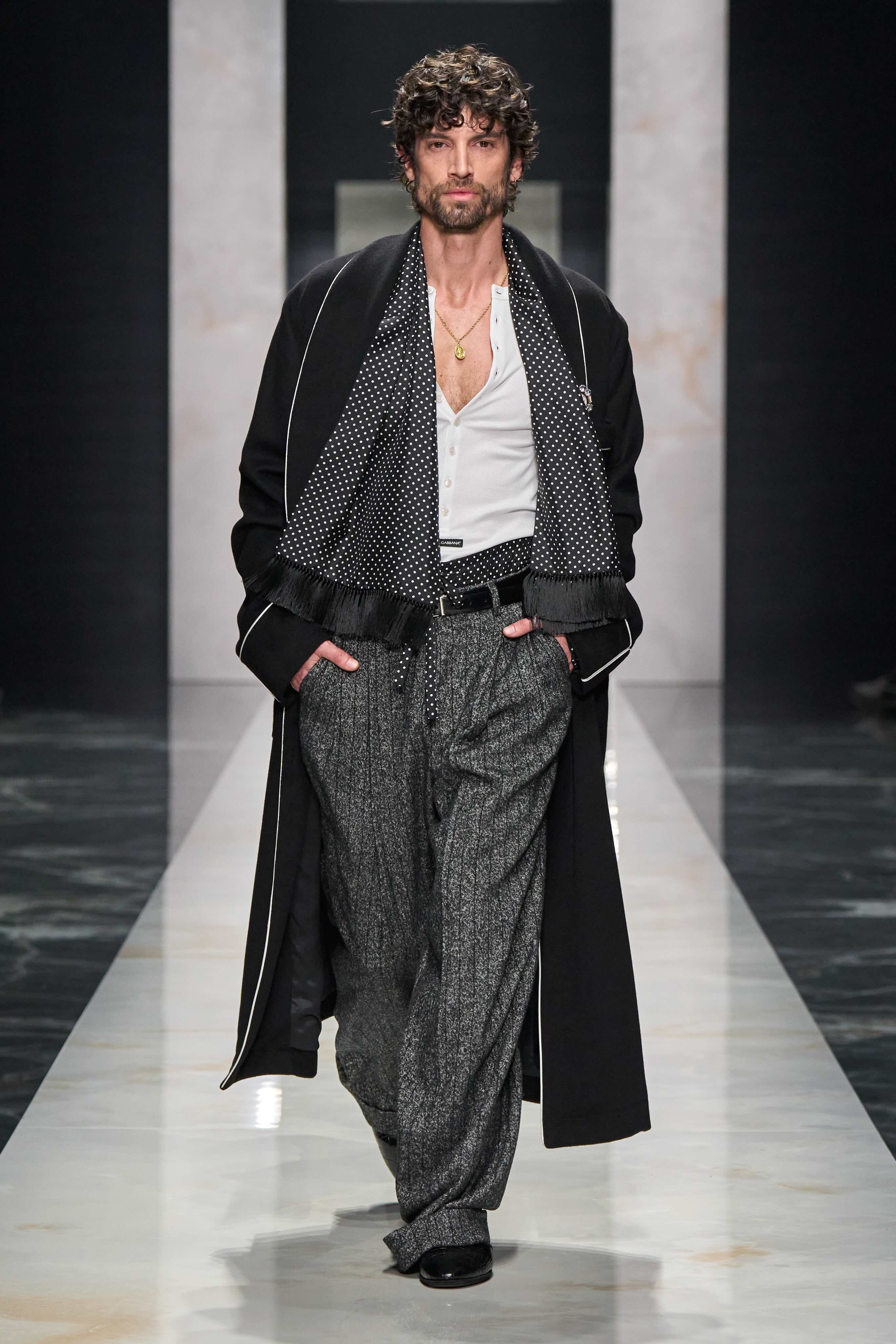
El discurso que acompañó el desfile insistía en la idea de retratos múltiples: cada modelo como representante de un tipo de hombre, de una actitud, de una manera de habitar el estilo. Más que estereotipos cerrados, presencias bien marcadas.
Al final, Domenico Dolce y Stefano Gabbana salieron a agradecer, cerrando un desfile tan extenso como ambicioso. Quedó claro que no hay una sola forma de ser hombre ni una sola manera de vestirse. En un contexto cada vez más homogéneo, Dolce & Gabbana vuelven a apostar por el gesto personal, por el exceso controlado y por la identidad como escena.