
In Paris, the Fondation Azzedine Alaïa explores the couturier’s relationship with Africa. Through openwork, light and the construction of the silhouette, the exhibition raises an intimate question: how does the memory of a place become a way of making clothes?
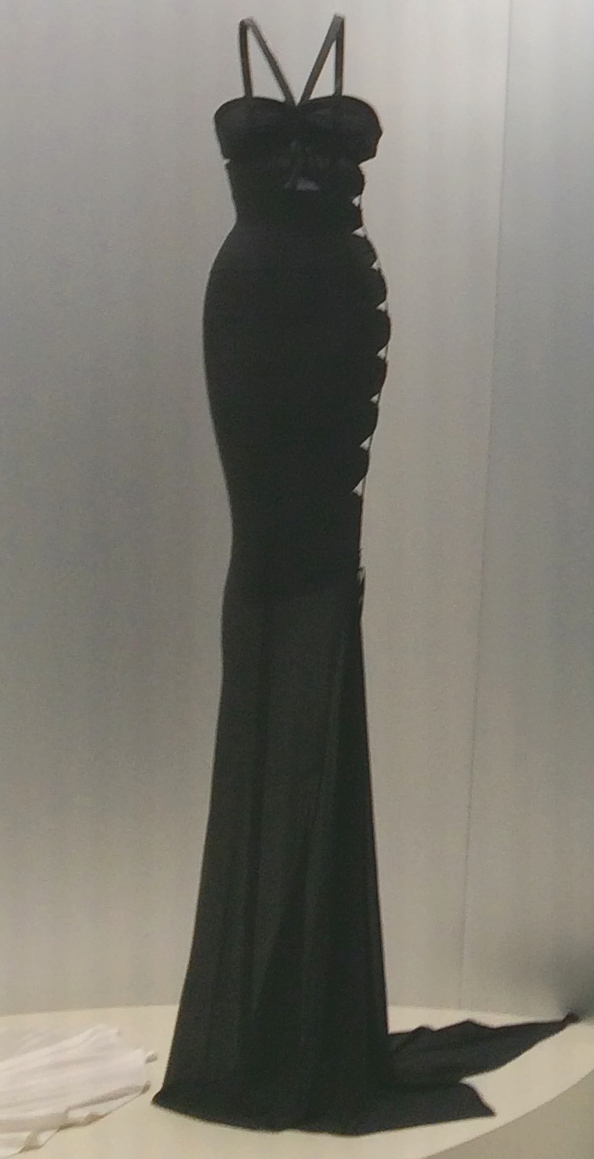
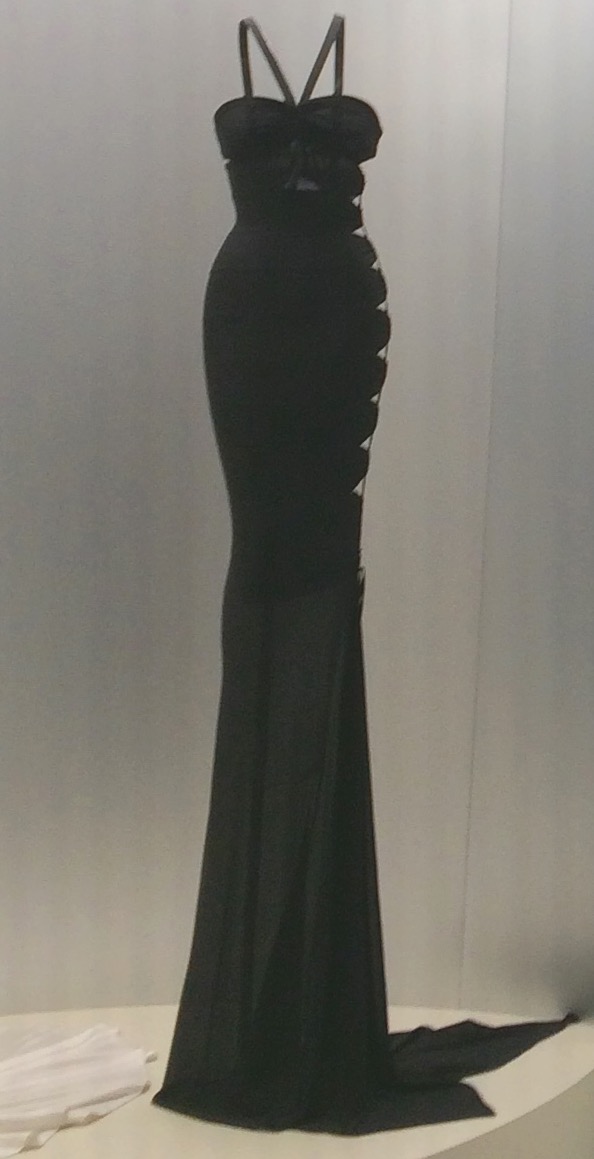
Header image: a black dress by Azzedine Alaïa, photographed at the Fondation in 2018. Archival illustration.
An opening in a fabric does more than reveal what lies beneath it. It admits light, breaks up a silhouette and shifts the boundary between clothing and skin. In Azzedine Alaïa’s work, that relationship offers a precise way into an approach to dressmaking so closely associated with the body.
Curated by Olivier Saillard, Azzedine Alaïa and Africa follows several of these connections. The exhibition’s accompanying text links the couturier’s openwork garments to memories of the moucharabiehs of Tunis: architectural screens that filter light and regulate the gaze.
Memory at work
The comparison invites us to consider inspiration through what it does. An architectural screen establishes a relationship between inside and outside. Translated into clothing, that relationship becomes a question of cut, surface and visibility.
The body appears in fragments. Skin participates in the composition. The spaces between sections of fabric become essential to the garment’s balance.
Seen through this lens, Alaïa’s precision takes on another dimension. Each opening requires decisions about proportion, support and the way a surface sits against the body. The visual effect depends on a structure.
The biography preserved by the Fondation Azzedine Alaïa places his early training in Tunis, between fine art and dressmaking. He studied sculpture and developed an understanding of anatomy; his sister Hafida also played a role in his introduction to sewing. Those experiences provide context for a practice in which volume is worked out in close relation to the figure.
A place can remain present through an action learned there. A way of adjusting, enclosing or opening a form can carry memory into the workshop.
Looking closely at the references
The exhibition’s title encompasses a continent. Its individual references call for a more specific reading.
The curatorial account connects white fabrics and openwork to Alaïa’s North African memories. It also identifies raffia, shells and cowries in the spring–summer collections of 1988, 1989 and 1990, and relates his bandage dresses, first developed in 1985, to his study of Egyptian imagery.
These connections form part of the exhibition’s interpretation. They deserve to be considered garment by garment. An ornament, a technique and a childhood memory enter the creative process in different ways. Preserving those distinctions makes the relationship between source and finished piece more revealing.
The interesting question is what happens during that passage. What is retained? What changes scale? How does a reference become a decision about construction?
The archive as a way of looking
Such questions depend on the possibility of returning to the clothes. The Fondation describes a body of work that Alaïa preserved throughout his career and that it now conserves, documents and presents to the public. Garments, accessories, sketches and models hold a material record of his practice.
An archive makes comparison possible. It allows us to follow an idea across seasons, to look at different solutions to a problem of construction, or to observe how a material changes the character of a silhouette. References acquire depth when we can examine the work that carries them.
That is what makes this exhibition a valuable occasion to revisit the relationship between fashion and place. The discussion can begin with something concrete: an opening in cloth, a band following a curve, a surface catching the light.
Through these details, belonging becomes an ongoing creative process. Something carried, reconsidered and transformed. In Alaïa’s work, the memory of a place can become part of the garment’s structure.
“Azzedine Alaïa and Africa,” Fondation Azzedine Alaïa, 18 rue de la Verrerie, Paris. 7 July 2026–4 January 2027. Official exhibition information.
Sources & links
- Fondation Azzedine Alaïa — exhibition and curatorial presentation
- Fondation — Azzedine Alaïa’s chronology
- Fondation — conservation and presentation of the couturier’s work
- Maison Alaïa — official website
Header photograph: TheStandard, 1 February 2018, via Wikimedia Commons, CC BY-SA 4.0. Existing cropped version by Arroser / Premeditated Chaos, reproduced without additional editorial alteration. This archive image does not depict the 2026 exhibition.