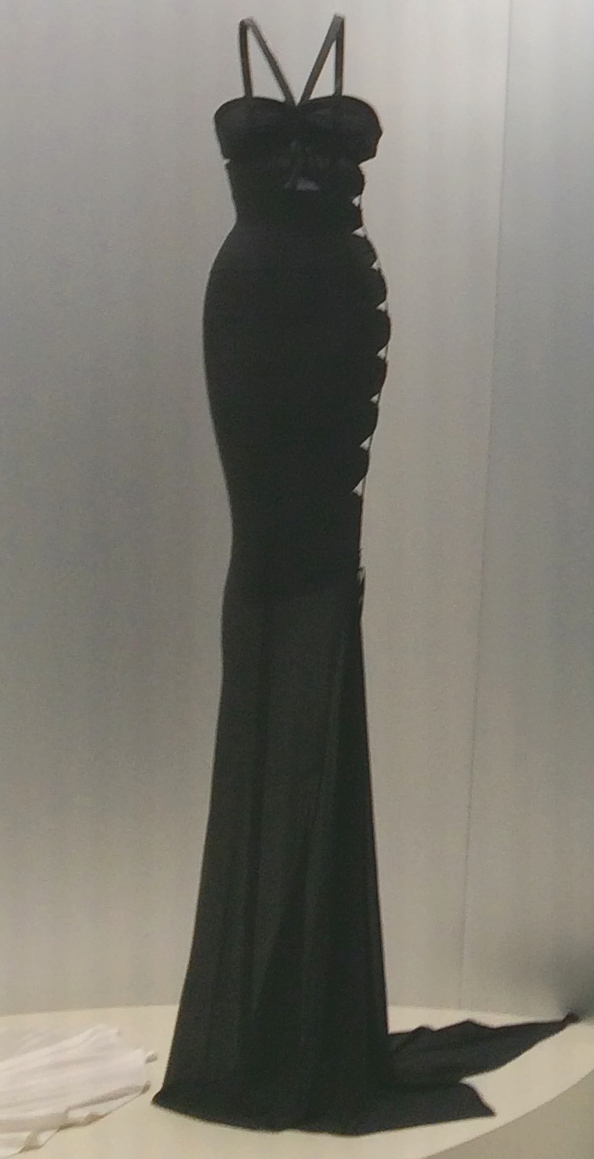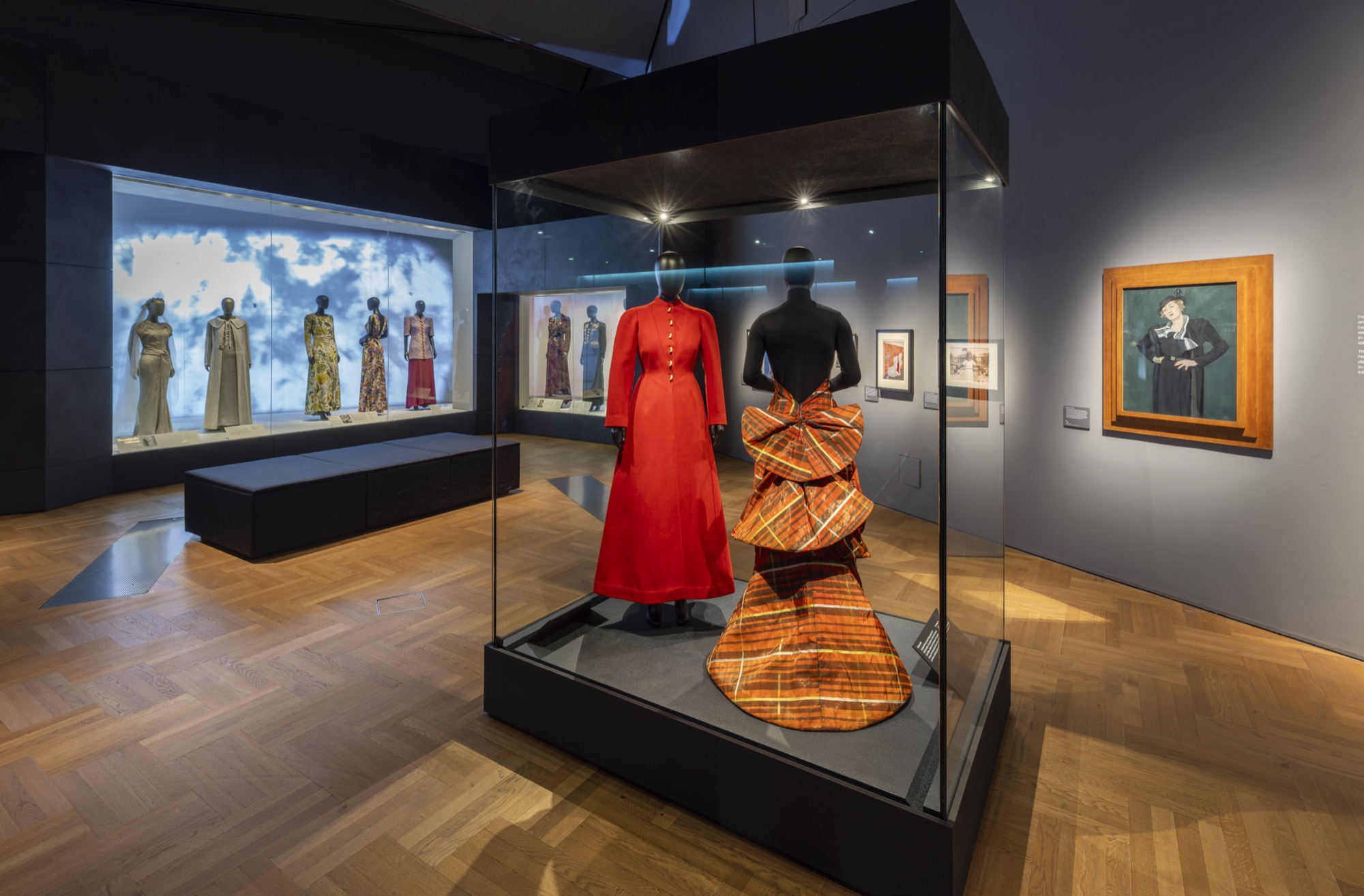

At the V&A, Schiaparelli’s world reaches beyond the visual. For Fashion Becomes Art, sound studio Father composed a score shaped by physical materials, repetition and musical memory. It offers another way into a house whose creations have long unsettled the senses.
A dress has a silhouette, a weight, a way of occupying space. It also has a sonic life: fabric rustling, a lining shifting, one surface brushing against another. Much of that disappears when clothing enters a museum. Still, illuminated and protected, the garment becomes an object of sustained looking.
For Schiaparelli: Fashion Becomes Art, the V&A commissioned an original score from sound studio Father. Sound becomes another way of approaching the objects, shaping the atmosphere around them and inviting a different kind of attention.
Composing with materials
Approached by design studio Nebbia, Father developed its work around materiality, process and déjà vu. The team describes recording materials and processes, then using those recordings as the starting points for its compositions. Physical actions became a musical vocabulary.
The approach feels particularly suited to fashion. Music can give an exhibition an immediate emotional register: drama, intimacy, nostalgia. Beginning with materials creates a closer relationship with the garment itself. Sound can suggest resistance, density or transformation. It brings a sense of activity to an object that is no longer moving.
The V&A connects this method to Schiaparelli’s textile experiments, including her interest in tree-bark textures and cellophane. The score extends that curiosity about what a surface might make us feel beyond what it allows us to see.
The feeling of having been here before
Father also worked with a fragment of Debussy, repeating and transforming it throughout the score. The studio describes a form of uncertain recognition: something sounds familiar, while its origin remains difficult to place.
Fashion has its own versions of this experience. A proportion, a gesture or a colour can bring an era to mind before we identify the reference. Recognition arrives first as a feeling. Sound allows that moment of hesitation to unfold over time.
There is a related play of perception in Schiaparelli’s historical collaborations. An evening coat designed with Jean Cocteau in 1937 uses embroidered trompe-l’œil to complicate the image on its back. The V&A documents the craftsmanship of Maison Lesage, which translated the design into embroidery. The garment rewards a second look: its surface asks the eye to reconsider its first impression.
Making time for a garment
A soundscape can also change the pace of looking. Understanding a garment takes time: following a seam, reading a volume, distinguishing the construction from the effect it produces. A score gives that attention a temporal setting.
The exhibition traces Schiaparelli’s story from the 1920s to the contemporary house under creative director Daniel Roseberry. Across those different periods, sound offers a way to consider continuities of mood, surprise and imagination.
The project opens up a wider possibility for fashion storytelling. A garment carries more than a photographic image can hold. There is the movement we imagine, the texture we cannot touch, the memory a shape unexpectedly brings back. Giving those sensations room can deepen our encounter with the object.
A dress may stand still. Our experience of it continues to move.
“Schiaparelli: Fashion Becomes Art,” V&A South Kensington, London. The museum currently lists the exhibition’s closing date as 15 November 2026.
Listen through the official V&A soundscape page.
Sources & links
- V&A — Schiaparelli exhibition soundscape
- Father — composing and designing the exhibition sound
- V&A — the Schiaparelli–Cocteau evening coat
- V&A — exhibition information
- Maison Schiaparelli — official website
Header photograph: Schiaparelli: Fashion Becomes Art at V&A South Kensington. © Victoria and Albert Museum, London. Image supplied through the V&A Press Office image library.