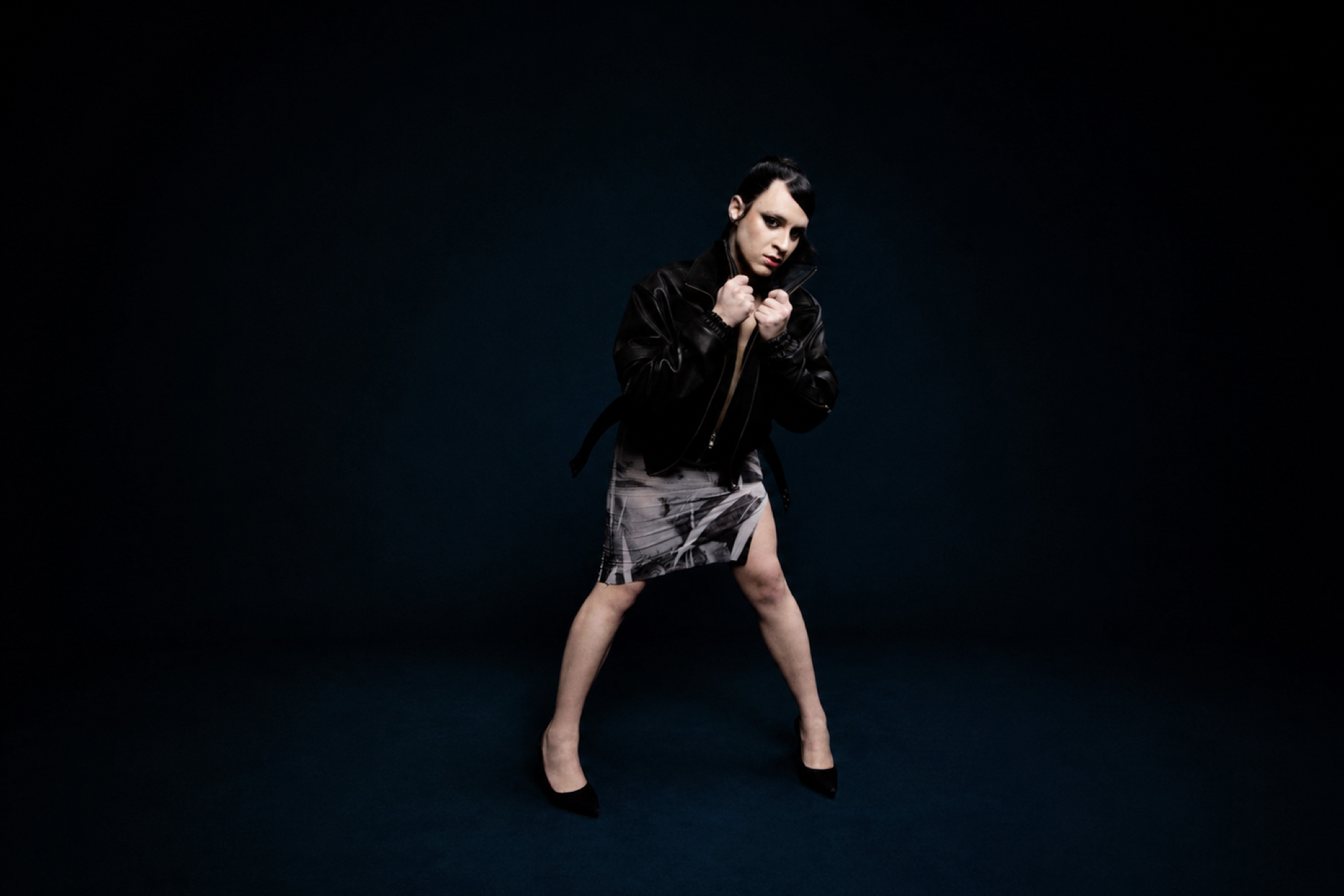
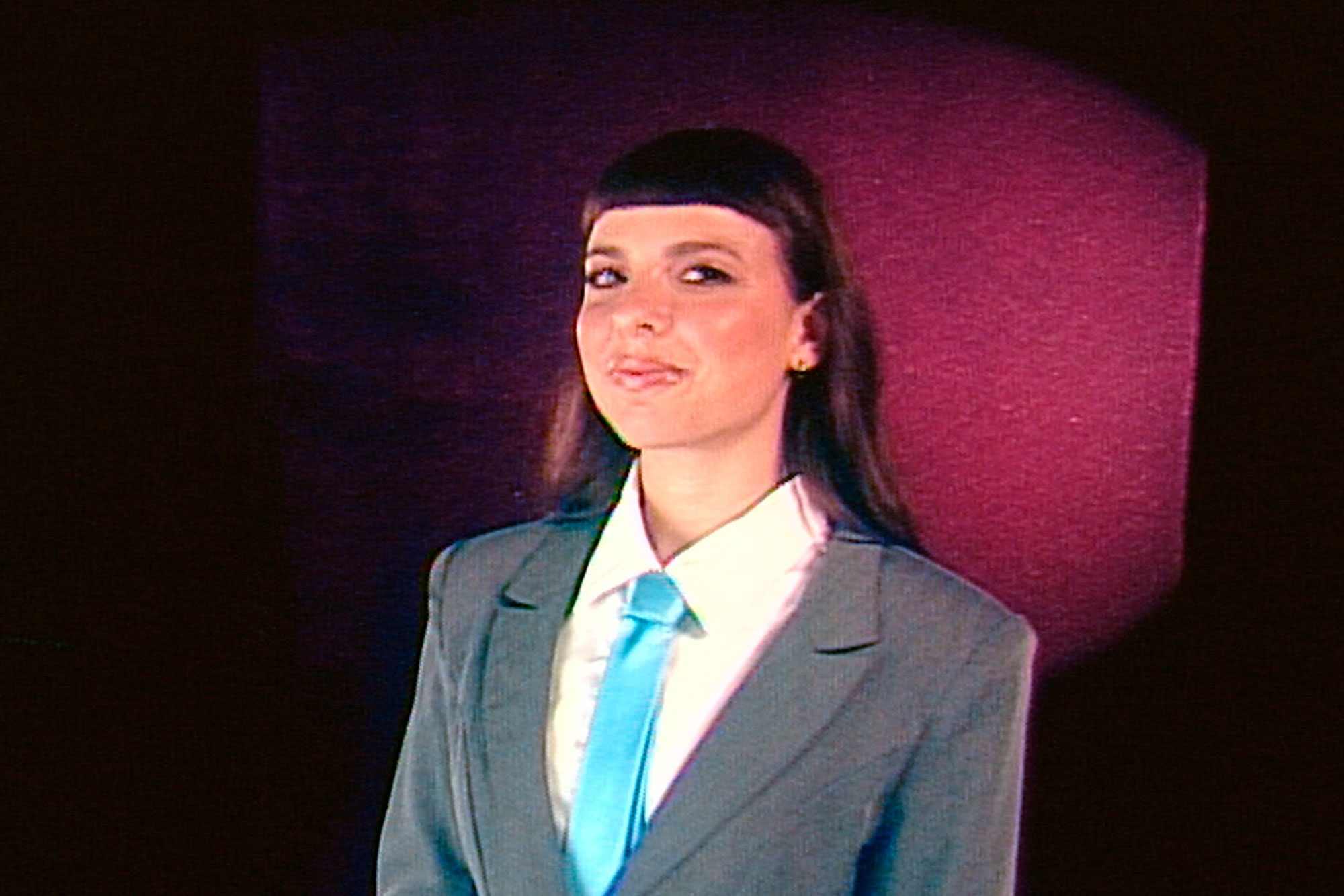
A caterpillar, inside its cocoon, does not sleep. It dissolves. Its own digestive enzymes break down its tissue until it becomes an undifferentiated cellular mass that holds, in potential, the complete architecture of the insect it will become. There is no continuity of form. There is total destruction and reconstruction from the most basic components of life. That is the conceptual image Daniela Lalita carries into "Tiroteo", her new single with Mura Masa — finding in the pain of loss and catastrophe the dissolving element that allows one to die, regenerate, and be reborn with one's own ammunition.
"Tiroteo" moves through slow rhythms that feel like they know something the ear hasn't caught up to yet, a density that shifts between the sensual and the threatening, as if suffering and desire were, at their core, the same substance. The question underneath is not new, but rarely stated so plainly — the possibility of surrendering completely, of letting it dilute everything one ever was.

The video, directed by Lalita herself and shot entirely in Peru with local collaborators, translates that logic into images of raw oneirism: her body folded inside a machine where pipes and gears hold her like a cocoon, an expressive choreography over bare earth, bodies moving together toward something that needs no name, a crowd gathered around fire where collective transformation takes shape. It is a primordial image — and the black and white renders it timeless, as if this rite had always been happening, as if it predated language itself.
Lalita studied under Morton Subotnick in New York, and that lineage is felt — there is an architecture to her music, a way of building time that refuses convention. Since her debut EP Trececerotres (2022), she has constructed a world of her own where folktronica, art pop, and experimental electronic feed one another. "Tiroteo" is, so far, her clearest statement — that catastrophe can be a starting point, and that no one knows that better than someone who has already learned to fire at herself.
Una oruga, dentro del capullo, no duerme. Se disuelve. Sus propias enzimas digestivas descomponen su tejido hasta reducirlo a una masa celular indiferenciada que contiene en potencia la arquitectura completa del insecto que vendrá. No hay continuidad de forma. Hay destrucción total y reconstrucción desde los componentes más básicos de la vida. Esa es la imagen conceptual que Daniela Lalita lleva consigo en "Tiroteo", su nuevo sencillo junto a Mura Masa — encontrar en el dolor de la pérdida y la catástrofe el elemento disolvente que permite morir, regenerarse, y renacer con la propia munición.
"Tiroteo" contiene ritmos lentos que se mueven como si supieran algo que el oído todavía no puede procesar, una densidad que oscila entre lo sensual y lo amenazante, como si el padecimiento y el deseo fueran, en el fondo, la misma sustancia. La pregunta que subyace no es nueva, pero pocas veces se formula con tanta claridad — la posibilidad de entregarse por completo al sufrimiento, de dejar que diluya todo lo que uno era.

El video, dirigido por Daniela Lalita y filmado íntegramente en Perú con colaboradores locales, traduce esa lógica en imágenes de un onirismo crudo: ella encogida en el interior de una máquina donde tuberías y engranajes la contienen como un capullo, en coreografía expresiva sobre suelo de tierra, entre cuerpos que avanzan juntos hacia algo que no necesita nombre, una multitud reunida alrededor del fuego donde la transformación colectiva cobra forma. Es una imagen primordial — y el blanco y negro la vuelve atemporal, como si este rito siempre hubiera estado ocurriendo, como si precediera al lenguaje mismo.
Lalita estudió bajo la tutela de Morton Subotnick en Nueva York, y esa herencia se siente — hay una arquitectura en su música, una manera de construir el tiempo que no es convencional. Desde su EP debut Trececerotres (2022), ha edificado un mundo propio donde el folclore, el arte pop y la electrónica experimental se alimentan mutuamente. "Tiroteo" es, hasta ahora, su declaración más nítida — que la catástrofe puede ser un punto de partida, y que nadie sabe eso mejor que quien ya aprendió a dispararse.