A shoe is a small architecture with an intimate responsibility: it has to meet a body. At Museo Ferragamo in Florence, the history of Salvatore Ferragamo invites a reading of fashion that begins with support, material and movement.
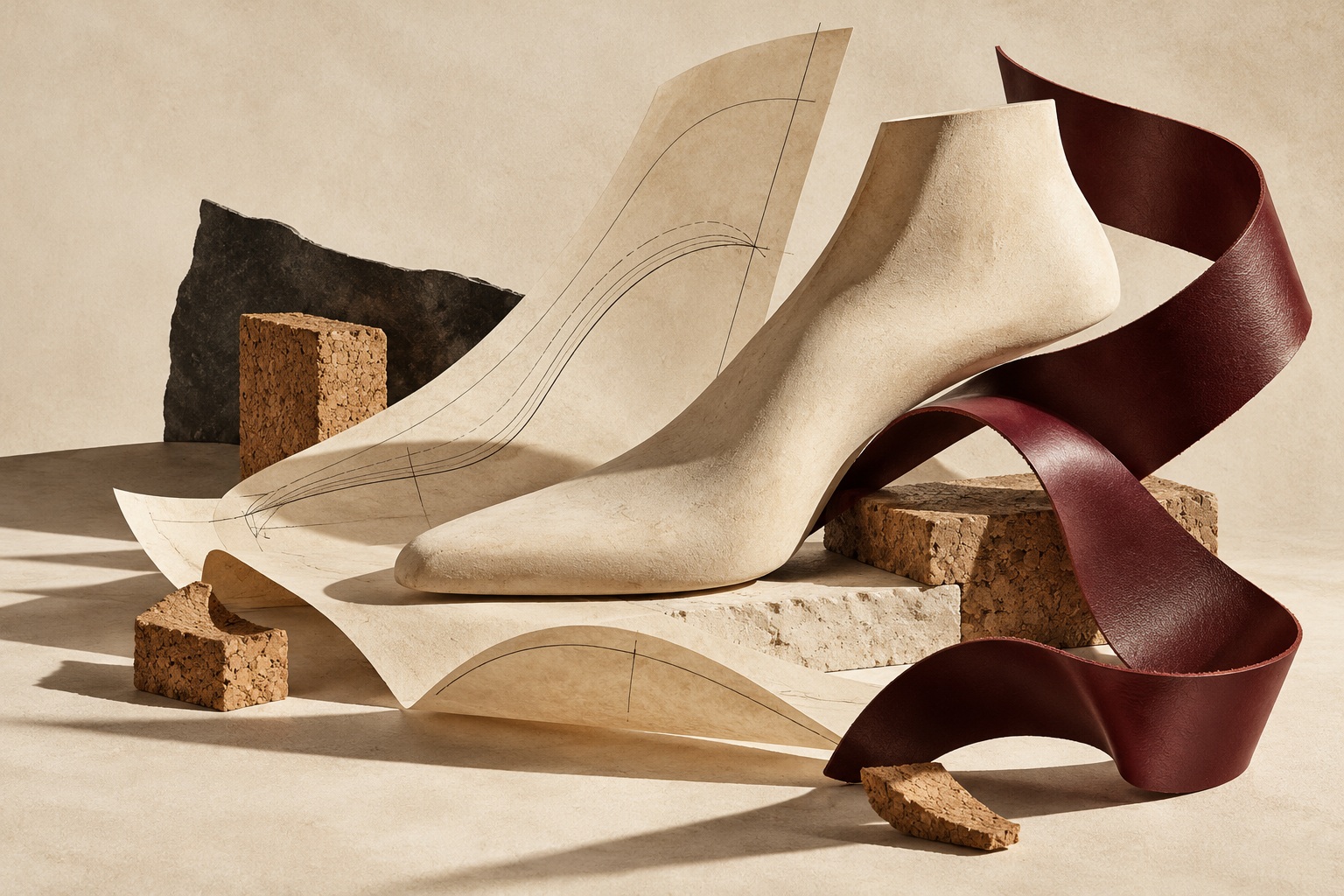
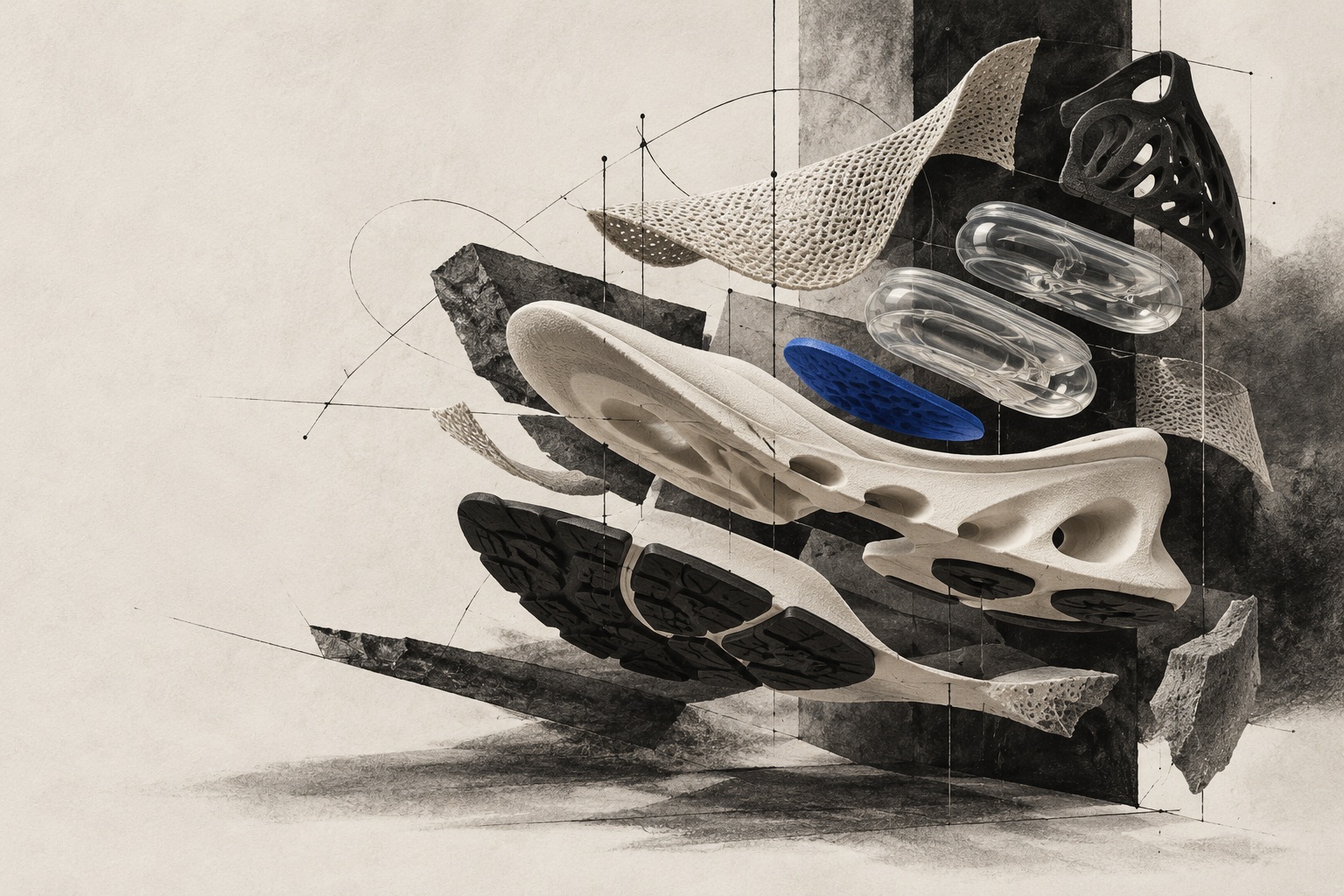
Header: original AI-assisted conceptual illustration created for REGIA. It does not depict a Ferragamo shoe, historical last, patent or museum installation.
The eye tends to arrive first. It follows a curve, measures a heel, registers the tension between an upper and the space beneath it. Yet the object’s relationship with the wearer continues beyond that first encounter. A foot occupies volume. Weight travels through it. The shoe must negotiate with something living.
This is a useful way into Salvatore Ferragamo 1898–1960. The retrospective remains on view at the company’s museum in Florence, with an extension to 14 February 2027 announced in May 2026. Its subject is the founder’s historical practice; it should not be confused with an exhibition of the house’s current collections.
Beauty has a structure
The museum’s curatorial presentation places anatomy, craftsmanship and experimentation with materials alongside colour and artistic references. It describes shoes as evidence of a working method, giving their construction a place in the story of their appearance.
The relationship is worth taking seriously. A silhouette is also a distribution of support and space. A line that seems effortless may depend on a carefully resolved junction. Looking at a shoe through those relationships gives its beauty another dimension: the possibility of understanding how its parts answer to one another.
It also complicates the image of the isolated creative gesture. In footwear, an idea has to become an object that can be made and worn. The relationship between intention and constraint is part of the design itself.
A material answer to a historical condition
The Fondazione Ferragamo’s biography connects the cork wedge, patented in 1937, to the shortages and restrictions of the period. Its account places the development after the League of Nations’ sanctions against Italy following the country’s military aggression in Ethiopia. It also documents Ferragamo’s exploration of materials including hemp, felt and fish skin.
That context matters. Material ingenuity belongs within a history, with its pressures and consequences. To extract the inventive object from those conditions would make the past easier to admire and harder to understand.
The wedge offers a precise question for a fashion reader: how does a response to a structural problem become a visual identity? A change beneath the foot can alter proportion, the relation between shoe and leg, and the character of an entire silhouette.
The aesthetic result does not erase the conditions of its making. It gives us a reason to examine them more closely. Materials can carry practical decisions and historical circumstances into an object that is later encountered simply as style.
Who tells the story of a shoe?
Museo Ferragamo identifies itself as a company museum. Founded by the Ferragamo family in 1995, it grew out of the effort to preserve and present the founder’s work. Its own history recognises the roles of Wanda Ferragamo and her children, including Fiamma, in bringing the institution into being.
That relationship should remain visible to the reader. A corporate collection provides access to objects and documents while presenting a perspective on the history they represent. The pleasure of looking can accommodate an awareness of how the account has been assembled.
For REGIA, the most interesting passage is between the object and the body it anticipates. An arch, a curve and a chosen material can be read as parts of a proposal about wearing. The questions remain concrete: where is support offered, how is volume organised, what does the material allow?
These are questions to bring to the historical work, rather than claims about the fit or performance of present-day products. They offer a way to consider the shoe at the scale where design becomes intimate. Before it becomes an image, it has to make room for a foot.
Salvatore Ferragamo 1898–1960, Museo Ferragamo, Florence. Extended until 14 February 2027. Check the museum’s current visitor information before planning a visit.
Sources & links
- Museo Ferragamo — retrospective and curatorial approach
- Museo Ferragamo — extension announced in May 2026
- Museo Ferragamo — institution and family history
- Fondazione Ferragamo — founder’s biography and material experiments
- Ferragamo — official website
Written from published museum and foundation sources; no on-site visit or original interview is claimed. Header illustration: REGIA, AI-assisted conceptual artwork, not a reproduction of a Ferragamo archive object or an anatomical diagram.