
Demna’s debut for Gucci was, without exaggeration, perhaps the most anticipated moment of Milan Fashion Week. Not only because of the change in creative direction, but because of what it means to step into a house whose archive is loaded with eroticism, power, and visual memory. The expectation was not merely aesthetic; it was historical.

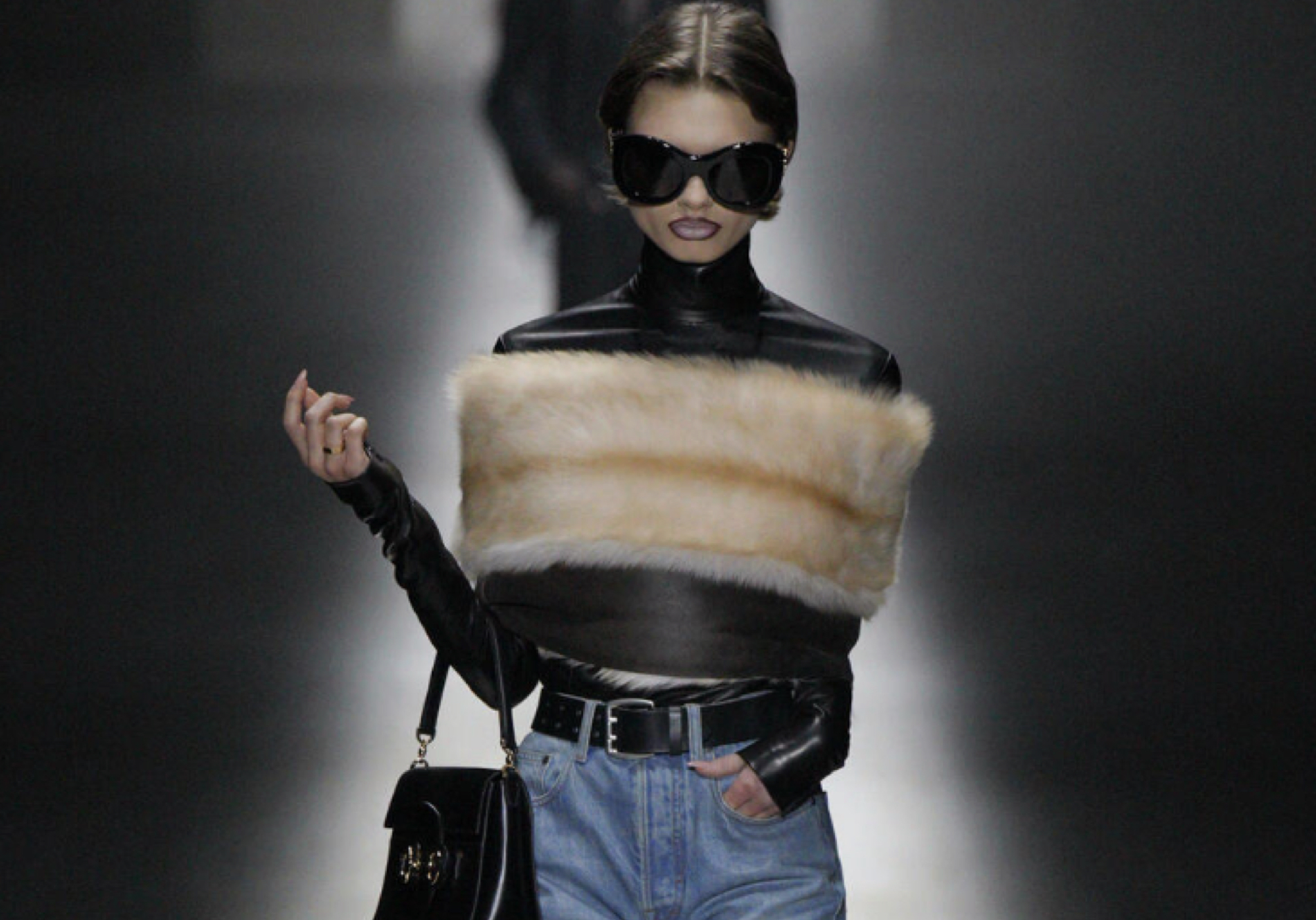
The staging was magnetic. The music, the rhythm, the energy. There was a clear sense of spectacle. A Gucci determined to make an entrance. The references to the Tom Ford era were unmistakable: fitted silhouettes, direct sensuality, nocturnal attitude. But rather than reconstruction, what emerged was an appropriation filtered through Demna’s lens — rawer, more frontal, less polished.
And then, Kate Moss. Nothing else was needed.

The designer’s hand is unmistakably present. And that is not a problem — that is precisely the role of a creative director. Still, there is something in the collection that seems to engage more with contemporary speed than with any classical notion of permanence. An aesthetic that is intense and immediate, conceived to strike and to circulate. To exist, above all, as image.

The question that lingers is another one: can an aesthetic designed to move quickly ever become lasting? What does permanence mean in an era that consumes in scroll?

Gucci has long been associated with desire, but also with a certain idea of sophistication that transcended the moment. Today, desire appears to be constructed differently — more exposed, more accelerated, less interested in subtlety and more in visual impact. Perhaps the point is not to decide whether this is better or worse, but to consider what kind of time this new chapter proposes.

In a context where everything is reproduced instantly, where images live and die within hours, the real challenge is not generating conversation — that is already guaranteed — but sustaining it. And that is where the true test begins.

El debut de Demna para Gucci fue, sin exagerar, quizás el momento más esperado de la semana de la moda en Milán. No solo por el cambio de director creativo, sino por lo que representa tocar una casa con un archivo tan cargado de erotismo, poder y memoria visual. La expectativa no era solo estética; era histórica.

La puesta fue magnética. La música, el ritmo, la energía. Hubo una sensación clara de espectáculo. Un Gucci decidido a irrumpir. Los guiños a la era Tom Ford fueron más que evidentes: siluetas ceñidas, sensualidad directa, actitud nocturna. Pero más que reconstrucción, lo que se vio fue una apropiación filtrada por la mirada de Demna —más cruda, más frontal, menos pulida.
Y después, Kate Moss. No hacía falta nada más.

La mano del diseñador está ahí, evidente. Y eso no es un problema: para eso existe un director creativo. Sin embargo, hay algo en la colección que parece dialogar más con la velocidad contemporánea que con la noción clásica de permanencia. Una estética intensa, inmediata, pensada para impactar y circular. Para existir, ante todo, como imagen.

La pregunta que queda flotando es otra: ¿puede una estética concebida para circular rápido convertirse en algo duradero? ¿Qué significa permanencia en una era que consume en scroll?

Gucci siempre fue una casa asociada al deseo, pero también a cierta idea de sofisticación que trascendía el momento. Hoy, el deseo parece construirse de otra forma: más expuesto, más acelerado, menos interesado en el susurro y más en el golpe visual. Tal vez no se trate de juzgar si es mejor o peor, sino de entender qué tipo de tiempo propone esta nueva etapa.

Porque en un contexto donde todo se reproduce al instante, donde las imágenes viven y mueren en cuestión de horas, el verdadero desafío no es generar conversación —eso ya está asegurado— sino sostenerla. Y quizás ahí empiece la verdadera prueba.


PHOTO CREDITS: imaxtree.com