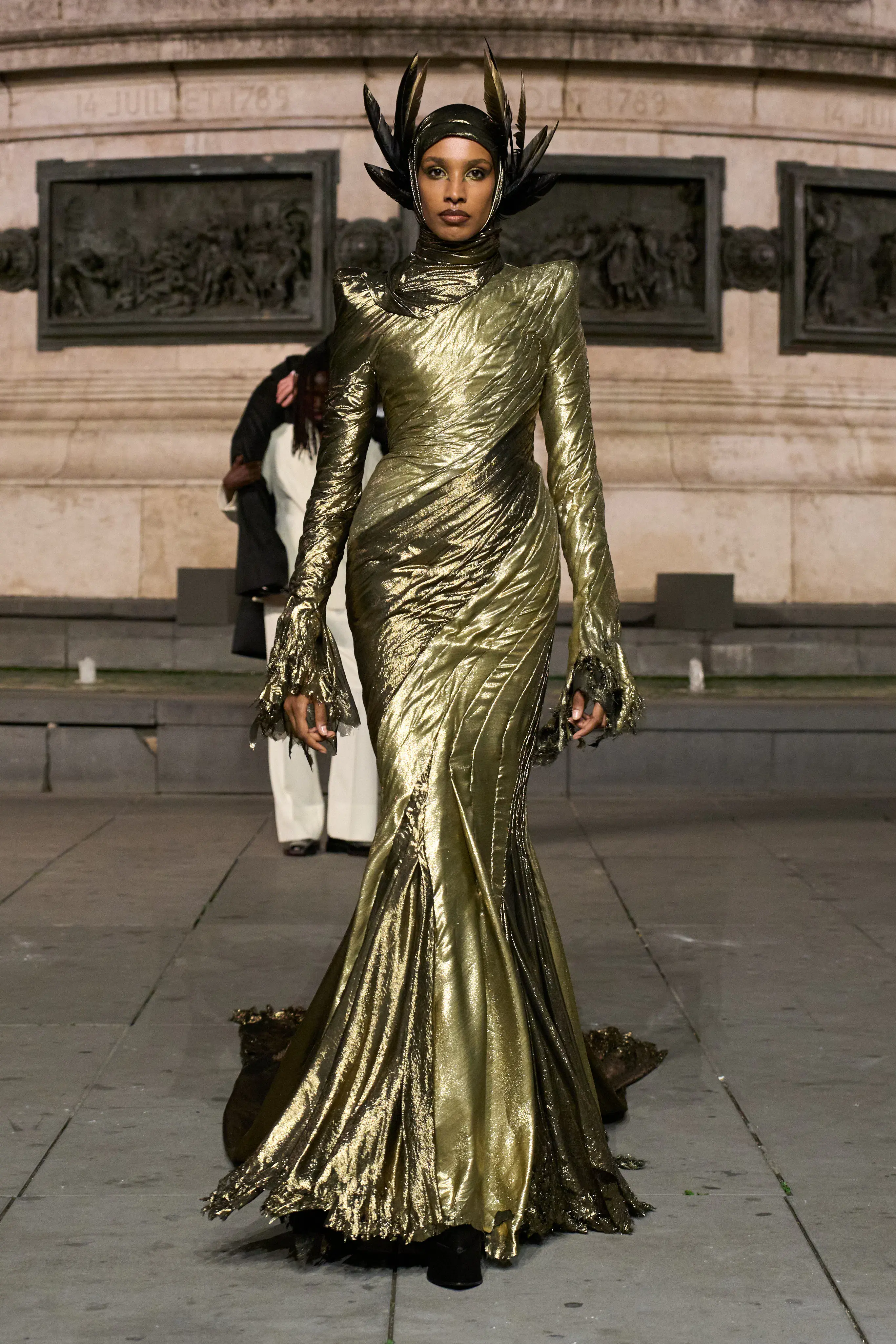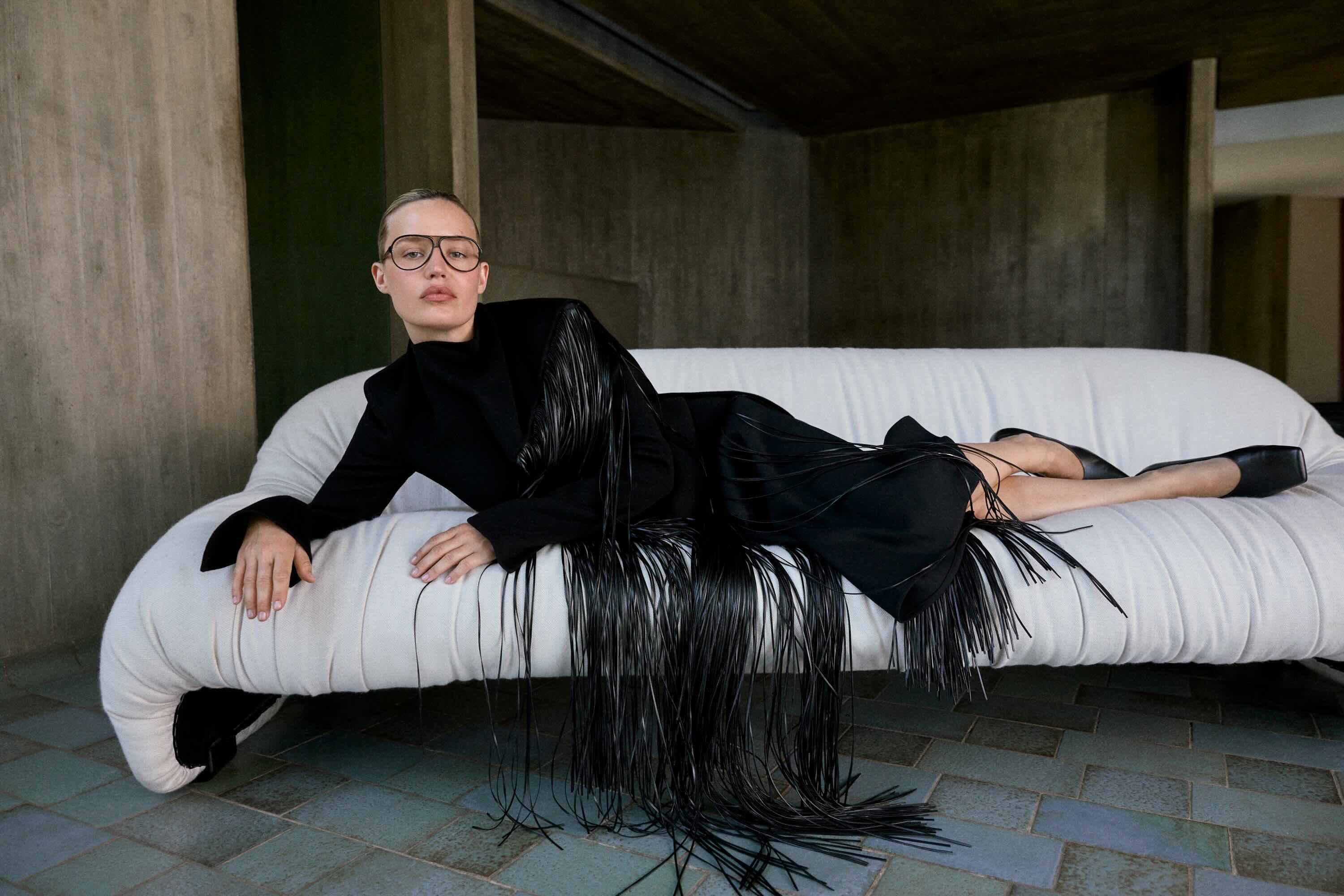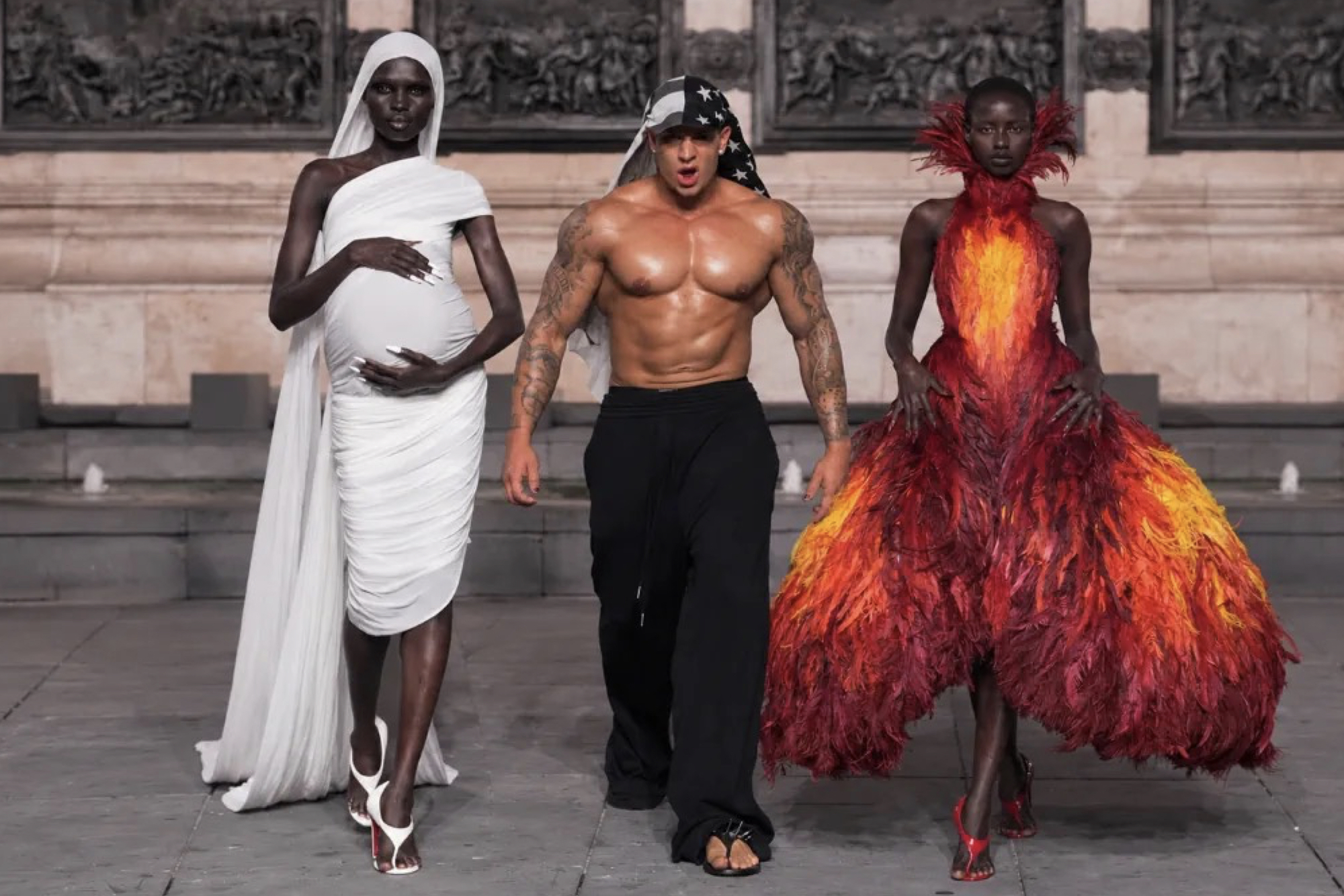

There is something deeply strange about what belongs to us and yet becomes something we learn to reject. The same matter can be intimate and repulsive, our own and foreign, familiar and disturbing. The boundary does not necessarily lie in the matter itself, but in the place it occupies: inside or outside, visible or invisible, acceptable or intolerable. Fashion knows that boundary very well.
For centuries, it has built its language around these distinctions: clean and dirty, elegant and vulgar, desirable and repulsive, human and monstrous. Fashion does not simply produce beauty. It also defines its limits.
Few brands have made that boundary into such a literal material as Matières Fécales, a tension its latest Paris Fashion Week show at Place de la République brought into sharp focus.
The name already functions as a statement. It does not speak of flowers, desire or fantasy. It speaks of what is discarded. Of what disappears down the toilet, of what we do not want to look at, of what we prefer to forget once it leaves our bodies. And yet, we are looking.
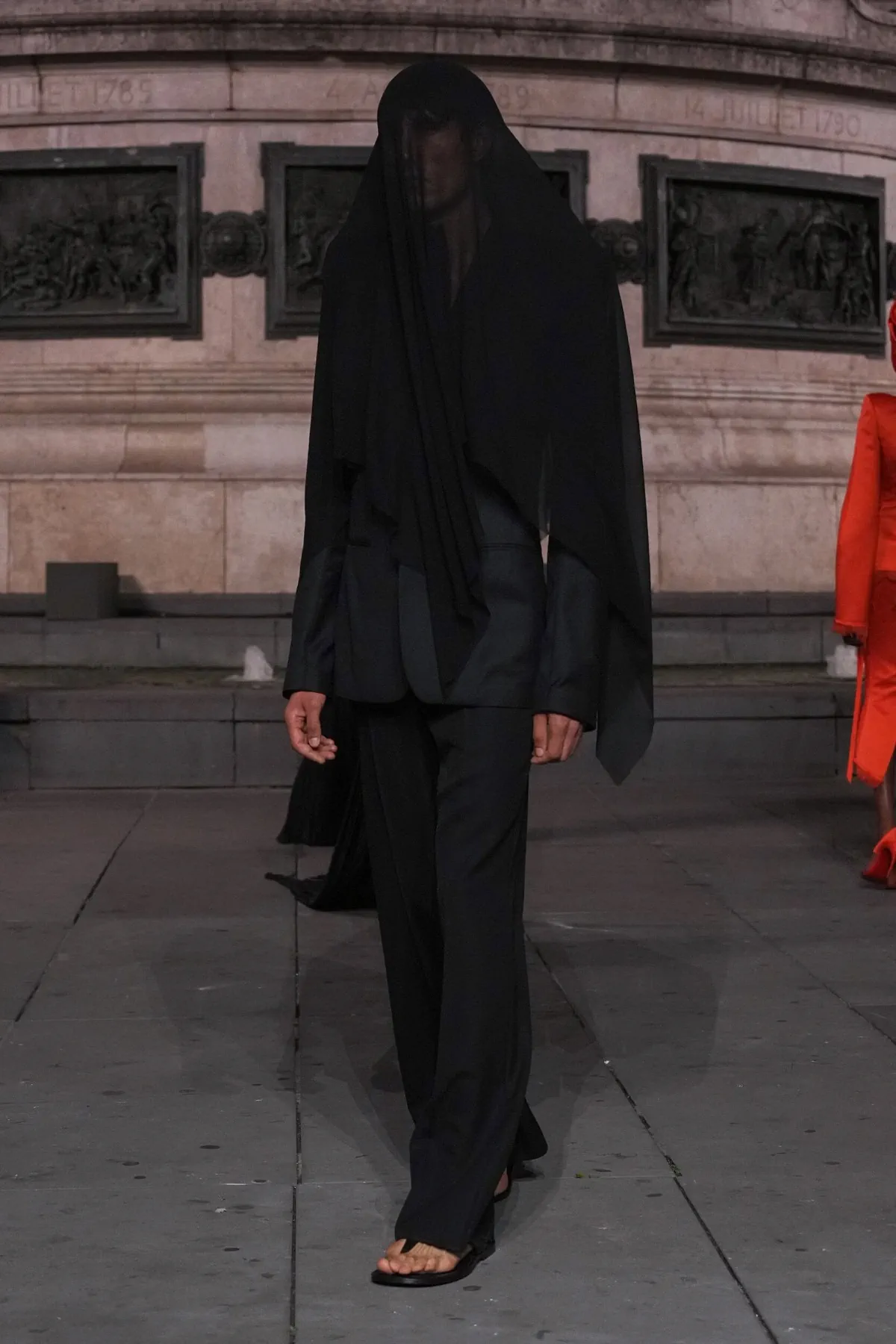
Over the past years, Matières Fécales has built an aesthetic around everything fashion has traditionally attempted to correct: altered anatomies, prosthetics, darkened eyes, impossible nails, platforms that distort the silhouette. There is horror, fetish, punk and a sensibility that seems to imagine beauty after the human. It is not simply about making something ugly. It is about questioning the need for beauty to be recognizable as such.
Julia Kristeva called abjection the state produced by that which threatens the boundaries of the self. Not because it is completely foreign, but because it is too close. The corpse, blood, excrement: matter that confronts us with something of our own that we can no longer integrate in quite the same way.
The abject is unsettling because it destabilizes a distinction we once believed to be secure.
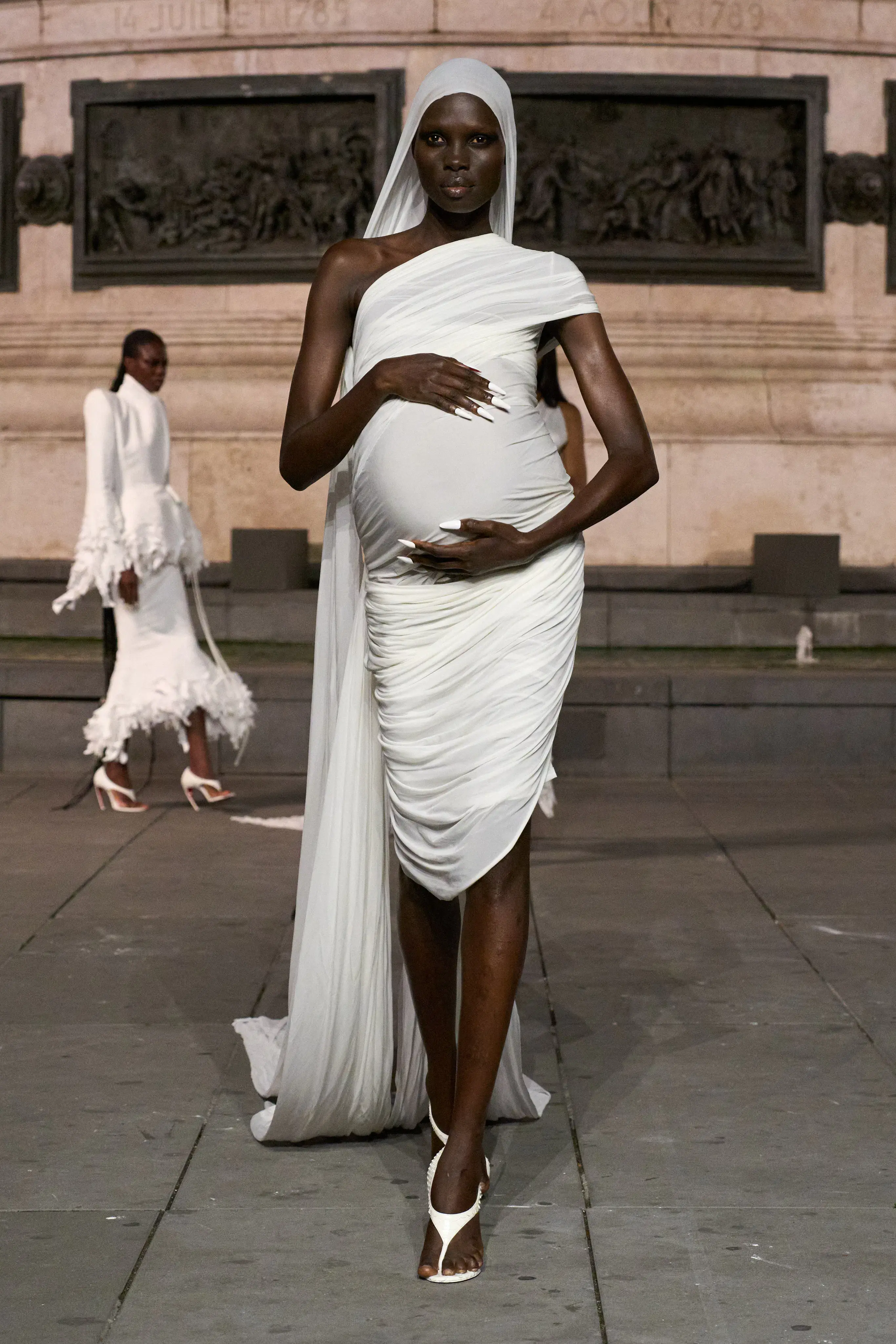
It seems like a particularly fitting definition for a brand whose name could have been taken from a treatise on bodily horror. But fashion has been working with that instability for a long time.
The vulgar becomes chic. The underground reaches an editorial. Fetish enters the runway. Subculture becomes reference. What once seemed too sexual, too strange or too violent begins to circulate as an image, then as a trend, and eventually as a commodity. Fashion has a particular ability to metabolize whatever initially resists it.
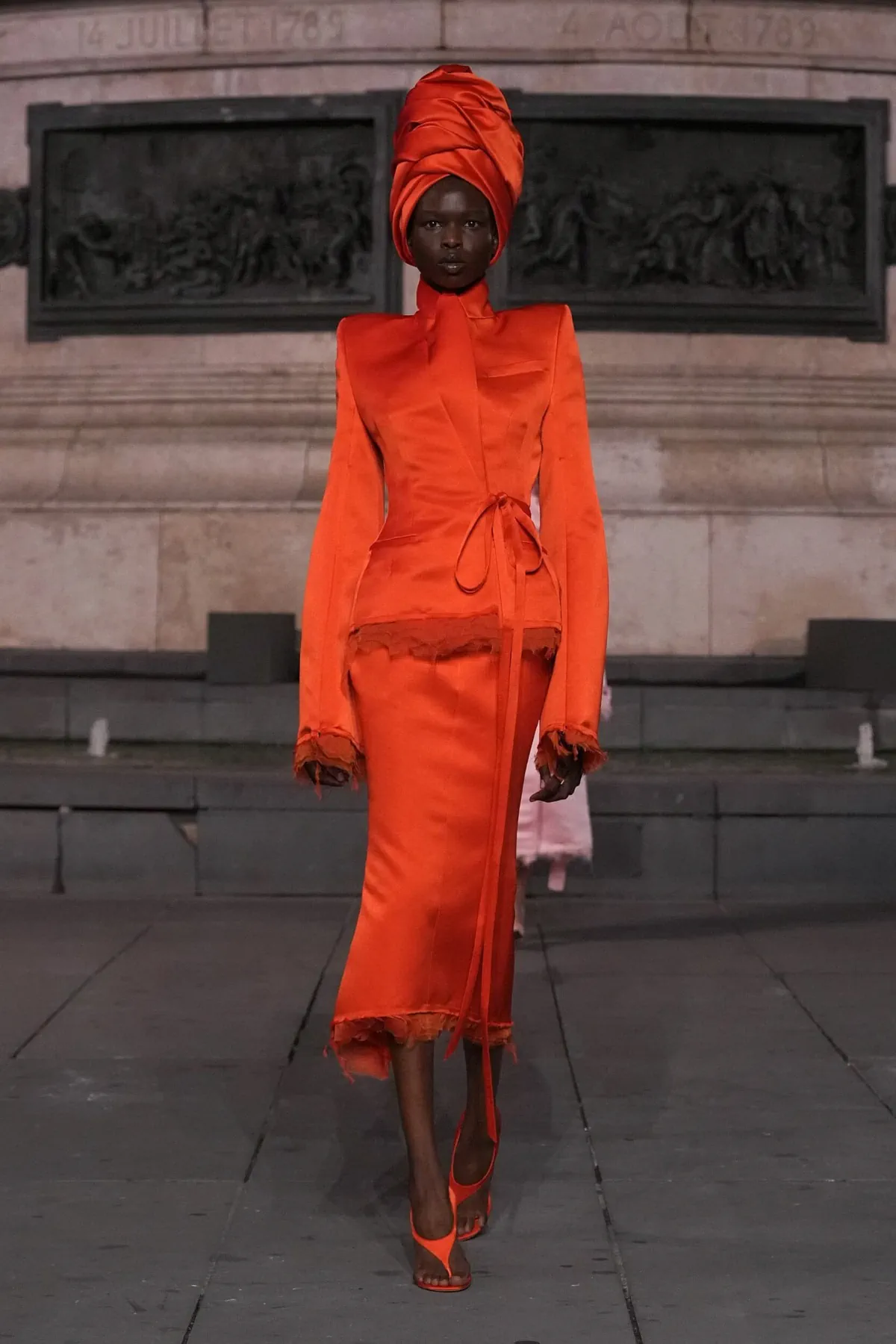
Matières Fécales arrived in Paris with that tension already embedded in its language. Its latest show, The 99 Percent, brought the collection to Place de la République, a space historically associated with protest and political expression. There, 99 racialized models took to the runway as a counterpoint to The 1% of the previous season.
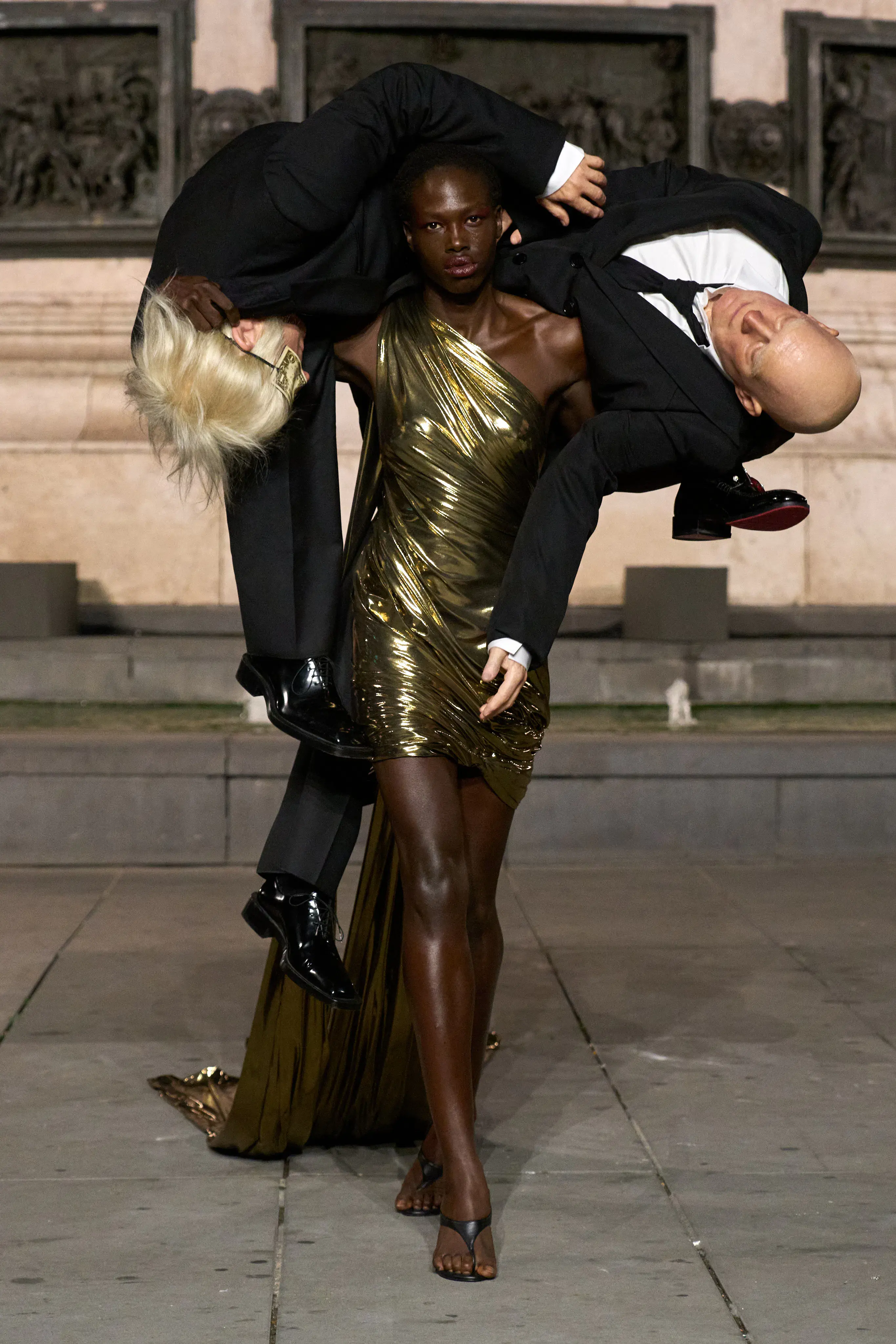
The collection staged ideas of representation, craftsmanship and the redistribution of visibility. But another image was unfolding at the same time: an aesthetic born at the margins occupying the center of one of the industry’s most visible rituals. Rihanna was among the audience.
The image feels almost too precise: one of the most recognizable figures in popular culture watching a brand that built much of its identity around everything beauty culture had learned to reject.
There is no need to resolve that contradiction. It is more interesting to leave it open.
Because perhaps Matières Fécales’ real gesture is not about provoking. Provocation is easy. The difficult part is making whatever provokes begin to produce desire.
That is where the brand becomes more complex. Its bodies do not seem to ask permission to be beautiful, but neither do they obediently attempt to enter an alternative definition of beauty. Deformation can be erotic; the artificial can appear more alive than the natural; the body can become a surface in permanent transformation.
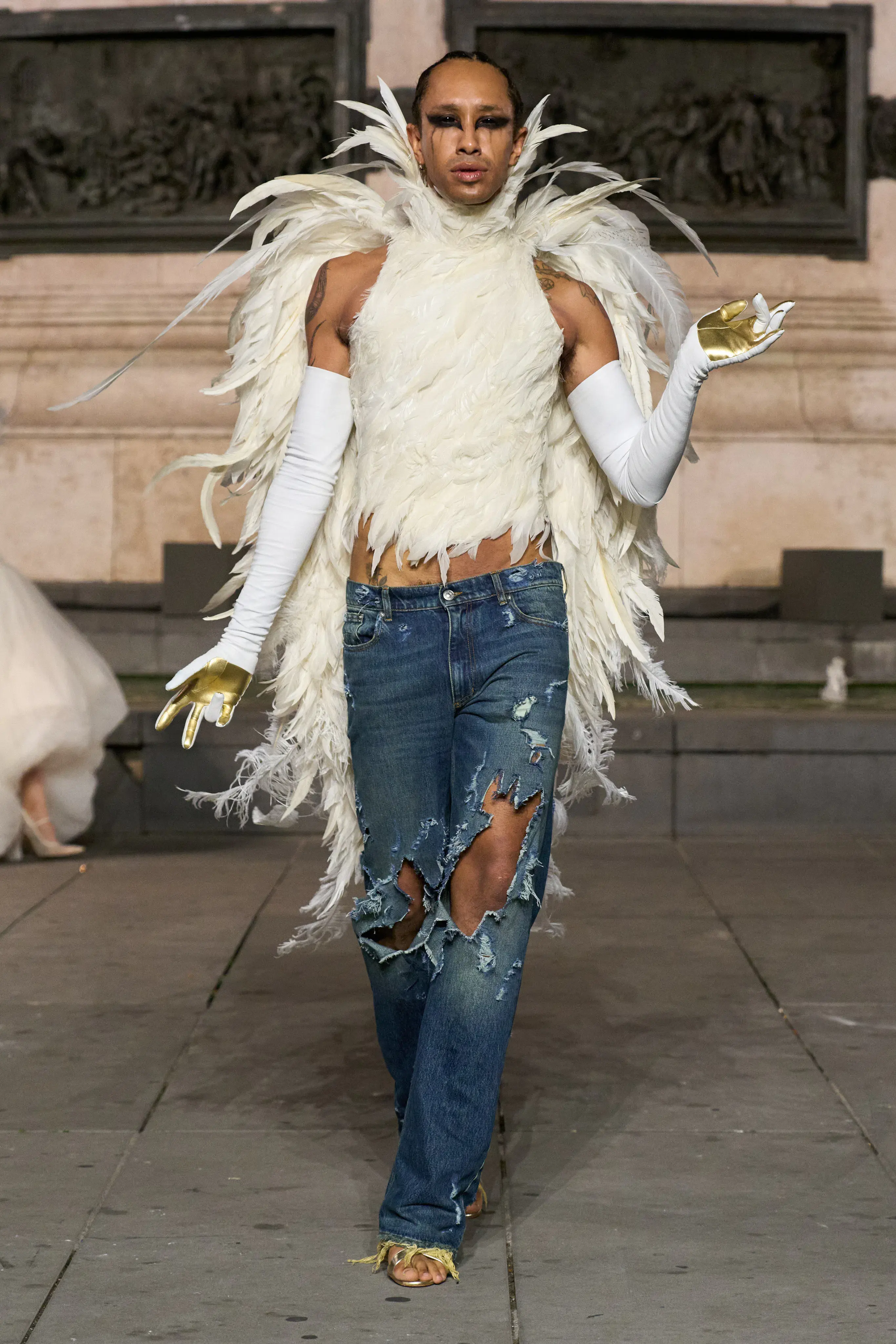
The aesthetic is post-human, but also deeply bodily.mThe stranger the body appears, the more evident its presence becomes. And perhaps that is where the discomfort lies: we are not looking at something entirely alien. We are looking at a displaced version of ourselves.
Fashion has always needed categories that function through contrast. The vulgar helps define good taste. The strange, the normal. The forbidden, the desirable. Matières Fécales pushes that logic into uncomfortable territory: what happens when what was meant to remain at the margins becomes one of the most desired images at the center?
The answer, for now, seems rather simple. The industry absorbs. It can turn rebellion into reference, marginality into aesthetics, and horror into desire. It can incorporate what once existed in opposition to it and give it a place within its own machinery.
Perhaps that is why the name Matières Fécales feels less like a provocation than a theory. Fashion has always been a machine of transformation. It takes what exists, alters it, and decides what deserves to be seen.
This time, it is looking directly at what it spent so long refusing to look at. Because perhaps waste was never the opposite of beauty. Perhaps it was one of its materials.
Hay algo profundamente extraño en aquello que nos pertenece y, sin embargo, aprendemos a rechazar. Una misma materia puede ser íntima y repulsiva, propia y ajena, familiar y perturbadora. La frontera no está necesariamente en la materia misma, sino en el lugar que ocupa: adentro o afuera, visible o invisible, aceptable o intolerable. La moda conoce muy bien esa frontera.
Durante siglos construyó su lenguaje alrededor de estas distinciones: limpio y sucio, elegante y vulgar, deseable y repulsivo, humano y monstruoso. La moda no solamente produce belleza. También establece sus límites.
Pocas marcas han convertido esa frontera en una materia tan literal como Matières Fécales, una tensión que su último desfile en Paris Fashion Week, en Place de la République, puso en primer plano.
El nombre ya funciona como una declaración. No habla de flores, deseo o fantasía. Habla de aquello que se descarta. De lo que desaparece por el inodoro, de lo que no queremos mirar, de aquello cuya existencia preferimos olvidar una vez que deja nuestro cuerpo. Y, sin embargo, estamos mirando.
Durante los últimos años, Matières Fécales construyó una estética alrededor de aquello que la moda tradicionalmente intentó corregir: anatomías alteradas, prótesis, ojos oscurecidos, uñas imposibles, plataformas que deforman la silueta. Hay horror, fetish, punk y una sensibilidad que parece imaginar la belleza después de lo humano. No se trata simplemente de hacer algo feo. Se trata de cuestionar la necesidad de que la belleza sea reconocible como tal.
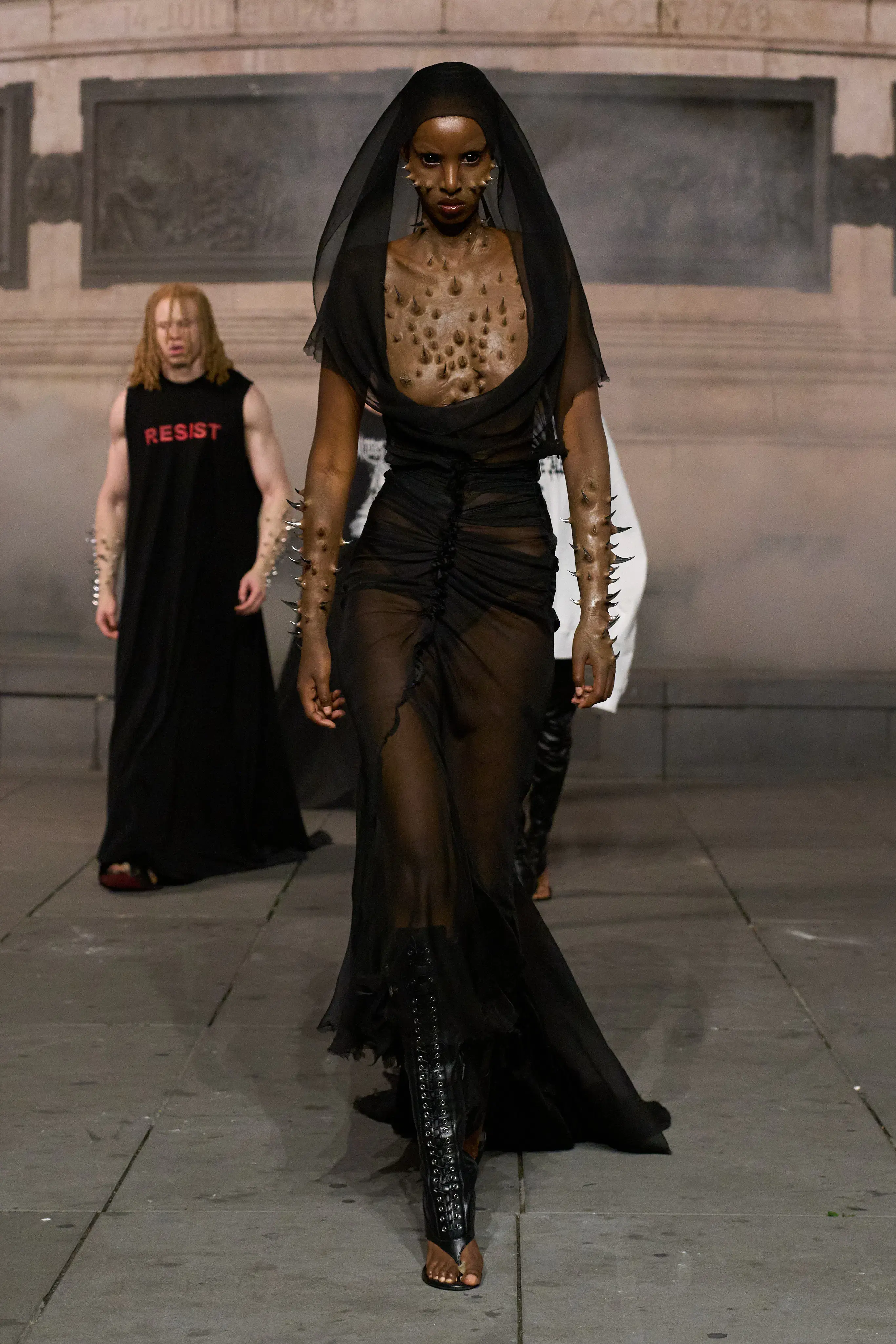
Julia Kristeva llamó abjection —abyección— al estado producido por aquello que amenaza las fronteras del yo. No porque sea completamente ajeno, sino porque está demasiado cerca. El cadáver, la sangre, el excremento: materias que nos confrontan con algo propio que ya no podemos integrar de la misma manera. Lo abyecto incomoda porque vuelve inestable una distinción que creíamos segura.
Parece una definición especialmente adecuada para una marca cuyo nombre podría haber salido de un tratado sobre el horror corporal. Pero la moda lleva mucho tiempo trabajando con esa inestabilidad.
Lo vulgar se vuelve chic. Lo underground llega a una editorial. El fetiche entra en la pasarela. La subcultura se transforma en referencia. Aquello que alguna vez parecía demasiado sexual, extraño o violento empieza a circular como imagen, después como tendencia y finalmente como mercancía.
La moda tiene una capacidad particular para metabolizar aquello que inicialmente se le resiste.
Matières Fécales llegó a París con esa tensión ya incorporada en su lenguaje. Su último desfile, The 99 Percent, trasladó la colección a Place de la République, un espacio históricamente asociado a la manifestación y la expresión política. Allí, 99 modelos racializados ocuparon la pasarela como contrapunto al The 1% de la temporada anterior.
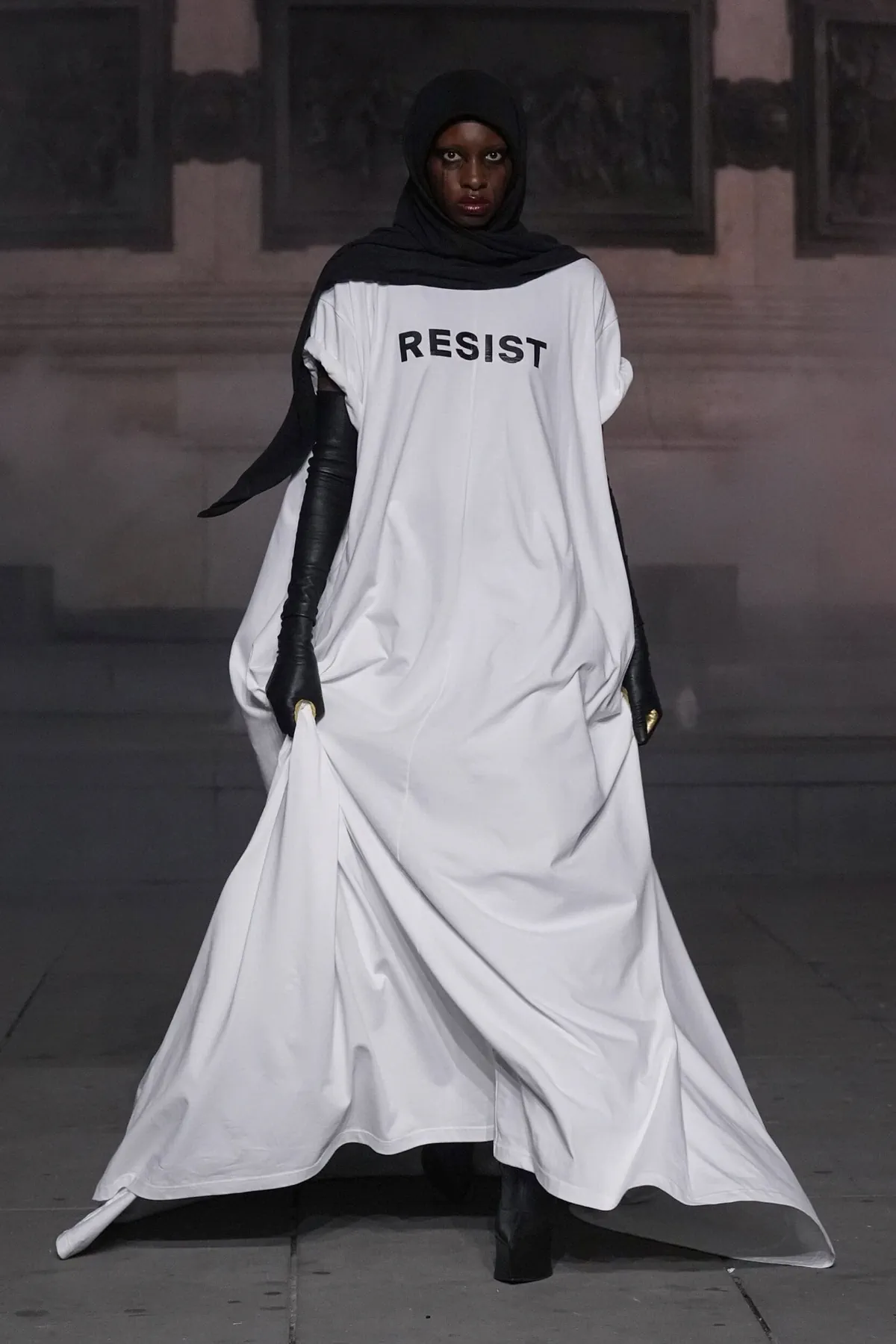
La colección puso en escena ideas de representación, artesanía y redistribución de visibilidad. Pero había otra imagen sucediendo al mismo tiempo: una estética nacida en los márgenes ocupando el centro de uno de los rituales más visibles de la industria. Rihanna estaba entre el público.
La imagen resulta casi demasiado precisa: una de las figuras más reconocibles de la cultura popular observando una marca que construyó buena parte de su identidad alrededor de aquello que la cultura de la belleza había aprendido a rechazar.
No hace falta resolver esa contradicción. Es más interesante dejarla abierta.
Porque quizás el verdadero gesto de Matières Fécales no está en provocar. Provocar es fácil. Lo difícil es conseguir que aquello que provoca empiece a producir deseo.
Ahí la marca se vuelve más compleja. Sus cuerpos no parecen pedir permiso para ser bellos, pero tampoco intentan entrar dócilmente en una definición alternativa de belleza. La deformación puede ser erótica; lo artificial, más vivo que lo natural; el cuerpo, una superficie en permanente transformación.
La estética es post-humana, pero también profundamente corporal.
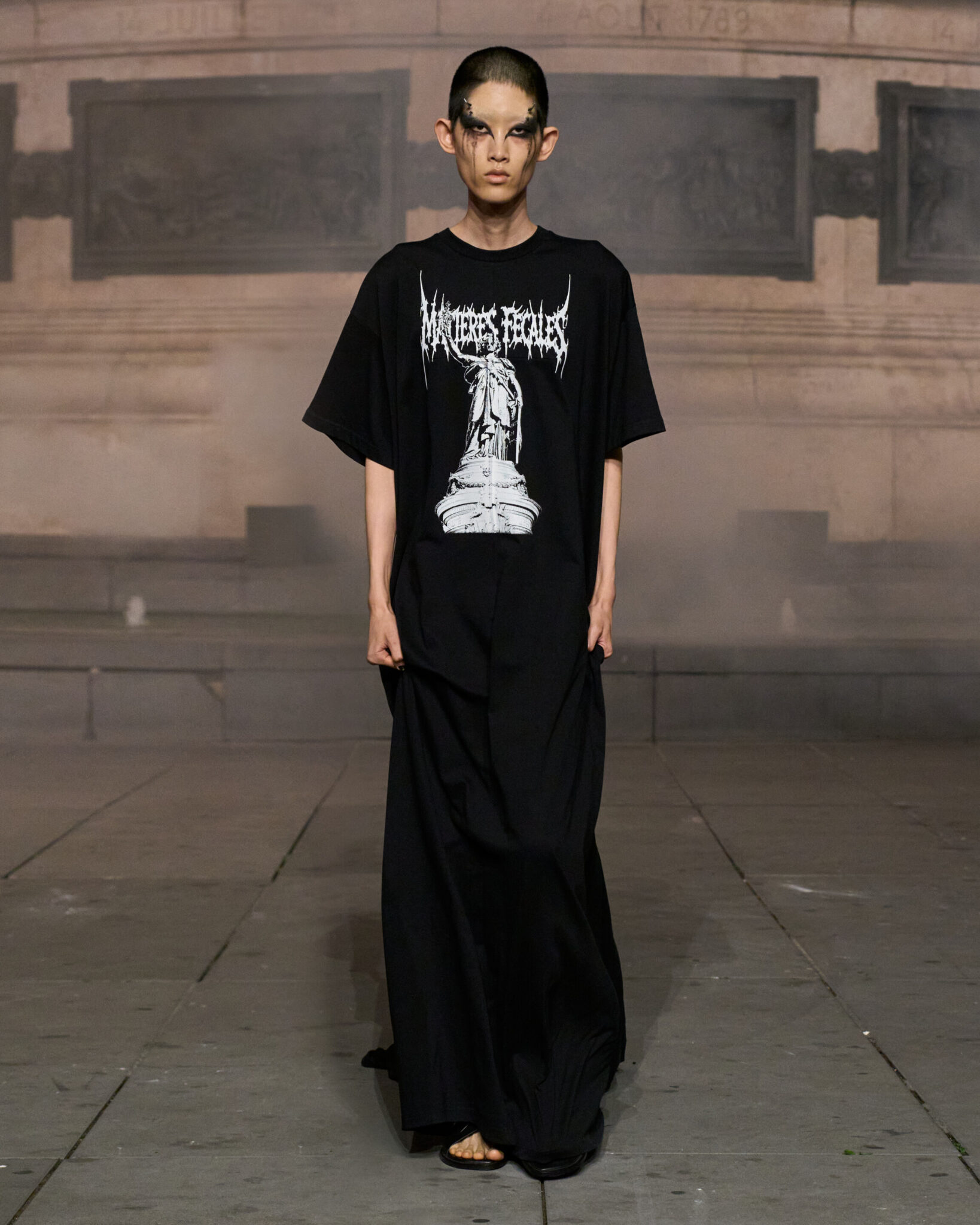
Cuanto más extraño aparece el cuerpo, más evidente se vuelve su presencia. Y quizás ahí está la incomodidad: no estamos frente a algo completamente alienígena. Estamos frente a una versión desplazada de nosotros mismos.
La moda siempre necesitó categorías que funcionaran como contraste. Lo vulgar ayuda a definir el buen gusto. Lo extraño, lo normal. Lo prohibido, lo deseable. Matières Fécales lleva esa lógica hasta un punto incómodo: ¿qué sucede cuando aquello que debía permanecer en el margen se convierte en una de las imágenes más deseadas del centro?
La respuesta, por ahora, parece bastante simple. La industria absorbe. Puede convertir la rebeldía en referencia, la marginalidad en estética y el horror en deseo. Puede incorporar aquello que alguna vez existió en oposición a ella y darle un lugar dentro de sus propias máquinas.
Quizás por eso el nombre Matières Fécales resulta menos una provocación que una teoría.
La moda siempre fue una máquina de transformación. Toma lo que existe, lo altera y decide qué merece ser visto.
Esta vez, está mirando directamente aquello que durante tanto tiempo prefirió no mirar. Porque quizás waste nunca fue lo contrario de beauty. Quizás era uno de sus materiales.